
Gosheni Destination
Arusha National Park
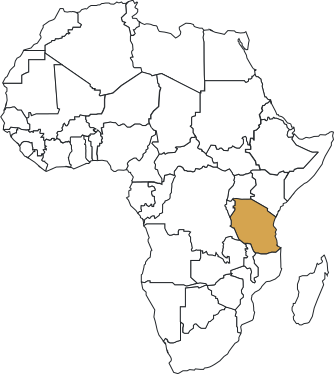
Arusha National Park is a place of mixed landscapes – towering Mount Meru, dense rainforests and sparkling lakes – in northern Tanzania. Ideal for a day trip before tackling nearby Mount Kilimanjaro, it is home to the world’s highest concentration of giraffes and an excellent variety of other mammals and birds.
Location & Habitats
The park is approximately 30 km (18.6 mi) from the town of Arusha, which is considered the gateway to the famed Northern Safari Circuit of Tanzania. Kilimanjaro International Airport is 35 km (22 mi) away. The park covers 552 sq. km (213 sq. mi). Mount Meru forms the highest point of the park, at 4 562m (14 967ft).
This small national park boasts great biodiversity thanks to its varied habitats. These include rainforests that are home to colobus monkeys, open savannah and mixed woodlands where zebra and giraffe roam, the alpine desert slopes of Mount Meru with peculiar flora and the Momella Lakes, whose alkali waters attract a technicolored array of water birds.
Conservation History
Arusha National Park was originally designated in 1960, to protect Mount Meru. Later, the management mandate was expanded to preserve the diverse habitats and the unique wildlife found therein. The park is well-managed, with active anti-poaching and habitat restoration initiatives in place. To ensure its future, there are numerous collaborative projects with neighboring communities which emphasize sustainable tourism, environmental education and poverty alleviation.
Tourism
Regulations
- No offroad driving
- Do not exceed the speed limit of 50 kph
- Night game drives are not permitted
- Only leave the vehicle at designated points
- Do not harm, harass or feed wildlife
- No littering
- No excessive noise
- No fires
Access
There are regular international and domestic flights from various destinations to nearby Kilimanjaro International Airport. From there, it is approximately a one-hour drive to the park’s main gate.
Day trips by road from Arusha are readily available with various tour operators.
Highlights Within Arusha National Park
Mount Meru
At 4 562 m (14 967 ft), Tanzania's second-highest mountain offers a stiff challenge for trekking enthusiasts.
Game Viewing
Despite its small size, the park is well-stocked with wildlife, including three of the Big 5.
Ngurudoto Crater
Accessible only on foot, the crater floor is partially covered in a rainforest teeming with life.
Tours Starting from Arusha City
- 5 Days
- Tanzania
- 10 Days
- Tanzania
- 13 Days
- Tanzania
- 7 Days
- Tanzania

- Tarangire, Ndutu Area, Ngorongoro, Serengeti Central, Lake Manyara
Highlights in the Vicinity of Arusha National Park
Chagga village tour
Visit a traditional village with a local Chagga guide to learn more about this colorful culture
Bird watching
Well over 400 species of birds have been recorded in the area - paradise for bird enthusiasts
Arusha
A bustling frontier town with a selection of hotels, restaurants, museums and galleries.
Places Worth Visiting
Within Arusha National Park
Showcases various hominid and fossil relics found in the nearby crater of the same name.
Near the Arusha National Park
As key stakeholders in the management of the reserve, a visit to a traditional Maasai village creates a better understanding of both their culture and their role in local conservation efforts.
Activities
Game Drives
Choose between full and half-day excursions in search of African wildlife, led by experienced local guides.
Cultural Encounters
Learn more about the cultural heritage and history of the local people on a guided tour of villages, community projects and festivals.
Picnic
Your guide will choose a scenic location where a lavish picnic can be enjoyed.
Bird-watching
Dozens of colorful birds can be found in the various habitats of the park, with over 400 species recorded.
Nature Walks
Enjoy an intimate experience of nature in the company of a qualified walking guide.
Canoeing
Paddle on the various lakes and watch the wildlife activity on the lush shores.
Horse Riding
Ride amongst the wildlife for an unusually close wildlife experience.
Wildlife

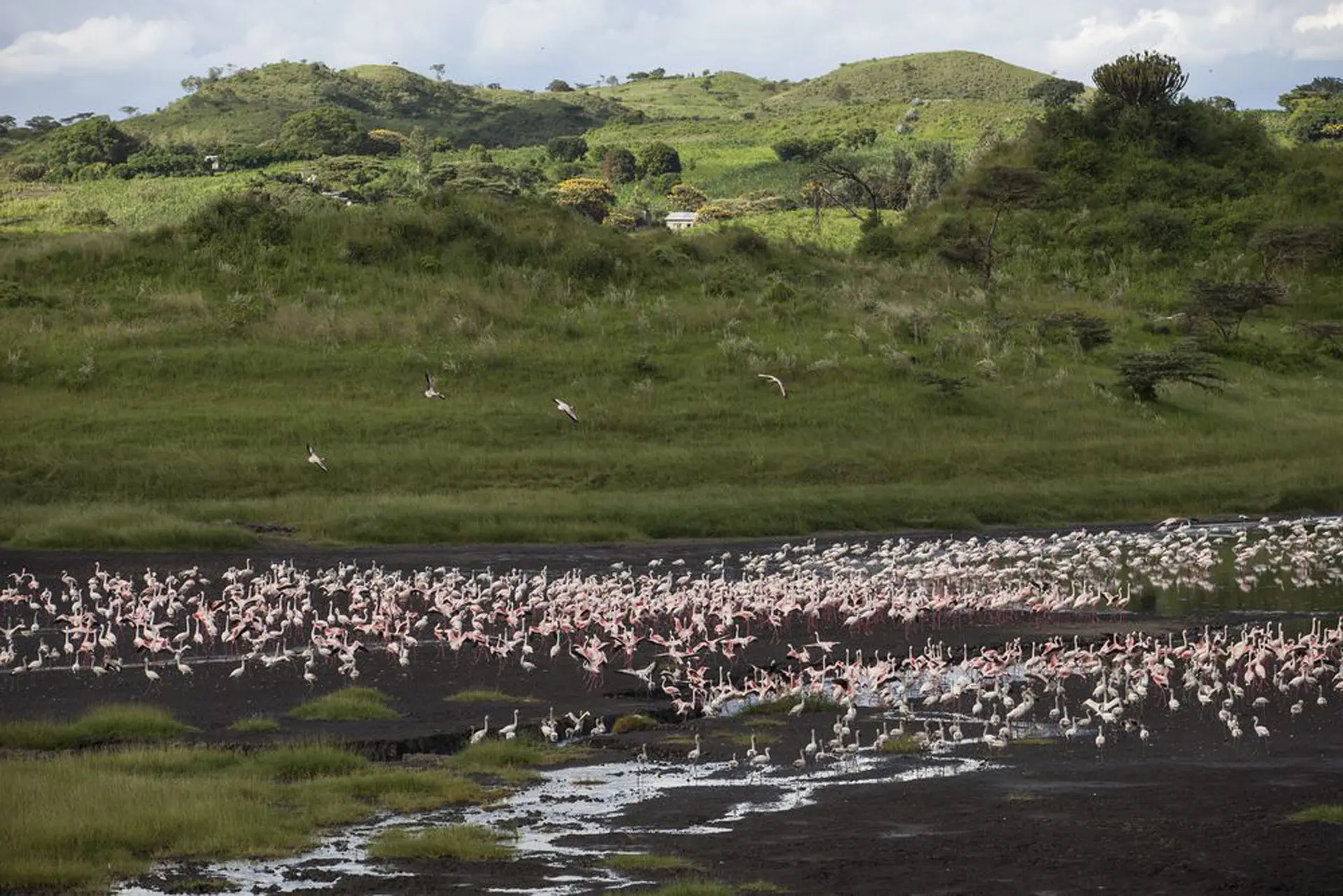
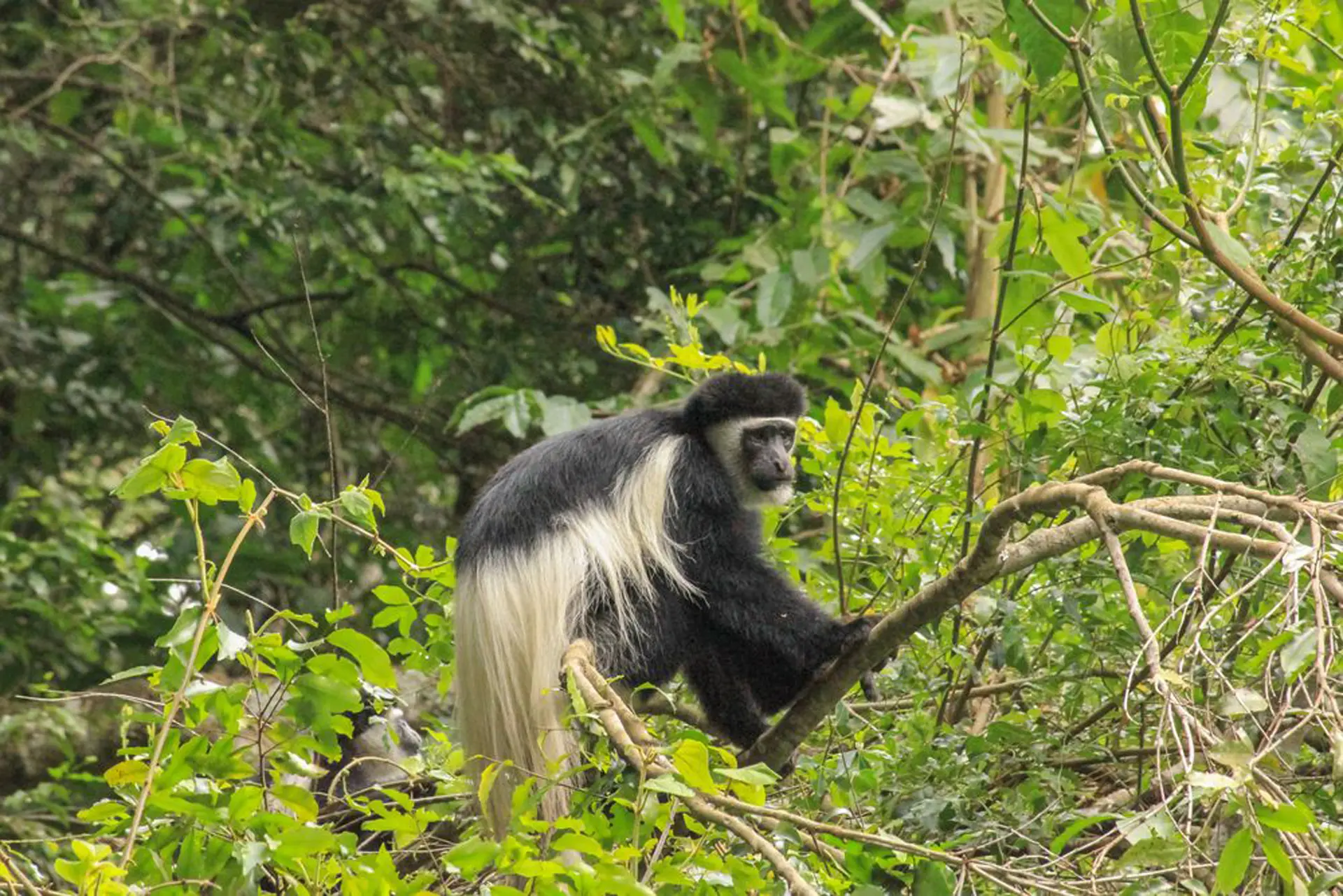
For a relatively small national park, and considering that much of the park is inaccessible, it is home to a good variety of wildlife. Two members of the Big 5, buffalo, elephant and leopard, are present, although sightings of the latter two are rare. Spotted hyenas are also occasionally spotted. Good populations of giraffe, zebra, warthog and hippos mix with various antelope species. Primates are frequently seen, with colobus and blue monkeys quite common. The varied habitats make it an ideal home to birdlife. Waterfowl are abundant around the various lakes, while the forests are home to beautiful trogons and turacos. In all, over 400 bird species have been recorded. For a snapshot of African wildlife, this is a great destination.
Landscape
Weather and Climate
On average, the climate is pleasant throughout the year. It seldom gets too hot during the day, although nighttime temperatures can get quite cold, extending into the early morning. If you plan early morning activities, be sure to pack warm clothing that can be layered.
From June to October, there is little chance of rain. Two Wet Seasons run from November to December and from March to May. During this time, afternoon showers are common. Due to the microclimate influenced by the presence of Mount Meru, the immediate area receives slightly more rain on average than the surrounding area.
Best Time To Go
- Best Time to Go
- Dry Season
- Wet Season
- Shoulder Season
June to October. Dry conditions mean the park is more easily accessed and game viewing is better around permanent water.
June to October, featuring warm days and cool overnight. Best for game viewing and hiking.
March to May and through November-December. This is the best time for bird-watching
Tourist numbers decline over the Wet Season when both Kilimanjaro and the other parks of the Northern Safari Circuit are less accessible.
See What Our Guests Have to Say
Bien évidemment les big five (même le rhinocéros!), la traversée de la rivière par les gnous et bien d'autres animaux.
En faisant un safari avec Hassan vous trouverez tout ce que vous êtes venus chercher.
A l'avenir si nous décidons de refaire un safari, nous voudrions repartir avec Hassan.
Grâce à lui et sa grande expérience nous avons découvert et appris énormément de choses sur la Tanzanie, les animaux, les végétaux etc. Hassan est un véritable passionné qui aime transmettre son savoir.
En plus de ses connaissances, Hassan a un véritable œil de lynx et sais débusquer le moindre animal caché.
Grâce à Hassan nous avons eu la chance de voir beaucoup d’animaux et tous ceux du « Big Five ».
Parmi tous les véhicules présents lors des safaris, Hassan sait se frayer un chemin pour nous permettre d’avoir toujours le meilleur point de vue.
Hassan sait où se placer pour nous permettre d’avoir une vue sans égal sur les animaux, en les observant de très près.
Hassan est également un excellent conducteur. La route n’a aucun secret pour lui.
C’est également un guide très attentionné, toujours aux petits soins pour nous et d’une extrême gentillesse.
Nous recommandons Hassan les yeux fermés et si nous devions refaire un safari, nous demanderons d’être guidés par Hassan sans hésitation.
Merci encore à Hassan pour ces merveilleux moments qui resterons gravés dans notre mémoire !!
thx a lot for the thoughtful and excellent service
highly recommend
In summary the experience was highly satisfying, I sincerely recommend Gosheni Safaris and to ask for Wilson as a guide.
I booked this holiday back in 2020 but then had to cancel due to Covid. That was after a lot of research of tour companies and finally picking Ghosheni. The time was right to get this once in a lifetime trip set up again, so working via email with William at Gosheni we compiled the agenda…he was so helpful and we settled on one day in Tarangire, one day in Lake Manyara, three days in Serengeti and one day in Ngorongoro Crater…I’m now on the way to Zanzibar after an amazing experience, Gosheni took care of the whole package for my wife, three teenage sons and I.
Our guide and driver was Zadock, a humble, honest, genuine, proud and generous man. He did absolutely everything for us, answered every question and took us to all the places to see the big five up close, hunts and more.
The food was served every lunch time as a picnic, with plates, blanket, wtc whilst others had lunch boxes. The Jeep was cleaned daily, and was extremely comfortable along the difficult rough terrain…a credit to Zadock.
Zadock had so much knowledge not only of the animal kingdom’s hundreds of species but also the history of Tanzania, Africa, politics, and social customs, we felt as though he was part of our family.
Thankyou Zadock and Gosheni, I very rarely write reviews after holidays and I have travelled extensively around the world, but these guys are special and have made this so memorable for my family and I….I recommend to everyone if you are unsure about who, how, what, these guys will sort out the whole trip and at a very reasonable price.
Well done William, Gosheni and Zadock, and I really hope you get to be recognised as the number one tour company in Tanzania!
As our city had quarantine arrangement due to COVID-19, we were so worry about our trip. Luckily, Gosheni is so considerate and try their best endeavors to rearrange our scedule. With their assistance, everything is set and we feel comfortable for all of their kind arrangements.
During the safari, we have a terrific tour guide, Edward! He takes care of all the stuff and administration including liaison with hotels, lunch packing, other add-on safaris so that we can fully enjoy the trip.
Not only Edward spots a lot a lot of animals and birds for us, including the top 5 in the trip, he also introduces us the habitat and features of the animals and birds. We are very impressed by his rich knowledge and do enjoy listening the "stories" of the animals.
Edwward is definitely experienced and propose the best programme during the safari, e.g. he tries to maximise our time for the game drive in different locations and tribe visit. We fully trust his expertise and professionalism.
We are very happy with Edward and Gosheni. We will absolutely consider them in our next Africam safari.
The food was excellent, and even on the all-day game drives we had a cooked, sit-down meal for lunch which was a big plus point. All the accommodation was excellent as well.
We had a bespoke itinerary which we planned in advance with William from Gosheni, and he was extremely helpful in answering our questions and accommodating our requests.
I would highly recommend Gosheni and especially Ombeni for future travels.
The company is very professional from beginning to end. Peter the owner of Gosheni Safaris helped us a lot about planning our itinary. I asked too many questions and he replied all of them everytime. Sometimes he can be in the bush and has no internet connection but be sure he always will reply your questions. Just be sure that you are in safe hands and Hakuna Matata☺️
Our guide was Hassani who is a perfect guide, safari driver, friend and everything. He always did his best to show us as much as possible. We always felt safe and witnessed lots of amazing moments by help of Hassani. Beside being a perfect safari guide, he prepared very nice lunch tables every afternoon. He is very funny person and makes lots of jokes during the safari. I higly recommend Gosheni Safaris which is best one and Hassani who is a very good guide. I want to thank Hassani in person for making our safari perfect and looking forward to meet again??
Tips: I recommend ‘Morning Hot air Balloon safari’.


