
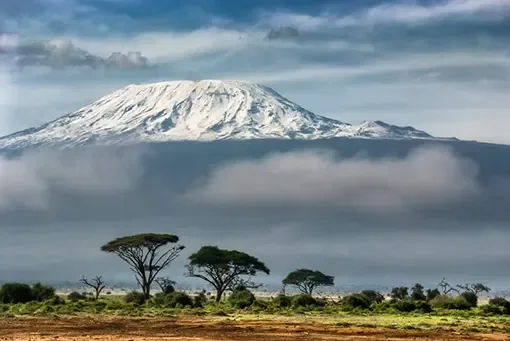
Kilimanjaro specialists
Climb Mount Kilimanjaro
5,895 metres, no ropes and no prior mountaineering: the world's highest free-standing mountain is a walk, and one of the hardest you will ever do.
Arusha-based Tanzanian operator
- 5,895 mto Uhuru Peak
- 6routes we run
- 6 to 9 dayson the mountain
- US$1,710from, per person
- A trek, not a technical climbNo ropes, no ice axe and no mountaineering experience needed. The hard part is the altitude, and how fast you gain it.
- Days matter more than anythingTime to acclimatise decides your summit chances. Seven days is our minimum, eight suits most climbers, and we do not sell five-day climbs.
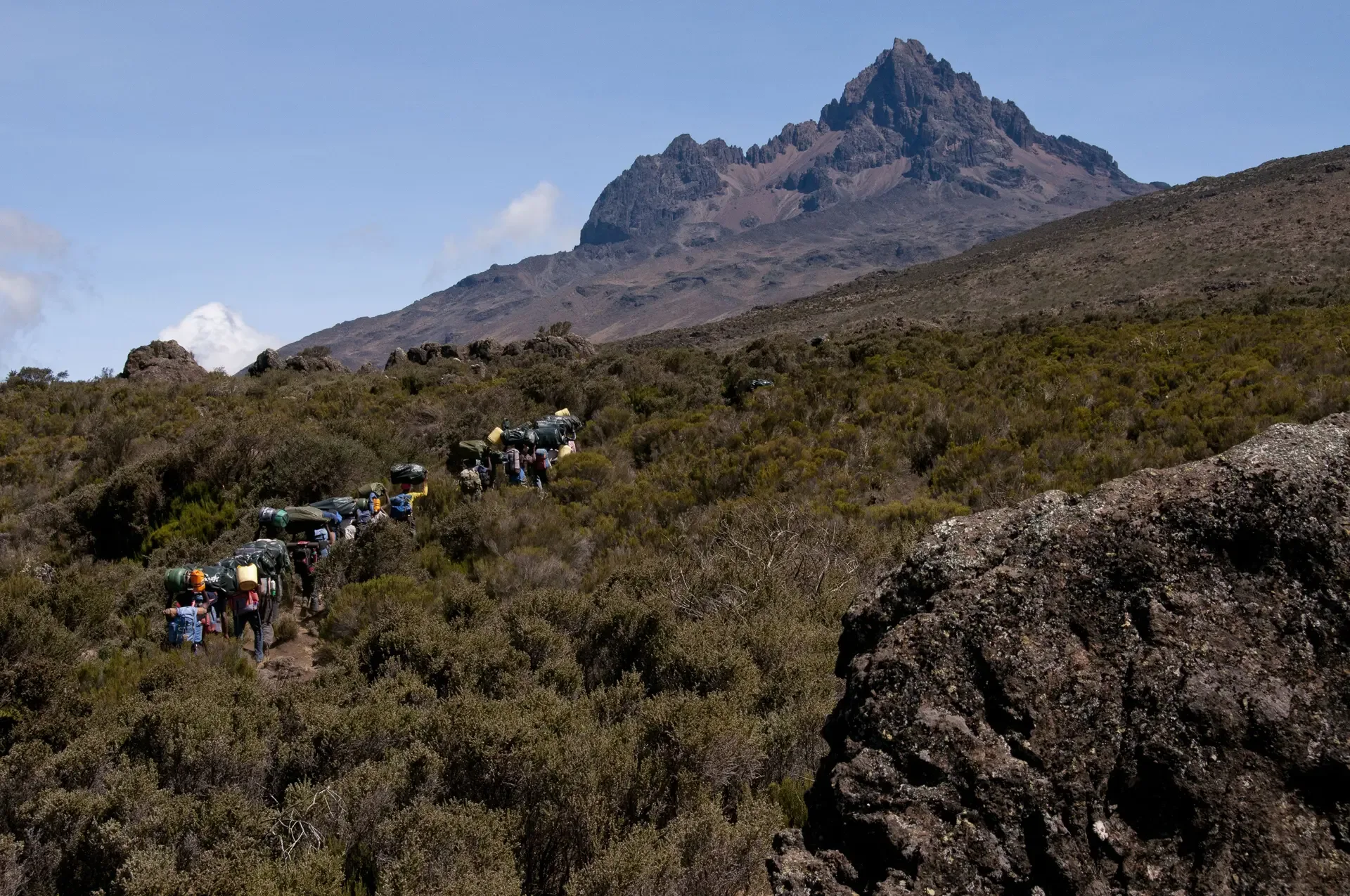
- You carry a daypackPorters carry the group kit and your main bag. You walk four to seven hours a day and summit overnight, reaching the crater rim at sunrise.
Route finder
Which route is yours?
Every route reaches the same summit. Answer three quick questions and we will point you to the one that suits your time, your legs and where you would like to sleep.
- 1
- 2
- 3
The mountain map
Every route, camp by camp
Each line follows one of our expeditions from the gate to Uhuru Peak and back down. Solid is the way up, dotted is the way down.
Curated Journeys
Kilimanjaro climbs
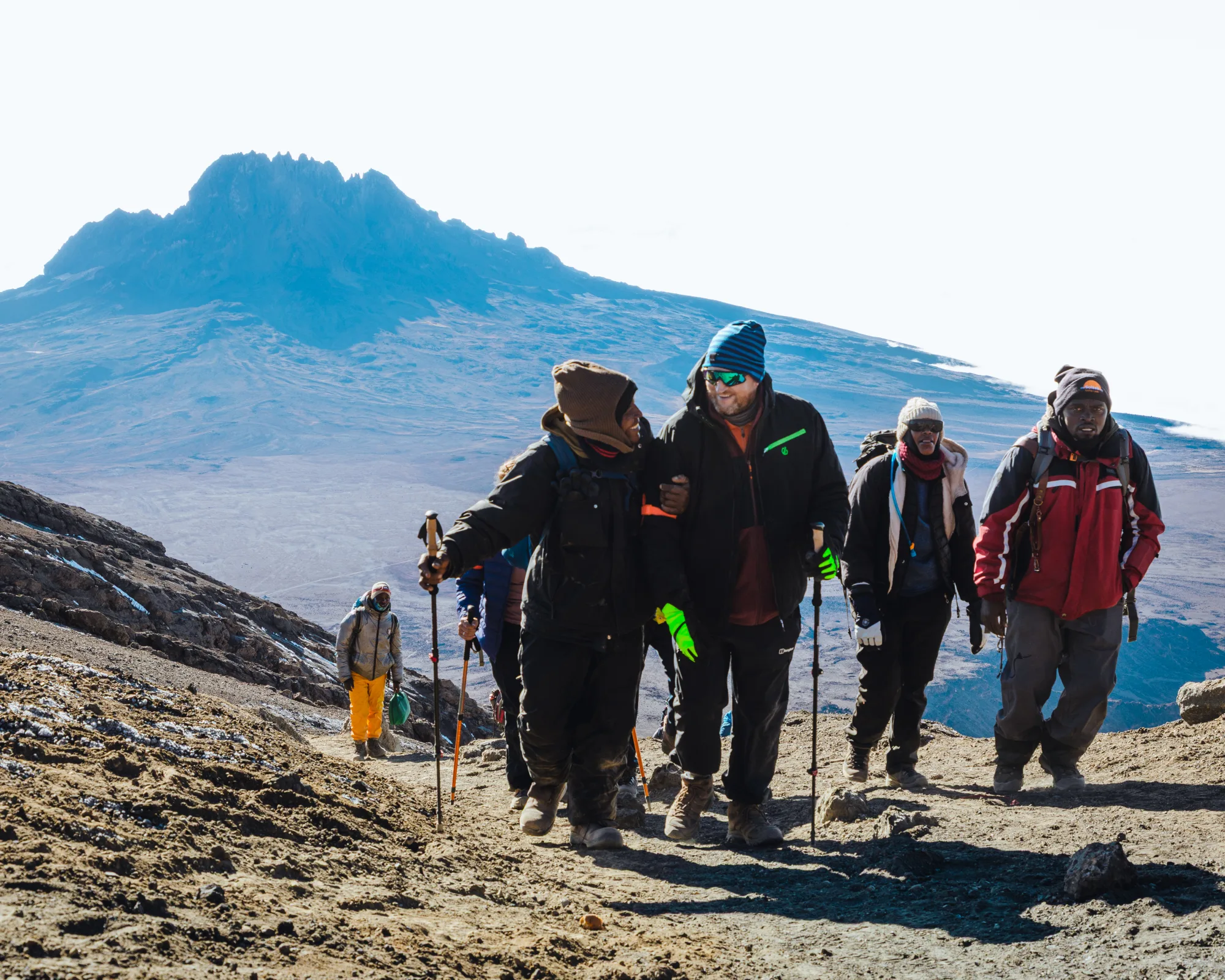
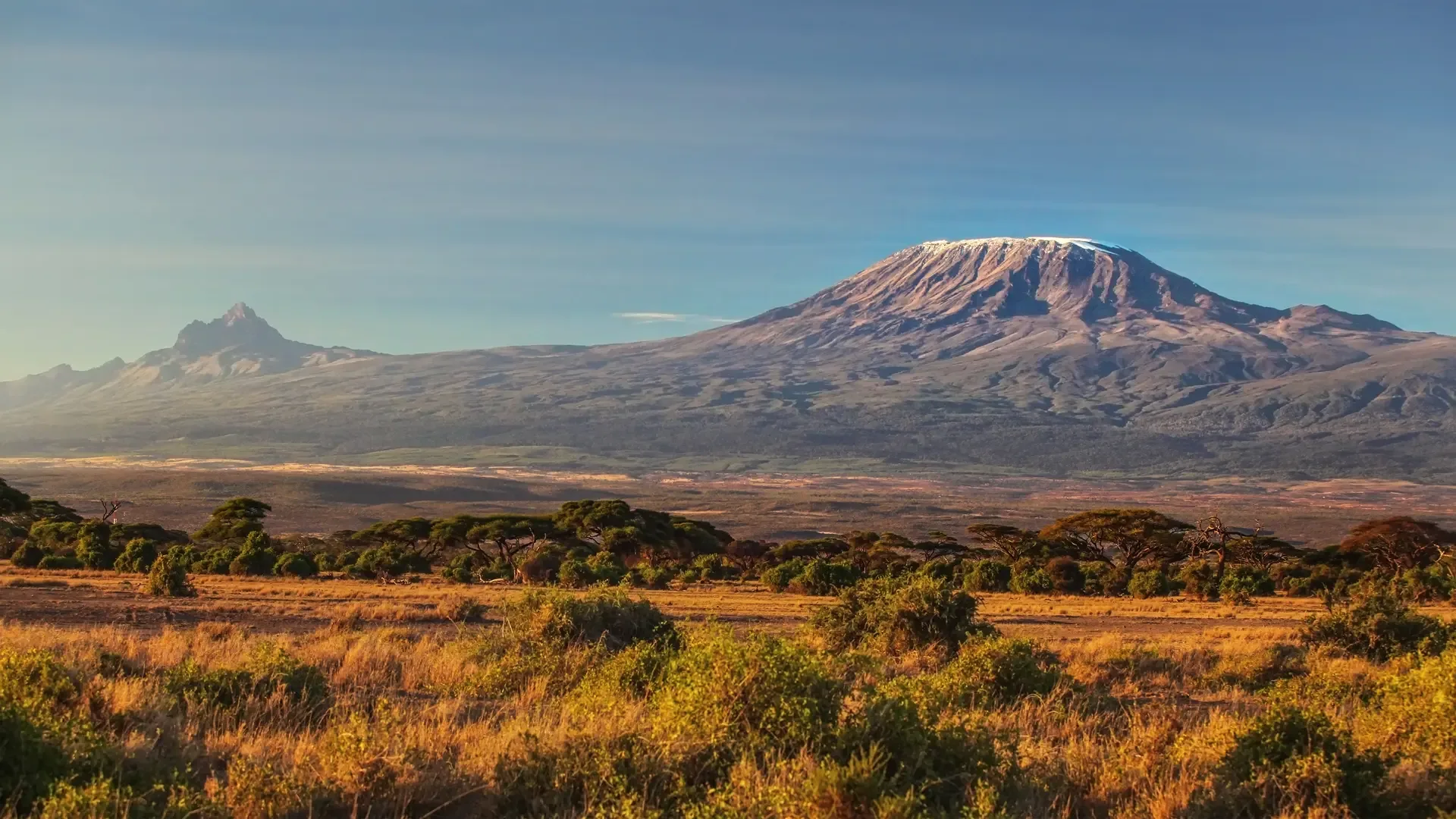
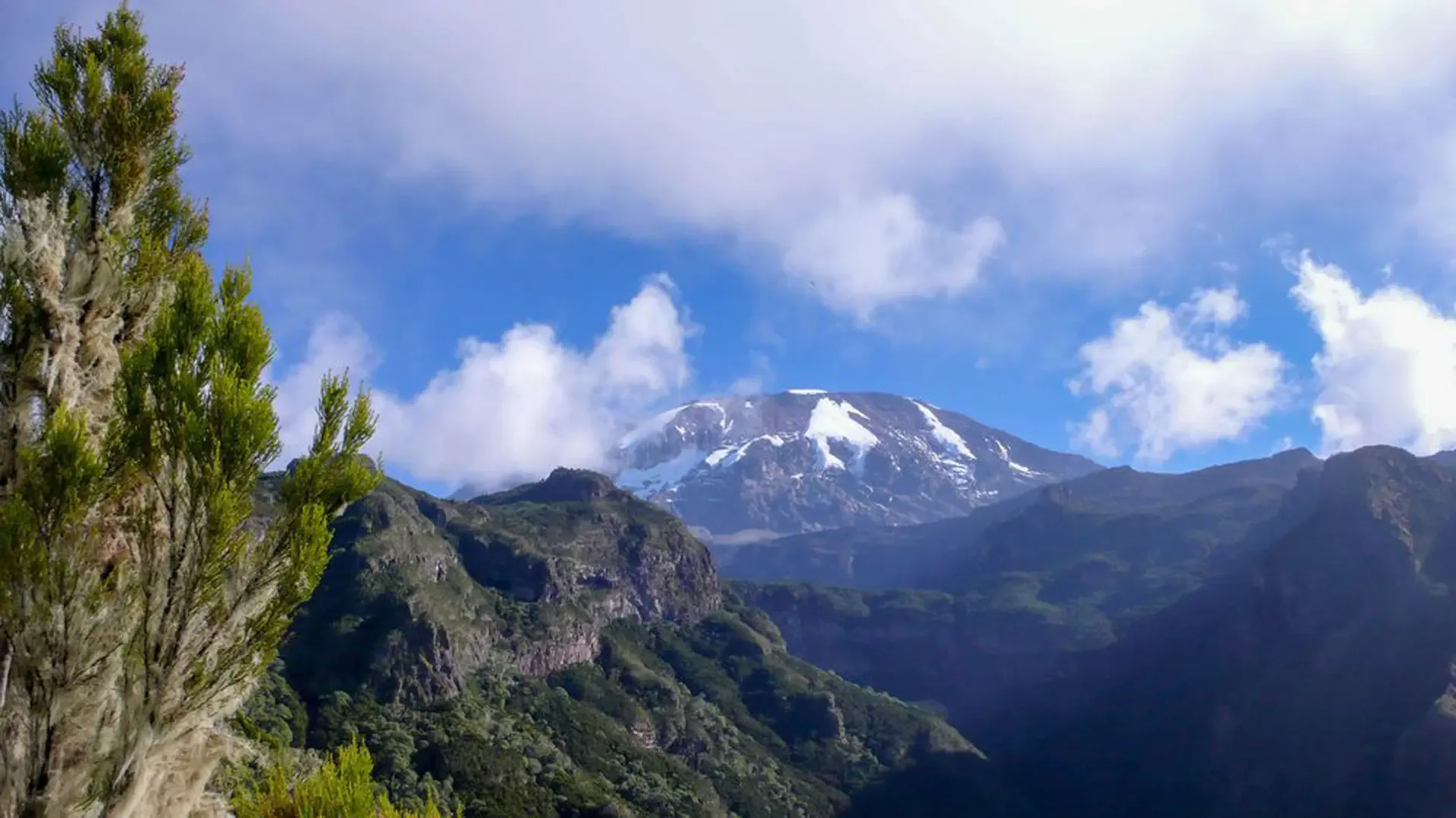
Private departures on any date, plus scheduled group-joining climbs. Every price includes park fees, camping equipment, meals and our own guides and crew.
The summit journey
Five climates in one week
Climbing Kilimanjaro is like walking from the equator to the Arctic. Here is what changes on the way up.
You are here
Farms and foothills
Stage 1 · 800 to 1,800 m
Farms and foothills
Coffee and banana farms of the Chagga villages on the lower slopes. Most climbs begin with a drive up through them to the park gate.
- Coffee farms
- Village life
- Park gate
Stage 2 · 1,800 to 2,800 m
Rainforest
Warm, humid and very green: tall trees, ferns and hanging moss, with colobus monkeys in the canopy. Paths can be muddy after rain.
- Colobus monkeys
- Giant ferns
- Muddy after rain
Stage 3 · 2,800 to 4,000 m
Heath and moorland
The forest gives way to giant heather, then the strange giant groundsels and lobelias. Nights turn cold and the views open right up.
- Giant groundsels
- Cold nights
- Big views
Stage 4 · 4,000 to 5,000 m
Alpine desert
Bare volcanic rock and scree, strong sun by day and frost at night. Very little grows up here, and this is where the altitude starts to talk.
- Scree and rock
- Frosty nights
- Thin air
Stage 5 · 5,000 to 5,895 m
Arctic summit
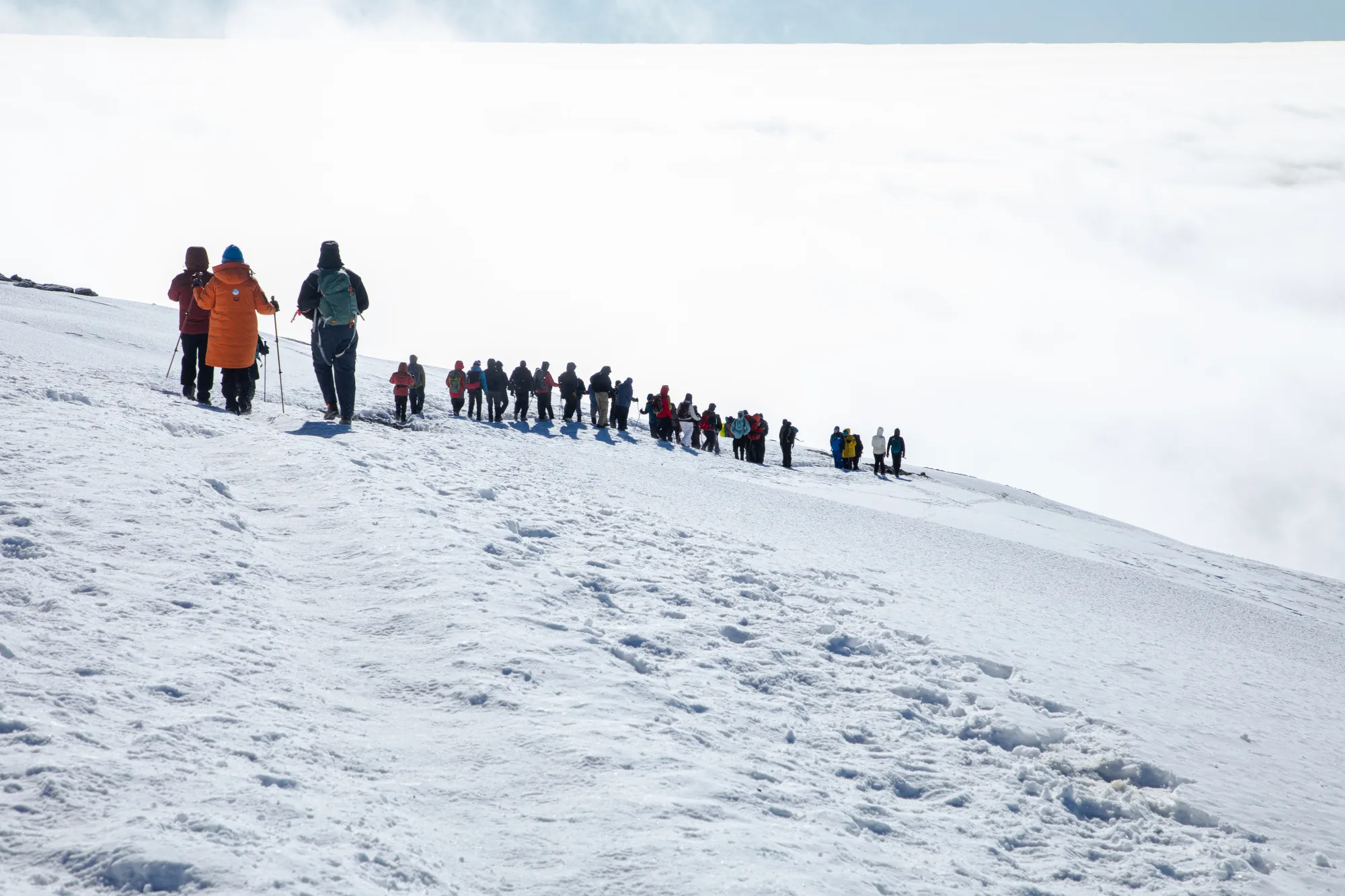
Glaciers, ice cliffs and the crater rim. You leave camp around midnight and walk through the night to reach the rim at sunrise, then on to Uhuru Peak.
- Glaciers
- Crater rim
- Sunrise summit
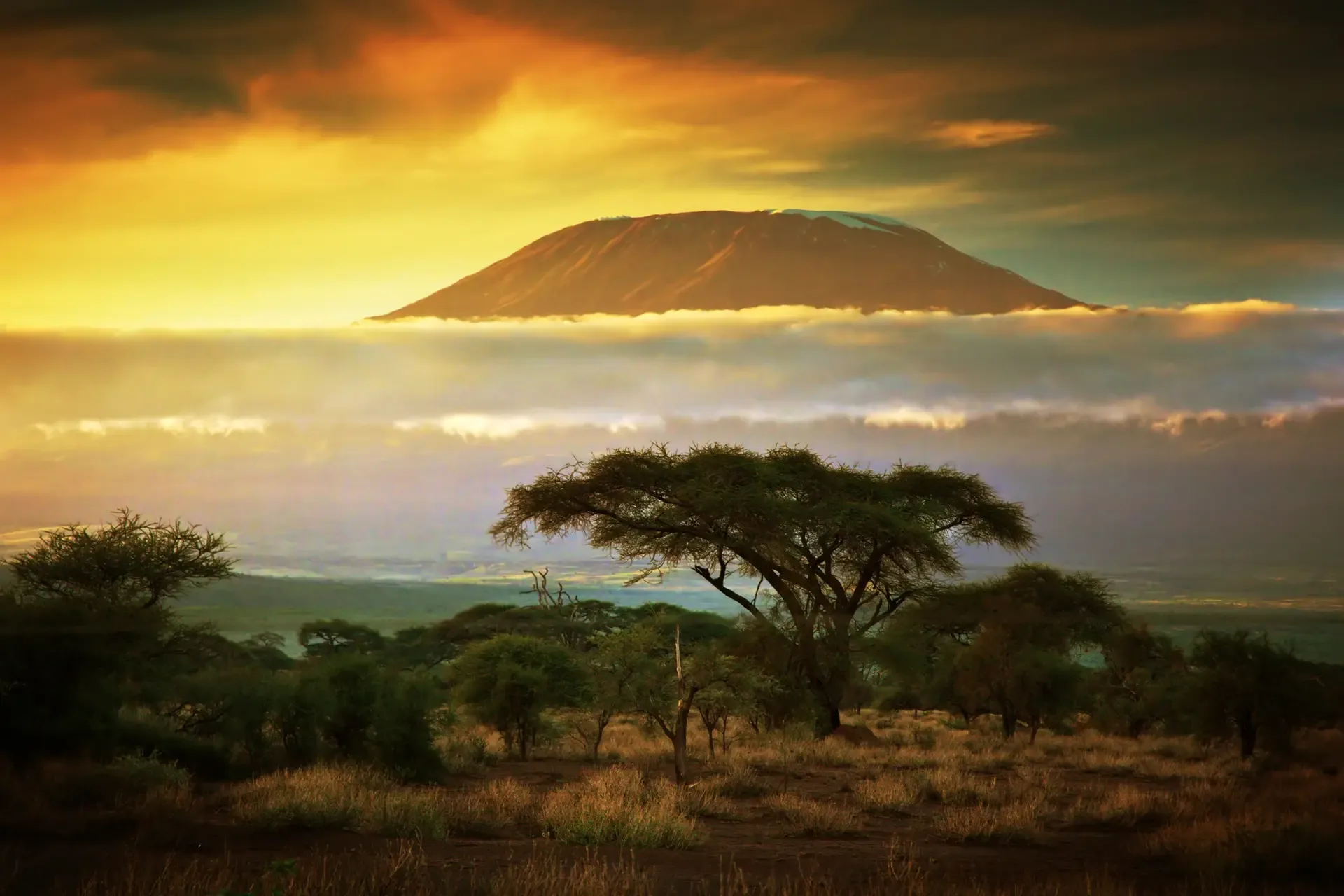
Most people who turn back are not unfit. They went up too fast.
Every itinerary we run is built around the extra night that makes the difference.
See group climbsWhen to climb
Pick your month
Kilimanjaro can be climbed year-round, but two windows are clearly better than the rest, and two are clearly worse.
Short rains
November
Short afternoon showers rather than all-day rain, clearing towards December. Quiet trails and lower rates, with a real chance of good weather.
- Afternoon showers
- Quiet trails
- Better value
- Improving late in the month
Group dates in November
- 14Nov7 Days Marangu RouteMarangu Route14 Nov to 20 Nov 2026US$1,71012 places left
Good to know
The climber's little guide
The practical things people ask us before they book, in small bites.
Training
You do not need to be an athlete. You do need to walk for six hours, day after day, at altitude, while tired, and only walking builds that. Start about three months out.
- Months one and twoThree or four cardio sessions a week: hiking, running, cycling or stair machines. Add one long walk each weekend and build distance rather than speed.
- Month threeLong walks of five to seven hours over hilly ground, with the daypack and boots you will actually use. Train downhill on purpose: descending is where knees fail on Kilimanjaro.
- Strength, throughoutCore and legs twice a week. Squats, lunges and step-ups carry straight over to the mountain.
- Before you flySee your doctor, especially with any heart, lung or blood-pressure history. Ask about acetazolamide (Diamox), and try it at home rather than on the mountain.
Altitude
Mild altitude sickness above 2,500 m is normal: headache, nausea, poor sleep. HAPE and HACE, fluid on the lungs or brain, are not. They are life-threatening and need immediate descent.
- Health checks twice a dayOur guides carry pulse oximeters and record every climber's oxygen saturation and pulse, morning and evening.
- Oxygen with every crewEvery crew carries supplementary oxygen and a first aid kit, and our guides have the authority to turn any climber around.
- Insurance is requiredTravel insurance covering trekking to 6,000 m and emergency evacuation is mandatory on our climbs, not optional.
- Pole poleGo slowly, drink three to four litres a day, eat even when you do not want to, and tell your guide honestly how you feel.
Life on the mountain
Every route except Marangu is camping, and the crew carries and sets it all up. Marangu uses shared dormitory huts with bunks and mattresses.
- Your campTents, sleeping mats, a mess tent with chairs and tables, and a private toilet tent. Bring a sleeping bag rated to about -10°C, or hire one from us.
- FoodA hot breakfast, a packed or hot lunch and a three-course dinner with soup. Plain, warm and frequent, because appetite fades at altitude. Vegetarian, vegan, halal and allergy needs are catered for with notice.
- WashingThere are no showers. Warm washing water comes to your tent morning and evening, and each camp has basic toilets as well as our own.
- Power and signalNo power and no mobile signal on much of the mountain. Bring a power bank and keep it warm in your sleeping bag overnight.
Costs
Park fees alone run to roughly US$1,000 for a week-long climb before a single wage or meal is paid. Expect from around US$2,000 per person, depending on route, season and group size.
- Why cheap climbs worry usOperators priced well below that floor recover it somewhere, usually from porter wages, load limits, food quality or safety equipment.
- Our crewWe are a KPAP-principled operation. Our porters are our own staff, paid, fed and equipped properly, with enforced load limits.
- TippingCustomary tips are around US$20 a day for the lead guide and US$10 a day for each porter, pooled and shared at the end. We give you a clear breakdown before you go.
Questions
Kilimanjaro questions
Fit enough to walk five to seven hours a day for a week over uneven ground. It is endurance, not athleticism. The youngest recorded summiteer was seven and the oldest was in his late eighties, and climbers with a range of disabilities have reached Uhuru Peak. Three months of consistent walking preparation matters more than any single fitness benchmark.
For most first-time climbers, eight-day Lemosho or eight-day Machame. Lemosho is quieter and more scenic with slightly better acclimatisation; Machame is a little cheaper and more sociable. Choose the ten-day Northern Circuit if you want the highest odds of summiting, and Rongai if you are climbing in a wetter month.
Kilimanjaro National Park sets a minimum of ten years, with exemptions granted case by case. In practice we assess younger climbers individually and are honest when we think a child is not ready, an unsuccessful, unhappy climb helps nobody.
Bring your own boots (broken in, never new) plus base layers, an insulated jacket and a waterproof shell. Sleeping bags, duffel bags, trekking poles and down jackets can all be hired from us in Moshi or Arusha, which saves buying kit you will use once. We send a full packing list on booking.
Your main bag is carried by a porter and is limited to 15 kg by park regulation and by our own load policy. This is a welfare limit, not an inconvenience. You carry a daypack of around 20-30 litres with water, layers, camera and snacks. Anything else stays at your hotel.
Almost everyone does, and we recommend it, coming off the mountain into a Serengeti or Ngorongoro safari, or straight onto a Zanzibar beach, is the right way to end the trip. Both connect easily from Kilimanjaro International Airport. Allow at least one rest day after summit before flying.
You descend with an assistant guide while the rest of the group continues. This is exactly why our crews carry more guides than the minimum. Descent is the treatment for altitude illness and it works fast. There is no cost penalty and no argument; your guide's decision on this is final.
Ready to stand on the roof of Africa?
Tell us your dates and how much time you have, and we will recommend the route that gives you the best chance of the summit, not the one with the best margin.
Plan my climb