Plan ahead for the Great Migration — one of nature’s most incredible spectacles. Book your 2026 safari now and enjoy 10% off on selected tours when you reserve before the end of 2025.
What is the Wildebeest Great Migration?
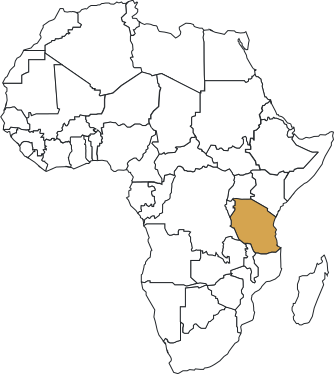
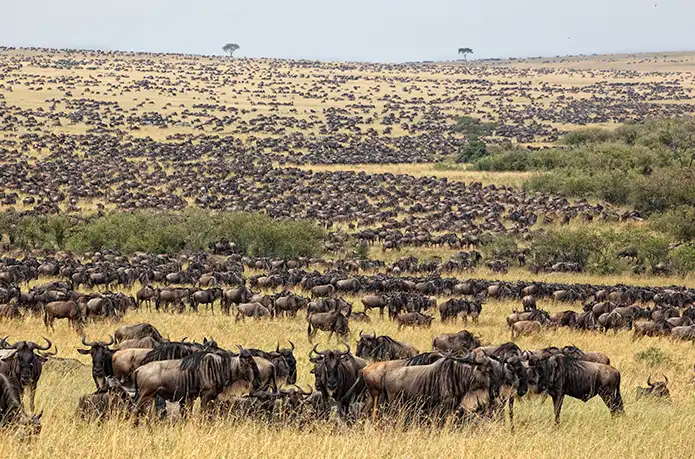
It’s an annual migration of more than two million wildebeest and twenty thousand other game animals from Serengeti National Park in Tanzania towards the Masai Mara National Reserve in Kenya. The wildebeests embark on the great migration voyage, searching for better grazing pastures and sufficient drinking water.
The migration patterns depend on the different seasons experienced throughout the year. The historical event begins in the north and terminates in the south—an incredible stretch of more than 3000 Kilometers. The wildebeest migration is a spectacular natural phenomenon and a must-see safari for adventure enthusiasts.
What's So Special About It?
The great wildebeest migration is distinct because, unlike many people’s belief, the migration happens all year round in a clockwise route, with each time of the year offering breathtaking wildlife experiences.
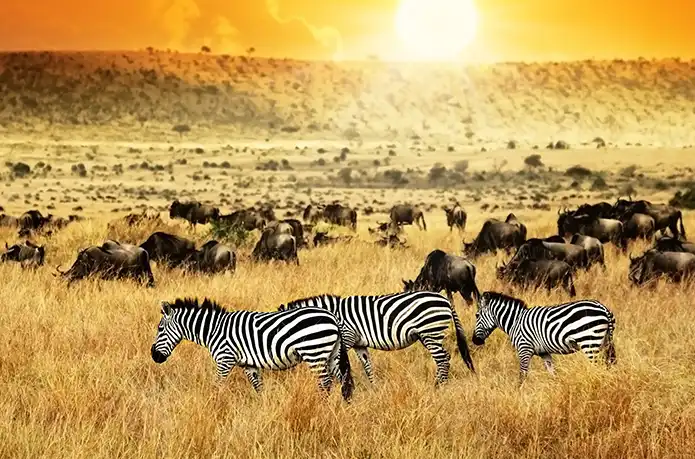
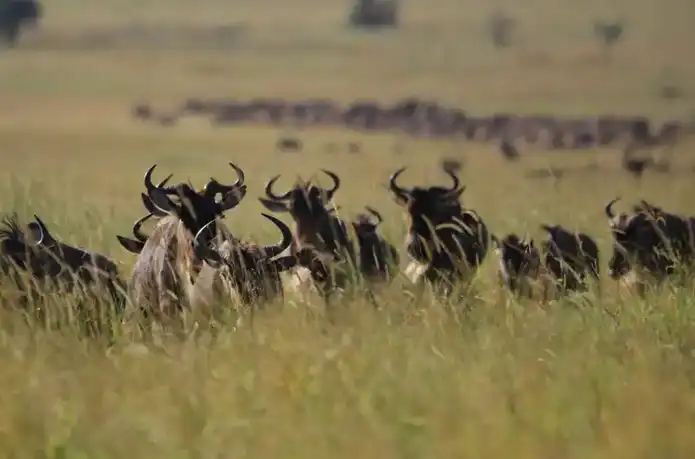
During the migration, wildebeest and zebra cohabit together because they feed on the same species of vegetation. At the same time, approximately 3000 lions from the Serengeti ecosystem follow the migratory herds as they make their way around the country.
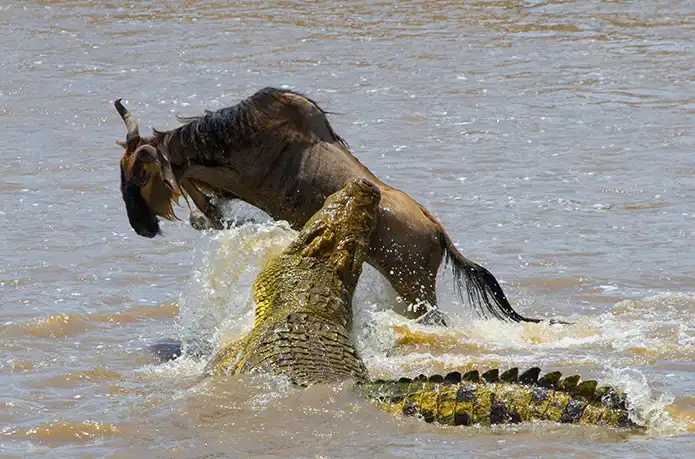
The most scenic view of the great migration is probably watching the Mara River crossing, characterized by strong currents, giant crocodiles, and hippos waiting for the animals to jump into the brown waters and prey on them. It’s usually a battle for survival, and only the strong ones see the promised land in the Masai Mara National Reserve.
Great Migration, Tanzania Tours
Experience thrilling safaris, captivating cultural encounters, and breathtaking landscapes on our meticulously crafted tours.
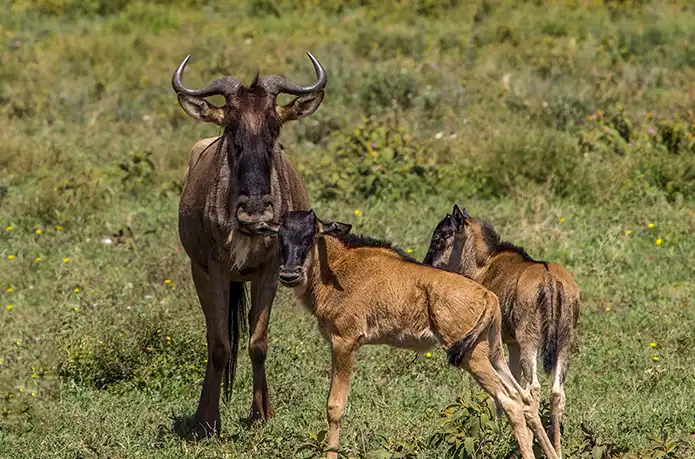
You can expect to see wildebeest migration movement in different phases depending on the times of the year. They calve on the southern part of the Serengeti near the Ngorongoro Conservation Area. You will enjoy the mesmerizing views of wildebeest calves taking baby steps and curbs learning how to kill their prey during the calving season.
You’ll also experience incredible predatory encounters, particularly by lions, cheetahs, and hyenas, before witnessing the crocodile-filled Mara River’s adrenaline-moving crossing.
Lastly, you’ll enjoy a great adventure as you witness the self-sustaining ecosystem of the Serengeti-Mara region. You can expect to see impalas, zebras, gazelles, elands, and antelopes participating in the clockwise movement.
What is the Difference Between Calving Safari Versus River Crossing Migration?
Calving Safari
Calving Safari gives you a chance to enjoy the fascinating predator action fueled by vulnerable prey. This mostly happens between January and March if the rains follow the typical pattern. The wildebeests are usually clustered in the lush green plains in the Ndutu region of southern Serengeti. At least 8000 calves are born during each season.
Best Time To Visit
If you’re interested in witnessing the spectacle of calving during a safari, then the best time to visit will depend on the location. Some popular destinations for calving safaris include East Africa’s Serengeti National Park and the Arctic region of Canada.
River Crossing Migration
On the other hand, the River Crossing Migration provides spectacular views of wildebeests crossing the Grumeti River and the Mara River during July and August. The Mara River crossing is the most dramatic and chaotic. You’ll enjoy every second of the class action as the wildebeests pile across the banks of the river before jumping in a flurry of panic. Crocodiles and hippos await in the river as lions and leopards prey on the unsuspecting victims along the river banks.
Best Time To Visit
If you’re interested in witnessing the spectacle of calving during a safari, then the best time to visit will depend on the location. Some popular destinations for calving safaris include East Africa’s Serengeti National Park and the Arctic region of Canada.
What happens month by month?
Each month of the year marks a different occurrence.
January
The migration cycle is in the short grasslands in the plains south of Serengeti in Tanzania. The calving season begins thanks to the excellent climate. Predators are numerous due to the large number of weak calves. It’s always a thrilling scene as Wildebeests protect their calves.
The calving season continues, and you will witness mature wildebeests forming barricades around the calves to protect them from the lethal predators. Thanks to the intense action, drama, and wonders, this season is one you can’t afford to miss.
The last batch of calves is born this month. The animals feed on leftover grasses. They also gather as the long journey heading northwards is about to start.
As April kicks in, the migration begins as the animals seek fresh water and good pasture in the north. They are scattered between the central and western areas of the Serengeti.
The herds arrive on the southern side of the Grumeti River in June. They pile up in large groups to cross. The river isn’t continuous, and thus, the crossing is less bloody.
It is the month for the “World Cup of Wildlife” – Mara River crossing. The dramatic event happens towards the end of the month, and only the strong and lucky animals survive the crocodile and hippo-infested waters.
The crossing proceeds as the animals enter the neighboring Masai Mara National Reserve in Kenya. Thousands of animals die while the survivors celebrate as they feast on the fresh grasses in Masai Mara.
During this last, the herds cluster in south Serengeti and then disperse into the plains to feed on the fresh pastures as the calving season starts. The cycle begins again
Get answers to common questions about traveling to see the Great Migration for a hassle-free experience.
Which months are the best time to visit?
The best time to visit depends on what you want to experience. From March to June, you’ll find fewer crowds, lush landscapes, and increased predator activity, perfect for a more intimate safari. July to October is ideal if you want to catch the dramatic river crossings as herds of wildebeest and zebra navigate the crocodile-filled waters in Northern Serengeti.
Am I guaranteed to see the great migration?
Since the Great Migration follows natural instincts and unpredictable paths, sightings cannot be guaranteed. However, by extending your stay and choosing an experienced guide, you maximize your chances of witnessing this incredible event. Our recommended accommodations also move with the herds, ensuring the best possible proximity.
What if I can't come during the best months?
Not to worry! Tanzania’s wildlife is abundant year-round. Even outside of peak migration times, you’ll still experience remarkable predator-prey interactions and witness a rich variety of animals in their natural habitat.
How does a safari work?
Your safari will include early morning and late afternoon game drives to track the wildlife, with a flexible itinerary tailored to the animals’ unpredictable movements. Each day, your guide will adjust the plan based on herd locations and the latest wildlife sightings, giving you the best opportunities for viewing.
How many days should I stay?
We recommend a stay of 5 to 7 days to maximize your chance of witnessing key migration events, such as river crossings or large predator gatherings. A longer stay also allows for a deeper immersion into the landscapes and wildlife of the Serengeti.
Is accommodation included in the booking?
Yes, our packages include all essential costs, covering accommodation, meals, park fees, and transportation. You can enjoy a seamless experience with no additional costs for essentials during your stay.
Where should I stay?
To keep you close to the herds, we’ll recommend the best locations within Tanzania based on the migration’s current movements. Whether in Northern, Central, or Southern Serengeti, our accommodations are strategically placed to reduce travel times, allowing you more time in the heart of the action.
What kind of accommodation to expect?
Your accommodation will be selected to match the migration path, ensuring an immersive safari experience. Options include midrange to luxury lodges, luxury tented camps, and mobile camps, each offering a unique experience. We balance your needs and budget with the best locations to witness the migration up close.
How can I lower the cost of my safari?
For a more budget-friendly experience, consider a shorter stay, travel in the off-season, or opt for midrange accommodations. We’re happy to help you tailor a package that maintains quality while staying within budget.
Is it a good idea to bring kids or elders?
Yes, our safaris are family-friendly and can be customized for all ages. We select accommodations that offer comfort and safety, making it an incredible experience for children and older guests alike.
How is the Great Migration safari different from a regular safari?
A Great Migration safari is centered on tracking the herds as they move through the Serengeti, offering a more dynamic and unpredictable experience compared to regular safaris, which follow set itineraries. This allows for closer encounters with the migration’s unfolding drama.
Can I combine a great migration tour with something else?
Absolutely! You can enhance your safari by adding nearby experiences, such as beach time in Zanzibar, cultural visits, or even a Mount Kilimanjaro trek, for a well-rounded adventure.
What kind of food is served?
You’ll enjoy high-quality, buffet-style meals with options to suit various dietary preferences, including gluten-free, vegetarian, and vegan dishes. We ensure you have a range of delicious choices to keep you energized throughout your safari.
Related Articles
Extend your African exploration with our related articles. Immerse yourself in captivating destinations and vibrant cultures for a fuller understanding.