Gosheni Destination Embark on a journey to witness the iconic tree-climbing lions of Lake Manyara National Park with our specialized tours. About Lake Manyara Lake Manyara National Park, named...


The Great Wildebeest Calving Migration Safari has been designed specifically to focus on following the Great Serengeti Wildebeest migration during calving from December to April. The areas to be covered are Lake Ndutu area, as well as the Southern and Central areas of Serengeti National Park where the majority of the wildebeest are usually found. A visit to the world famous Ngorongoro Crater is part of this safari as well.
The Southern Serengeti and Ndutu areas in Tanzania are the best locations for the months of January, February and March to witness thousands of wildebeest spread across the plains grazing on the rich short grass plains. Predator action is at its peak with great sightings of cheetah, lion, hyena and leopard and a very good chance to see adrenaline-packed kills.
7 days
Price for 2: $3,050 Per person sharing
Gosheni Destination Embark on a journey to witness the iconic tree-climbing lions of Lake Manyara National Park with our specialized tours. About Lake Manyara Lake Manyara National Park, named...
Gosheni Destination Tarangire stands out among its peers thanks to an abundance of two of nature’s giants: African elephants and the peculiar baobab tree. Large predators and typical plains...
Gosheni Destination Ngorongoro Crater Two million years ago a volcano thought to have been slightly taller than Mt Kilimanjaro erupted with such force that the mouth of the volcano...
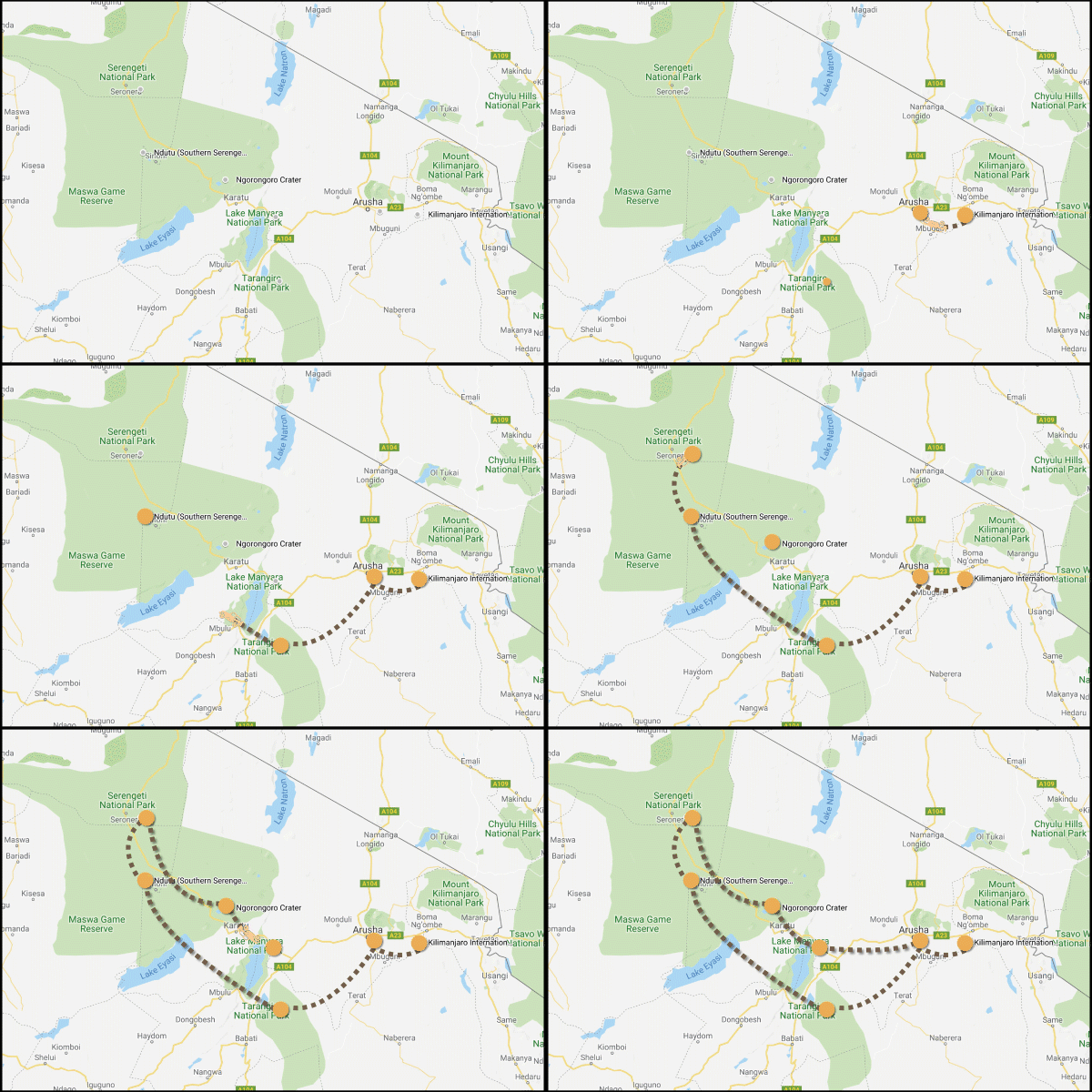
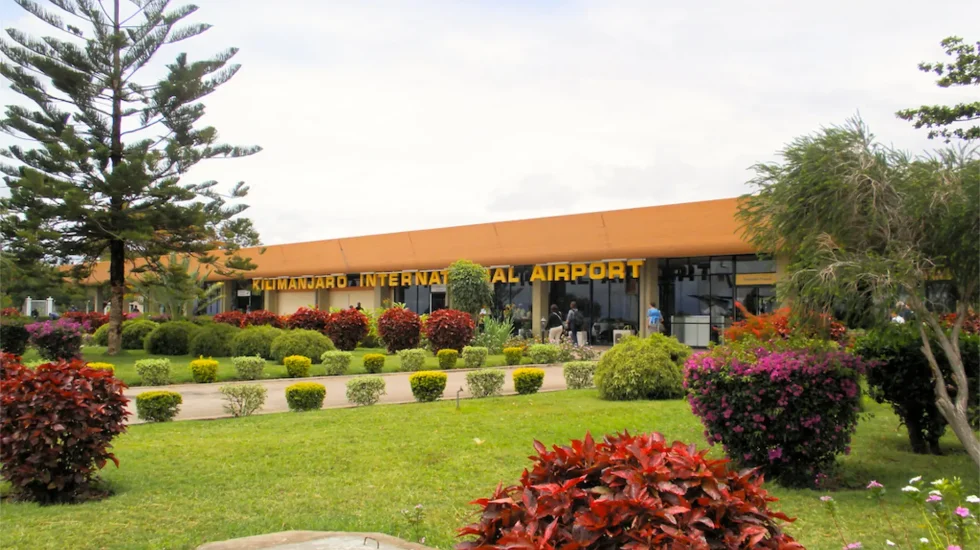
A staff member of Gosheni Safaris will pick you up from the Kilimanjaro International Airport (JRO). From here, you will be driven to a hotel in Arusha and brief you on your upcoming safari. Enjoy a restful night before beginning your adventure tomorrow!
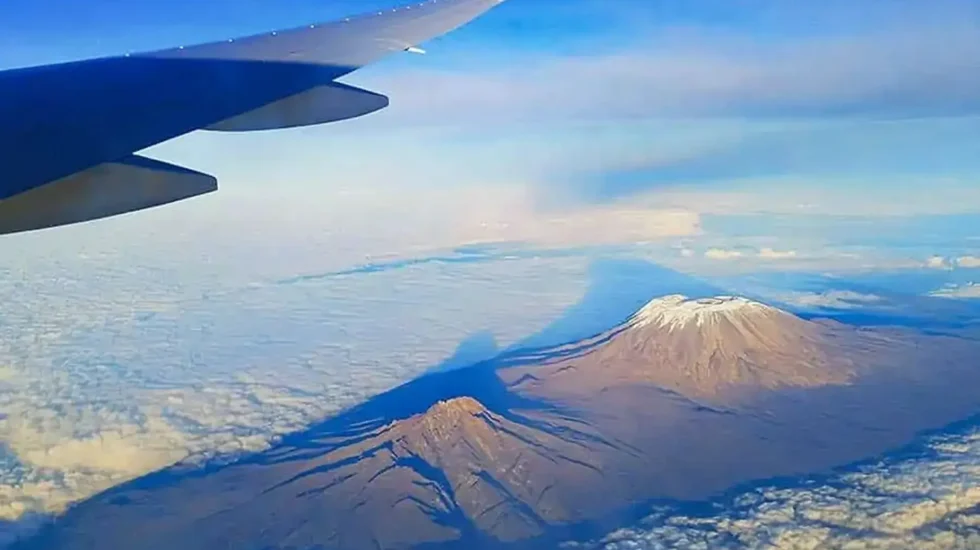
Arusha, also known as “A” Town by the locals, is situated at the foot of Mount Meru, Africa’s 5th highest mountain. The altitude gives the city a pleasant climate and lush green environment. Arusha is not a particularly attractive city in itself and is regarded by many visitors as little more than a necessary stopover before their safari starts in earnest. However, the natural charm of the Tanzanians and the buzz of a fast-growing city mean that Arusha has plenty to offer for those who are prepared to see beyond their air-conditioned safari trucks and satellite-TV equipped hotel rooms.

Meals: B
Four Points by Sheraton Hotel
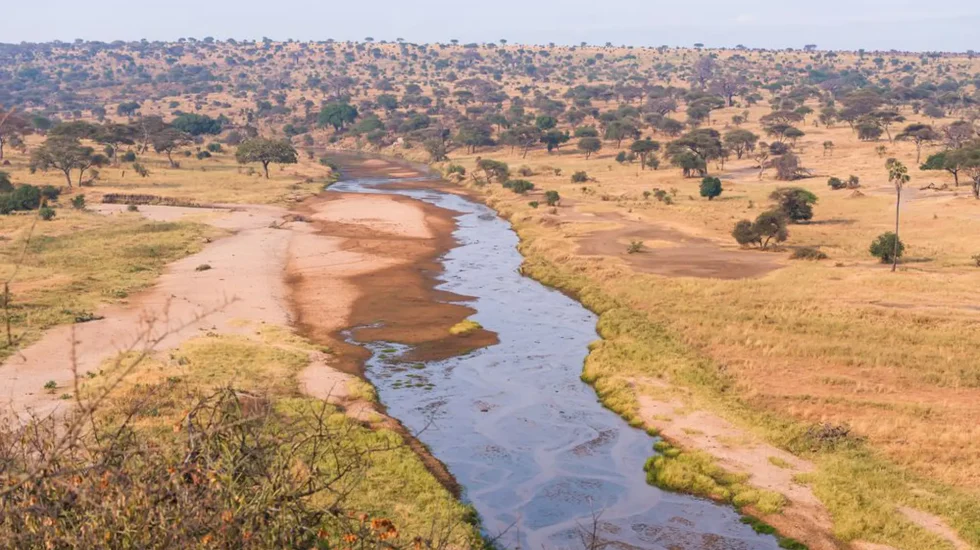
After breakfast, we’ll drive to Tarangire National Park. We’ll have some game viewing in the park to maximize your chances of more wildlife viewing. Before sunset, we’ll drive to a small town of Karatu for dinner and overnight.
Tarangire is the sixth largest national park in Tanzania after Ruaha, Serengeti, Mikumi, Katavi and Mkomazi. Activities will include a wildlife game drive where you can see pythons climb trees, as well as lions and leopards among others. For the bird lovers, keep an eye for the screeching flocks of colorful yellow-collared lovebirds, and the somewhat drabber rufous-tailed weaver and ashy starling. These are all endemic to Me dry savannah of north-central Tanzania.


Meals: B, L , D
The Castle at Ngorongoro
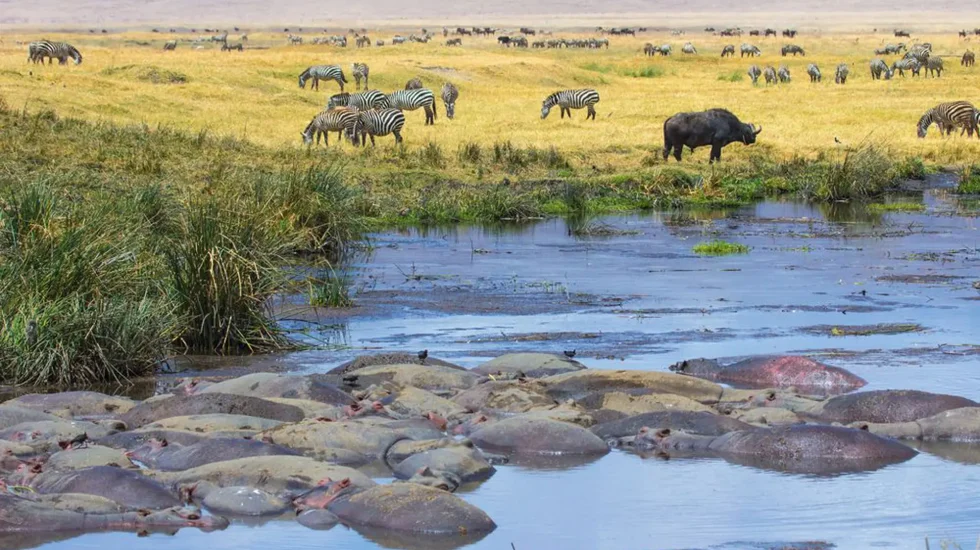
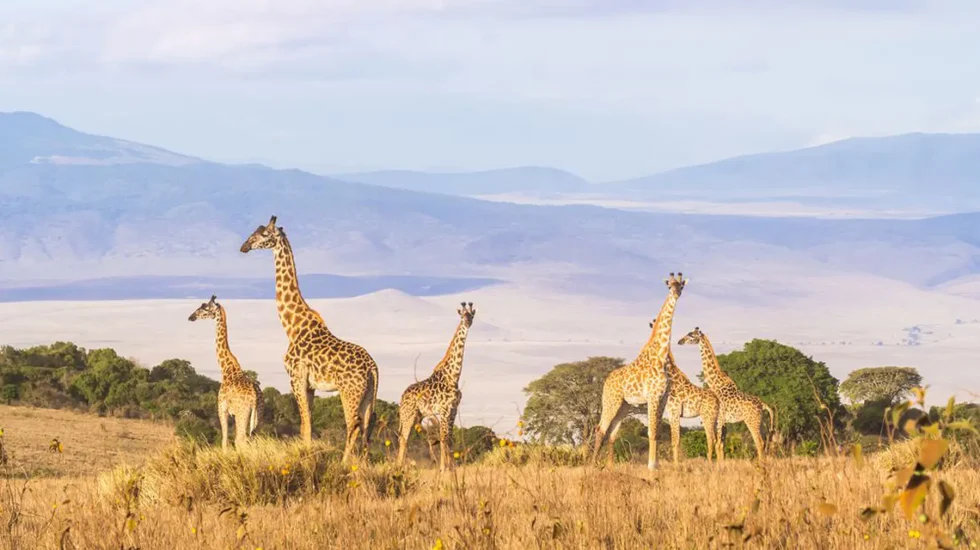
After breakfast, we will set off for Ndutu area situated in the Ngorongoro conservation area, which is part of the southern Serengeti ecosystem.
Lake Ndutu like most other rift lakes is alkaline, however, the water is still drinkable and consumed by a wide array of local wildlife The majority of the wildebeest migration can normally be found on the short-grass plains tram December to April. The area is usually heavily populated with elephant, birds and resident game.

Meals: B, L , D
Enkutoto Migration Camp
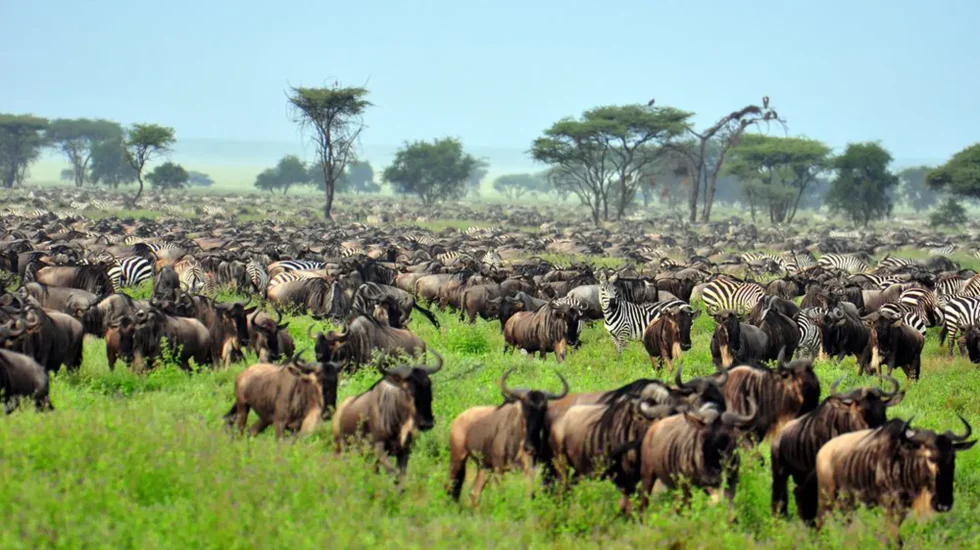
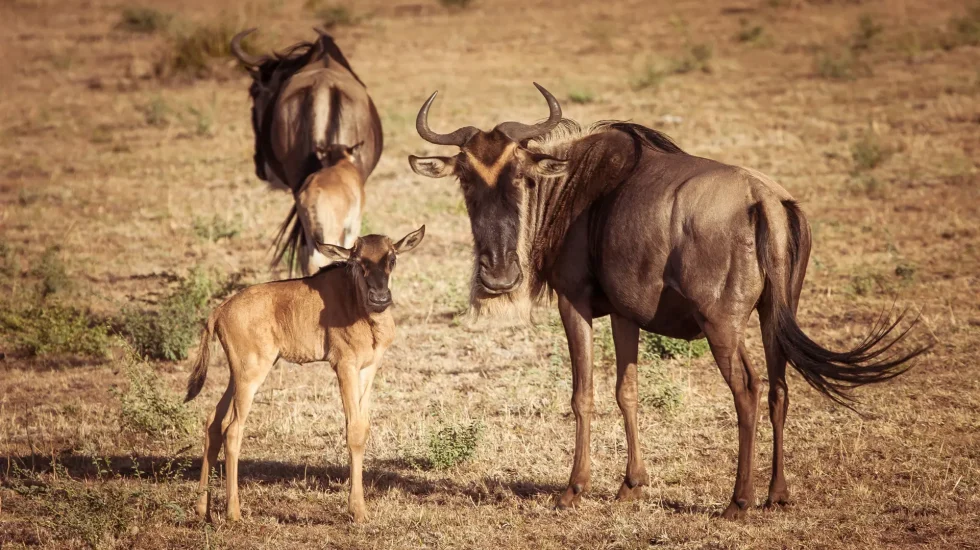
You will enjoy a game drive after breakfast in the Ndutu area exploring a great range of various habitats such as swamps, woodland, soda lakes and the world famous Serengeti short grass plains. You will witness herds of wildebeest and zebras especially during a short time-frame from around February and lasting for about 3 weeks where majority of the wildebeest calves. Later continue with game viewing while heading to Serengeti Central for dinner and overnight.
The sea of grass provides little cover and the young make an easy prey for a variety of predators. Wildebeest calves can run minutes after they were born and within 3 days, they are normally strong enough to keep up with the herd.

Meals: B, L, D
Enkirari Wilderness Camp
Enjoy a full day of game drive in the park.
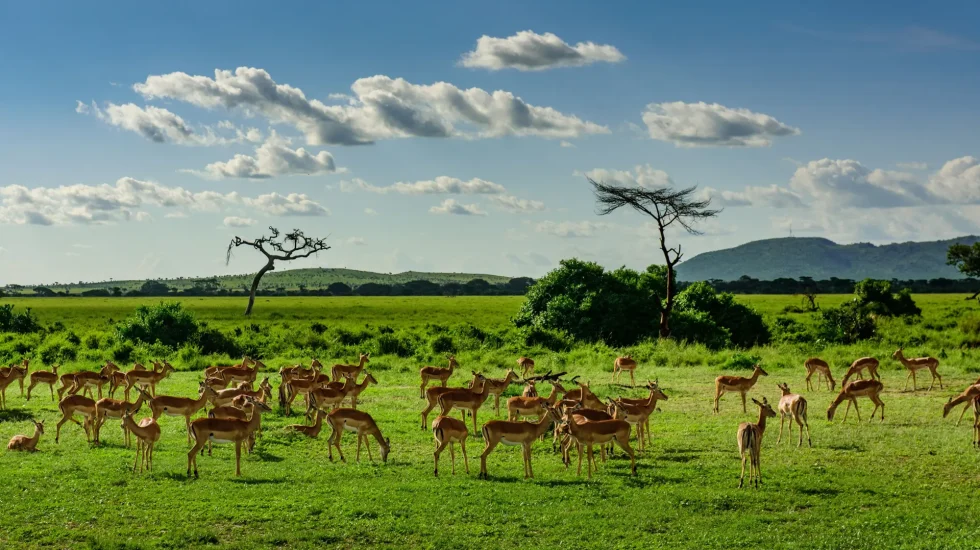
The Serengeti is Tanzania’s oldest and most popular National Park. A UNESCO world heritage site and recently proclaimed 7th wonder of the world, Serengeti is famed for its annual migration where some six million hooves pound the open plains. Serengeti offers an exotic game-viewing experience in the whole of Africa giving you an up-close look of the animals you’ve only seen in National Geographic: great herds of buffalo, smaller groups of elephant and giraffe, and thousands of eland, topi, kongoni, impala and Grant’s gazelle.


Meals: B, L, D
Enkirari Wilderness Camp
We’ll depart after breakfast for Ngorongoro Crater viewing. By sunset we go straight to your accommodation.
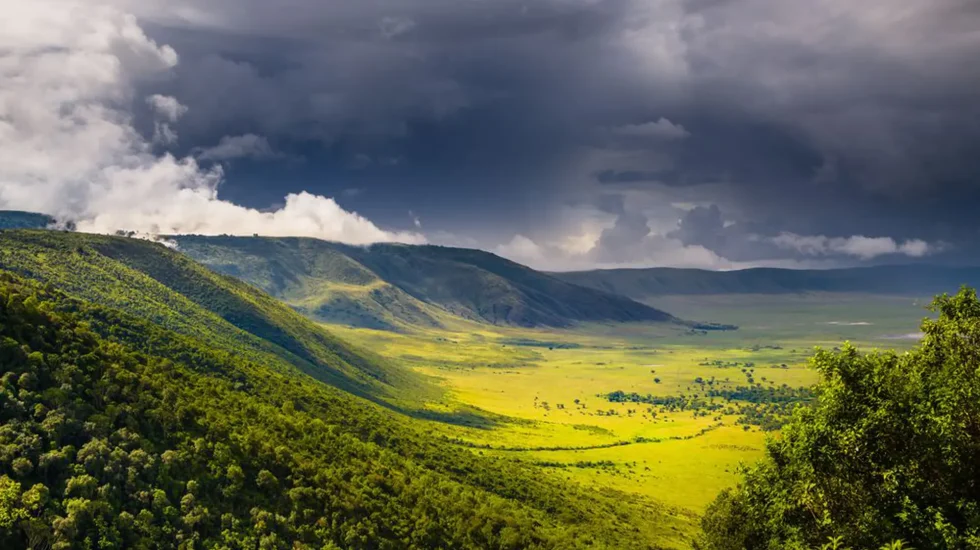
Ngorongoro is an extensive highland area along the eastern arm of the Great Rift Valley, with the world-renowned Ngorongoro Crater as its focal point. It is not a national park in the strict sense of the word but was rather established to conserve wildlife and other natural resources. It exists to safeguard the interests of indigenous people as well as promote tourism.


Meals: B, L, D
Karatu Acacia Farm Lodge
We’ll leave after breakfast and go straight to Lake Manyara National Park. Later in the afternoon, we’ll drive back to Arusha.
Lake Manyara National Park, whose lake Ernest Hemingway claimed was ‘the loveliest I had seen in Africa’. The park offers a compact game-viewing circuit and is one of the most diverse reserves in the country. The lake itself covers two-thirds of the park and the Great Rift Valley provides a stunning backdrop. Over 400 species of birds can be found in the Manyara, including thousands of pink-hued flamingos on their perpetual migration, as well as other large water birds such as pelicans, cormorants, and storks.


Meals: B,L,D
No Accommodation (End of Tour)
The inclusions and exclusions vary by tour. Each tour has its specific set of inclusions and exclusions. Please refer to the individual tour page to see what is specifically included in that tour.
We accept various payment methods, including card payments. For more information on acceptable payment methods, please visit our payment information page.
Our cancellation terms are standard within the industry. For more information on our cancellation policy, please visit the designated page.
We strive to cater to all requirements, such as providing wheelchair-friendly accommodation or rooms on the first floor if stairs are a challenge. Please communicate with us in advance about your needs.
The requirements vary depending on the country and nationality. For the most accurate information, please visit the page specific to your destination and consult the corresponding embassy page for the latest information.
Most safari parks have bumpy but manageable roads, with some roads being paved. Generally, guests do not view this as a problem.
Yes, if you have a special preference, let us know, and we will offer alternatives from our vast network of company-owned and partner accommodations. Booking with us allows you to enjoy discounted rates as we have special agreements with our partners.
Most standard camps and lodges are equipped with generators, so electricity is generally available 24 hours. However, some interruptions may occur but are typically not a significant concern for guests.
es, though signal strength may vary in different areas.
We cater to all diets, including vegan, vegetarian, and gluten-free options, among others. Please inform us in advance about your dietary preferences.
A safari offers an enriching experience for children, allowing them to observe animals in their natural habitat. Some camps and lodges offer amenities for children, such as playrooms and pools, though these are not universally available. We suggest bringing activities that your children enjoy.
Tipping is not required but is recommended. The amount varies by country, but you should tip according to what you feel is appropriate.


