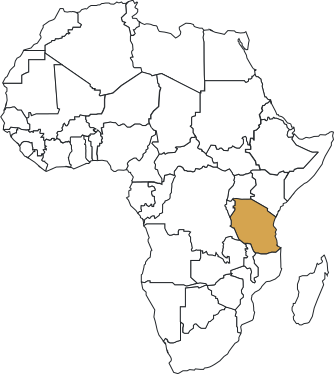
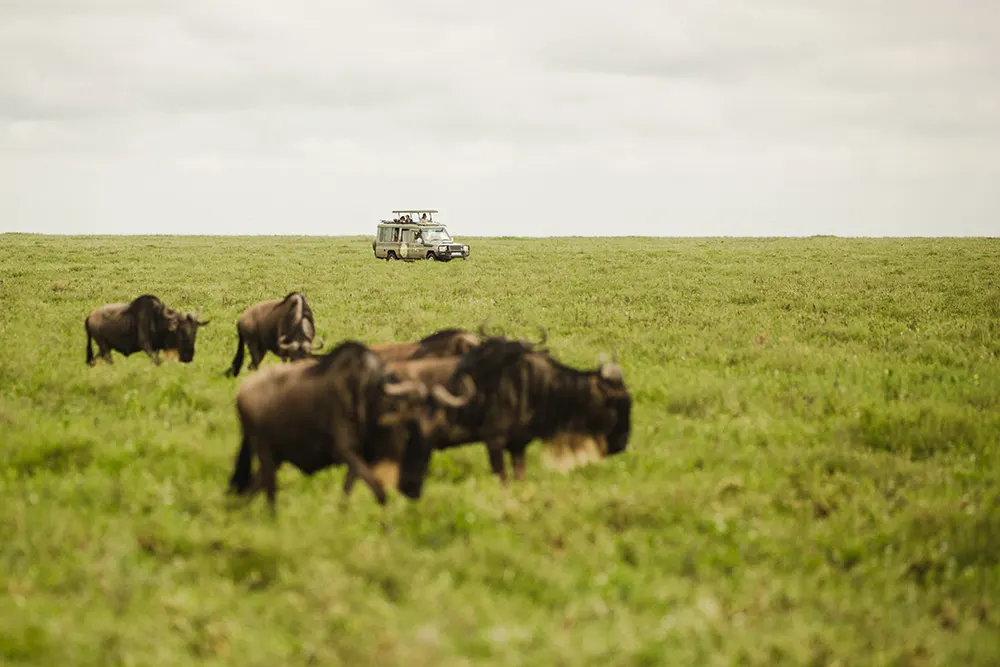
The calving season in the Serengeti is a remarkable time of the year when thousands of wildebeest and zebras give birth to their young. This period typically runs from January to March, and it offers some of the best opportunities for wildlife photography. For beginners, the abundance of animals and dramatic landscapes create a perfect environment to practice and improve their skills. Whether it’s capturing the tenderness of a newborn wildebeest or the thrilling chase of a predator, calving season offers countless moments worth photographing. Having your own private safari vehicle during this time is highly recommended, as it allows more flexibility and longer stays in key areas.

Understanding the Calving Season
What is the Calving Season?
Calving season refers to the time when large herds of wildebeest, zebras, and other grazers give birth to their offspring. This usually happens in the southern Serengeti and the Ndutu region, where the grass is lush and provides plenty of nourishment for nursing mothers. During this time, over half a million calves are born, transforming the plains into a lively scene filled with young animals.
Why It’s Important for Photographers
For photographers, calving season presents a rare opportunity to capture unique wildlife behavior. Apart from the newborns, predators such as lions, cheetahs, and hyenas are highly active, making for dynamic and action-packed photo opportunities. Additionally, the green landscapes and dramatic skies create a beautiful backdrop for photos. The Serengeti’s vast open plains offer an ideal setting for capturing wide-angle shots and action sequences.

Essential Photography Gear for Calving Season
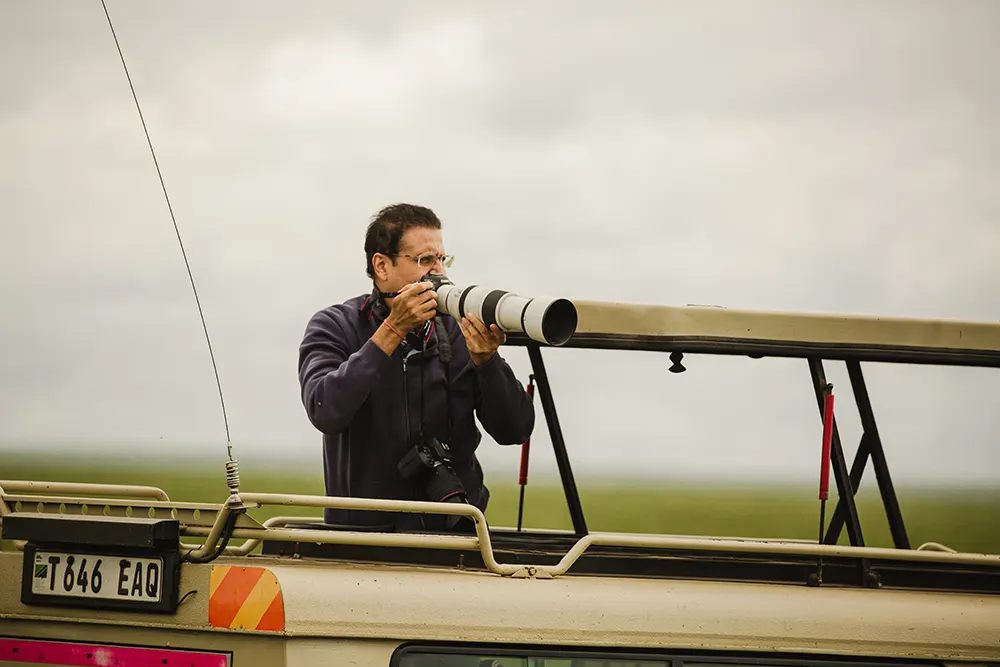
Camera Body
A DSLR or mirrorless camera with a fast shutter speed and good low-light performance is ideal for capturing fast-moving wildlife and early morning or late afternoon shots.
Lenses
- Telephoto Lens: A telephoto lens (100-400mm) allows you to photograph animals from a distance without disturbing them.
- Wide-Angle Lens: Useful for capturing landscapes and wide scenes of herds spread across the plains.
Accessories
- Tripod/Monopod: Helps stabilize your camera, especially when using heavy telephoto lenses.
- Extra Batteries and Memory Cards: Wildlife photography involves a lot of continuous shooting, so it’s essential to have backups.
- Lens Hood and Filters: A lens hood reduces glare, while filters can help protect your lens from dust and scratches.
Weather Protection
The weather during the calving season can be unpredictable, with occasional rain showers. Using a rain cover for your camera and storing your gear in dry bags can help protect your equipment.
Basic Photography Tips for Beginners
Understanding Light and Composition
- Golden Hour Photography: The best light for photography is during the golden hour, shortly after sunrise and before sunset. This soft light enhances the colors and reduces harsh shadows.
- Rule of Thirds: Divide your frame into thirds, both horizontally and vertically, and place your subject along these lines to create a balanced composition.
Focusing Techniques
- Use continuous autofocus (AF-C) mode to keep moving subjects in focus.
- Select single-point focus to precisely target an animal’s eye or head, ensuring sharp details.
Patience and Timing
Wildlife photography requires patience. Spend time observing animal behavior, as it helps you anticipate key moments, such as when a predator starts stalking or a calf takes its first steps.

Capturing Specific Scenes During Calving Season
Newborn Wildebeest and Zebras
Photographing newborns and their mothers can result in heartwarming images. Focus on capturing moments of interaction, such as a mother nuzzling her calf or a calf taking its first steps.

Predator-Prey Interactions
The presence of predators during calving season makes it possible to capture dramatic hunting scenes. Maintain a safe distance and use a telephoto lens to photograph these moments without disturbing the animals.
Birds and Other Wildlife
Calving season isn’t just about large mammals. The lush environment attracts a variety of bird species, offering great opportunities for bird photography. Use a fast shutter speed to capture birds in flight.
Landscapes and Wide Shots
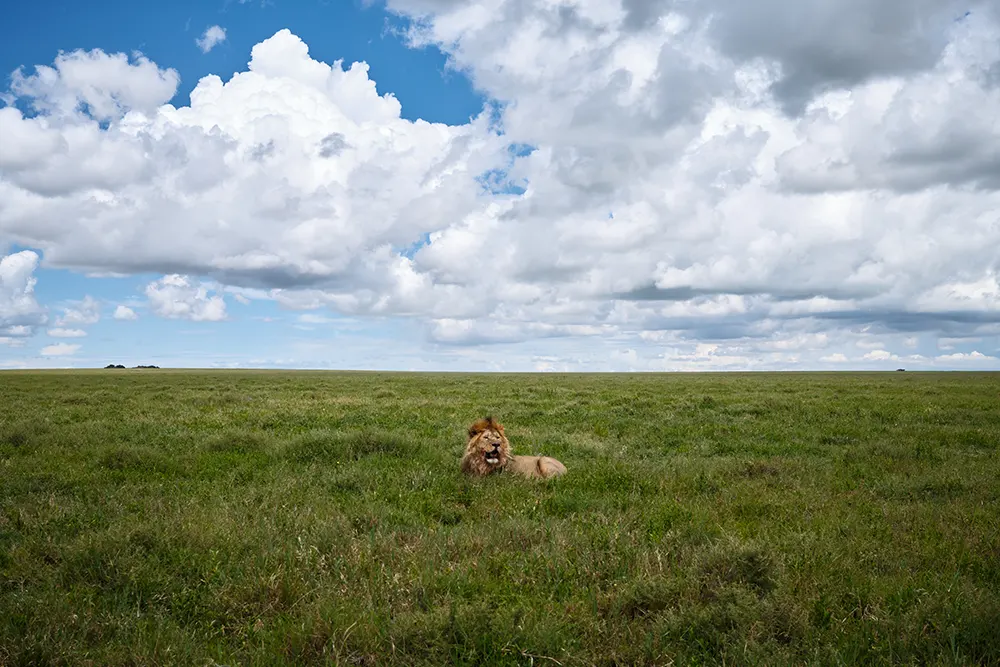
Don’t forget to include wide-angle shots that showcase the vast Serengeti plains dotted with herds of animals. These images help convey the scale and beauty of the environment.
Post-Processing Tips
Basic Edits
- Adjust brightness, contrast, and saturation to enhance the overall look of your photos.
- Crop your images to improve composition and remove any distracting elements.
Advanced Techniques
- Use noise reduction tools to clean up images taken in low light.
- Apply sharpening and clarity adjustments to bring out fine details in your subjects.
Organizing and Storing Photos
It’s easy to accumulate hundreds of photos during a safari. Use photo management software like Lightroom to organize your images and back them up on external drives or cloud storage to prevent data loss.
Ethical Photography Guidelines

Respect Wildlife
Always maintain a safe distance from the animals to avoid disturbing them. Use a telephoto lens to capture close-up shots without getting too close.
Follow Guide Instructions
Safari guides are experienced in handling wildlife situations. Listen to their advice on where to position yourself for the best photos and how to stay safe.
Leave No Trace
Ensure you leave the environment as you found it. Avoid littering and respect the natural habitat.
Best Spots for Calving Season Photography

- Southern Serengeti (Ndutu Region): Known for large herds and excellent predator activity.
- Ngorongoro Conservation Area: Offers a mix of wildlife and stunning landscapes.
- Maswa Game Reserve: Less crowded and perfect for photographing diverse wildlife.
Conclusion
The calving season in the Serengeti is a paradise for wildlife photographers, offering countless opportunities to capture unique moments. With the right gear, techniques, and a bit of patience, beginners can take stunning photos of this extraordinary event. Respecting wildlife and following ethical guidelines ensures that both photographers and animals have a safe and enjoyable experience.
It’s best to have your own private safari vehicle during the calving season, as it allows more flexibility in choosing locations and spending longer periods observing wildlife without being rushed. If you’re new to safari photography, consider working with experienced operators who specialize in arranging photography safaris tailored to your needs. This way, you can fully enjoy the experience while focusing on improving your skills.


