
For travelers seeking more than just point-and-shoot encounters, cultural anthropology in East Africa speaks volumes when lived, not just described. Out in the Maasai lands, wildlife corridors, and ancestral grazing grounds, you’ll see the Maasai way of life in all its glory – a world where Maasai traditions & wildlife are intertwined like the threads of a rich tapestry. The Maasai have historically depended on fertile lands to sustain their cattle herding and pastoralist lifestyle. As historically a nomadic people, the Maasai moved across vast territories in search of grazing for their cattle, a key aspect of the traditional Maasai people’s lifestyle that revolves around their reliance on cattle, land, and seasonal movement.
Today’s responsible safaris in northern Tanzania and southern Kenya let travelers not just observe but get up close and personal with Maasai culture, learn from the Maasai people, and gain a firsthand understanding of how a pastoralist lifestyle fits in the grand scheme of world-famous conservation areas.
Safari as Live Anthropology: Immersion Not Just Observation
The Maasai tribe in Kenya & Tanzania figures among the most studied African tribes, yet no book, movie, or documentary truly captures the essence of a day in the life of the Maasai. Safaris built around community partnerships give visitors a chance to hang out in or close to a Maasai village, walk right through Maasai country, and sit down with Maasai men, Maasai women, Maasai kids, and Maasai children. Here, you can learn firsthand about the experiences of Maasai children as they navigate between traditional teachings and the challenges of modernization, education, and changing environments.
Rather than just watching from a distance, these safaris are all about participation: you can pitch in with herding cattle, try to pronounce some basic phrases in the Maasai tongue, and gain insight into why cattle are the lifeblood of the Maasai economy & spirituality. According to Maasai spiritual lore, Enkai bestowed all the cattle upon the Maasai – a sacred story passed down through generations, and one that continues to be recited to young boys as an important part of their cultural upbringing even today.
Living Among the Maasai: Daily Life Revealed
Spending time in a Maasai village brings anthropology to life. You’ll be sleeping near a traditional Maasai hut, built from scratch using materials as humble as mud, sticks, and cow manure – an ingenious blend of indigenous technology and know-how that’s been refined over centuries. It’s in the simple, rustic structures that you’ll catch a glimpse of Maasai ingenuity in action. The Maasai people’s traditional way of living becomes painfully clear: Maasai women toil away tending to meals, collecting water, and singing sweet melodies to lull their little ones to sleep. Maasai women wear metal beads, intricate beading, bright fabrics, and women wear metal hoops in their stretched earlobes as part of their traditional adornment, while young men wear nothing but black during initiation periods. Traditionally, Maasai began by wearing garments made from animal skin, such as calf and sheep hides, which held deep cultural significance. In the 1960s, the Maasai began transitioning from animal skin attire to commercial fabrics, marking a significant shift in their clothing practices. The Maasai diet revolves around milk, meat, and herbs – a testament to how the Maasai eat and how the Maasai diet evolved to suit their rugged lifestyle.

Warrior Traditions and Coming of Age
Safari programs often involve sitting down with elder Maasai men who regale you with stories about the age-set systems that govern Maasai society. The Maasai warriors, also known as morans, embody strength, discipline, and the protection of their community and livestock.
Whereas lion hunting once marked the transition into warriorhood, modern safaris walk you through how conservation replaced this practice with symbolic ceremonies. You’ll learn how young warriors, young men, Maasai lads, and young Maasai boys navigate different stages of life, including how young men wear black during initiation periods – knowledge that goes down much better when imparted through conversation, not lectures.
In the evenings, guests sometimes get to indulge in Maasai music, featuring traditional jumping dances and vocalists singing harmonies during ceremonies. Women recite lullabies and sing praises, especially during important life passages, adding to the richness of Maasai musical traditions – all of which makes for a truly unforgettable experience where you can participate respectfully rather than just stand on the sidelines.
Maasai Religion and Spirituality: Beliefs in the Wild
Among the Maasai people, spirituality is not just a set of beliefs—it’s a living, breathing part of daily existence, woven into every aspect of their relationship with the land and its creatures. At the heart of Maasai religion is the reverence for Enkai, the singular, all-powerful deity who is seen as both creator and sustainer of life. Enkai’s presence is felt in the rolling thunder, the nourishing rains, and the vast herds that roam the savannah. For the Maasai, all cattle are a sacred trust from Enkai, and caring for them is both a spiritual duty and a way of honoring their heritage.
The Maasai worldview is deeply holistic, recognizing a spiritual energy—often referred to as “Ngai”—that flows through all living things. This belief in interconnectedness shapes how the Maasai interact with their environment, guiding them to live in harmony with wild animals and the rhythms of nature. Rituals, prayers, and the use of sacred plants are integral to Maasai life, marking everything from the birth of a child to the blessing of new pastures. These spiritual practices are not confined to special occasions; they are part of the Maasai’s entire way of life, influencing decisions, fostering respect for the land, and ensuring that every action is in balance with the world around them. In the wild, the Maasai’s spiritual connection to their surroundings is a source of strength, resilience, and identity.
Maasai Shelter and Architecture: Homes on the Savannah
The traditional Maasai house, or manyatta, is a testament to the resourcefulness and adaptability of the Maasai people. Built almost entirely by Maasai women, these shelters are crafted from a blend of mud, sticks, grass, and cow dung—a combination that provides insulation from the heat and protection from the elements. The use of cow dung is not only practical but also symbolic, reflecting the central role of cattle in Maasai culture.
Manyattas are typically clustered within a protective enclosure called an enkang, constructed from thorny acacia branches to keep wild animals at bay. This circular arrangement fosters a strong sense of community and security, with each family’s home forming part of the larger whole. The design of the traditional Maasai house is perfectly suited to the semi-nomadic lifestyle of the Maasai, allowing for easy dismantling and reconstruction as the community moves in search of fresh grazing lands. Inside, the space is simple yet functional, with areas for sleeping, cooking, and storing precious belongings. The architecture of the Maasai is not just about shelter—it’s a reflection of their deep connection to the land, their ingenuity, and their ability to thrive in the ever-changing landscapes of East Africa.

Maasai Social Structure and Community: Bonds Beyond Blood
Maasai society is renowned for its intricate social organization, which extends far beyond the nuclear family to encompass a web of age-sets, clans, and extended kinship ties. At the core of this structure is the age-set system, a unique feature that groups Maasai boys together as they pass through the various stages of life, from childhood to warriorhood and eventually to elder status. Each age-set shares responsibilities, undergoes rituals together, and supports one another throughout life’s challenges.
Clans, formed through lineage and marriage, further bind the Maasai community, fostering cooperation and mutual support across vast lands. Leadership is vested in a council of elder Maasai men, whose wisdom and experience guide the community in matters ranging from conflict resolution to land management. Decisions are made collectively, with the well-being of the entire Maasai community taking precedence over individual interests. This emphasis on unity and shared responsibility is what enables the Maasai to maintain their way of life, even as they navigate the pressures of modernity and changing landscapes. Among the Maasai, social bonds are as vital as blood ties, ensuring that every member—young or old, man or woman—has a place and a purpose within the fabric of Maasai society.
Maasai Diet and Nutrition: Sustenance and Symbolism
The traditional Maasai diet is a direct reflection of their pastoralist lifestyle and spiritual beliefs. At its core are the products of their cherished cattle: milk, meat, and, on special occasions, blood. For the Maasai people, these foods are not just sources of nourishment—they are symbols of health, vitality, and the sacred relationship between humans and animals. Milk is a daily staple, often consumed fresh or fermented, while meat is reserved for ceremonies and communal feasts. The practice of drinking raw blood, usually mixed with milk, is believed to have restorative and medicinal properties, especially during times of illness or after childbirth.
Beyond cattle products, the Maasai diet is enriched by wild fruits, roots, and grains gathered by Maasai women, who possess deep knowledge of the local flora. These supplementary foods provide essential vitamins and variety, ensuring a balanced diet even in the challenging conditions of the savannah. Food among the Maasai carries deep symbolic meaning, with certain dishes reserved for rituals, rites of passage, or to honor guests. The traditional Maasai diet is a testament to their ability to thrive in harmony with their environment, drawing sustenance from the land while upholding the customs and values that define Maasai culture.
Wildlife Safaris Across Maasai Territory
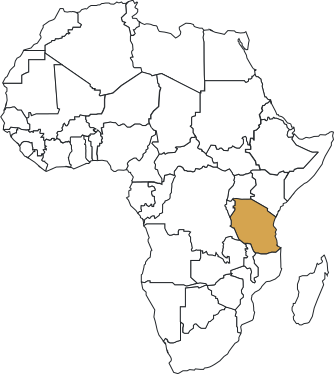
The Maasai experience is deeply intertwined with wildlife. Many safari routes cross Maasai lands long before borders existed, spanning from southeastern Kenya right through to southern Kenya and finally into northern Tanzania. Historically, Maasai territory reached across vast areas of East Africa, including the Great Rift Valley, Mount Marsabit, and significant regions in both Kenya and Tanzania. This territory includes the Maasai Mara, the Serengeti plains, and the Ngorongoro Conservation Area. Today, the Maasai live in a balance between tradition and modernity, with some adapting to urban or settled communities while maintaining strong cultural ties to their land and cattle.
Guided safaris through these national parks & wildlife reserves pack a punch thanks to the Maasai insights. Unlike many other tribes, the Maasai lived alongside predators, seeing lions and hyenas as part of the delicate balance of nature rather than sworn enemies. On foot safaris with Maasai guides will reveal how they read landscapes, track animals, and move safely among wildlife. Most Maasai are still pastoralists and warriors, reflecting the core of their cultural identity and social structure.
In the Ngorongoro Conservation Area, you’ll get to experience a rare model where people, livestock, and wildlife live side by side. The Maasai guides will tell you how their grazing patterns, rich lands, and seasonal movement sustain both their cattle and the local wildlife. Maasai villages are also known for their unusual and interesting housing—circular or loaf-shaped dwellings made from local materials, designed for mobility and protected by the traditional Enkang fence.

Language as an Immersive Experience
Cultural immersion safaris really get you into the groove with language and local culture. Visitors come to realise that the Maasai speak a language called Maa – not just one language, but one that gets spoken freely across borders in Kenya and Tanzania. The Maasai language, also known as Maa language, is a Nilotic language central to their identity and cultural heritage. The Maasai speak Maa, and this language plays a vital role in their ceremonies, oral traditions, and daily life. You can’t help but be impressed by how the Maasai have a unique rhythm to their language, a way of speaking that really gives you a glimpse into their world view.
Getting to know a few simple phrases goes a long way in deepening your connection and showing respect when you are interacting with many Maasai across different villages and grazing areas. Language is a huge part of who they are – especially as the Maasai community navigate the challenges of modernisation.
From History to The Present Day
When you’re on a safari, anthropological storytelling brings the story of how the Maasai set off from the Nile Valley and made their way through Southern Sudan and northern Africa to where they are today. Guests get to learn about how British settlers and other European settlers came in and disrupted the Maasai way of life, causing significant land loss and displacement through treaties such as the one signed in 1911.
The Maasai population is estimated to be around one million people, living primarily in southern Kenya and northern Tanzania, though exact numbers are often debated. A well-known Maasai myth tells of how all cattle on earth were given to the Maasai by the sky god Enkai, which underpins their deep spiritual and cultural connection to cattle and land. The Maasai have traditionally relied on cattle and indigenous knowledge for their livelihoods, and cattle remain central to the Maasai’s entire social, economic, and ritual life.
Nowadays, all but a few Maasai are trying to find a balance between their traditional way of life and the demands of modernisation. In the 1960s, the Maasai began replacing traditional animal skin garments with commercial textiles, reflecting cultural adaptation and outside influences. While some are embracing education and becoming part of the wage workforce, others are sticking to their herding traditions even as the Tanzanian government brings in new land policies.
Ethical safari experiences play a big role in this – they make sure that tourism revenue gets directed back into education, healthcare and land stewardship so that the Maasai can keep on thriving.
Why Experiential Safaris Are So Important
When you experience Maasai culture through a safari, you’re not just a spectator – you become a participant. By walking on ancestral lands, sharing meals and listening to stories by the campfire, you get a glimpse into their lives that just isn’t possible from looking at photos. These safaris are a big deal because they protect both culture and conservation.
They also show why the Maasai are among the most resilient African tribes out there. They manage to cling on to their way of life while still adapting to modern realities.
Conclusion: Living Anthropology
If you want to really understand the Maasai, then you need to move with them – to follow their trails, sing with their communities, and share in their landscapes with the wildlife. Cultural safaris in Tanzania and Kenya give you the chance to experience anthropology firsthand, rather than just studying it.
These community-led experiences are all about respect – so you don’t just learn about who the Maasai are, you also get a glimpse into how they live, why their culture has endured and how wildlife and people can live together in harmony. This is not tourism as a spectator sport, but anthropology as an experience that is real, human and unforgettable.
Ready to Plan Your Maasai Experience Safari?
Discover tailored safari experiences designed to bring you closer to the Maasai –
Start planning with these popular safari options:
- Great Migration Overview: https://discover.goshenisafaris.com/great-migration-en/
- Tanzania Safari Experiences: https://discover.goshenisafaris.com/tanzania-safari-en/
- 7-Day Tanzania Wilderness Safari: https://discover.goshenisafaris.com/7-day-tanzania-wilderness-safari-en/
- 5-Day Tanzania Mid-Range Safari: https://discover.goshenisafaris.com/5-days-tanzania-mid-range-safari-en/
- 7-Day Great Serengeti Migration Safari: https://discover.goshenisafaris.com/7-days-the-great-serengeti-migration-safari-en/
Your next unforgettable experience begins here.


