
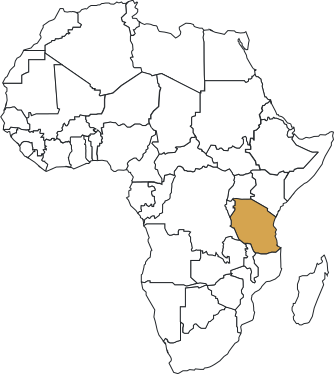
Deep in the volcanic highlands of northern Tanzania, you’ll find one of Africa’s top natural wonders: the Ngorongoro Crater. This incredible 264-square-kilometer crater is basically a self-contained world, home to nearly 30,000 large mammals – and that’s just the tip of the iceberg. As the world’s largest intact caldera, it’s an absolute game-changer. The Ngorongoro Crater was born when a massive volcano erupted and collapsed in on itself, creating this truly unique geological feature. Understanding the location of the Ngorongoro Crater is pretty much essential for planning your East Africa safari – this UNESCO World Heritage site is at the heart of the Northern Circuit route.
The Ngorongoro crater is so much more than just a great place to visit – it’s a living, breathing lab where wildlife thrives in crazy-high density, where human evolution has left its mark over millions of years, and where traditional Maasai communities are still living their ancestral way of life. And then there’s the attractions – including the crater itself, Olduvai Gorge, Lake Magadi, and Empakai Crater. No wonder Tanzania safari goers flock here. Whether you’re all about hot air balloon safaris over the Serengeti plains or are on the hunt for the ultimate Big Five experience, the crater’s perfect location makes it a must-stop on any Tanzania safari itinerary.

Where is Ngorongoro Crater Located
Way out in the Crater Highlands of northern Tanzania is where you’ll find the Ngorongoro Crater – roughly 180km west of Arusha City. You can pinpoint it on a map with precise coordinates of 3.2° South latitude and 35.5° East longitude, nestled in the huge Ngorongoro Conservation Area – a mind-boggling 809,440 hectares of rugged highland plains, savanna woodlands, woodlands, and montane forests.
Thanks to its super-convenient position, the crater is within easy reach of Tanzania’s other top wildlife spots. The Serengeti National Park borders the conservation area to the west, and Lake Manyara National Park is just 60kms to the east. The broader ecosystem includes the northern plains, which are vital for wildlife migration and biodiversity, forming a key part of the migration corridor. And to the south, you’ve got Tarangire National Park completing the Northern Circuit triangle – making the Ngorongoro Crater location pretty much the perfect spot for multi-park safari adventures.
Of course, the Ngorongoro Conservation Area is more than just the famous crater – it’s also got the Olmoti Crater, Empakaai Crater, and Olduvai Gorge, an archaeological site that’s super significant. Here, wildlife shares the space with local communities, creating a pretty unique and sustainable model.
The crater’s elevation adds an extra layer of interest – the crater floor is at 1,800m, while the rim can reach up to 2,200-2,400m. That creates different microclimates that support everything from short grass plains on the floor to lush montane forests along the rim.
Access Points to Ngorongoro Conservation Area
The Ngorongoro Conservation Area Authority is in charge of all the entry points – with Loduare Gate being the main one that most visitors use. Located not far from Karatu town, this main gate is the best way to get to the crater rim and descent roads. But before you get in, you’ve got to register with a licensed guide and use a registered safari vehicle – strict protocols, but worth it. The Ngorongoro Conservation Area headquarters serves as the central hub for managing visitor access, issuing permits, and coordinating conservation activities, making it a key point for administrative functions and logistical arrangements within the area.
There are other access points too – Naabi Hill Gate is a must if you’re combining the conservation area with the Serengeti National Park. The Lemuta Gate gets less use by tourists, but it’s an option.
Getting down to the crater floor requires special permits – the Ngorongoro Conservation Area has rules about how many vehicles are allowed on the crater floor at any one time. And, of course, you’ll need to pay a daily conservation fee of $295 on top of the $70.80 per adult daily fee. It all helps preserve the delicate ecosystem and keep tourism on the right track.
When you descend into the crater, you’ve got to follow the designated roads that wind their way down the steep crater walls. Traffic flows one way to avoid overcrowding and to reduce the impact on the fragile volcanic slopes.
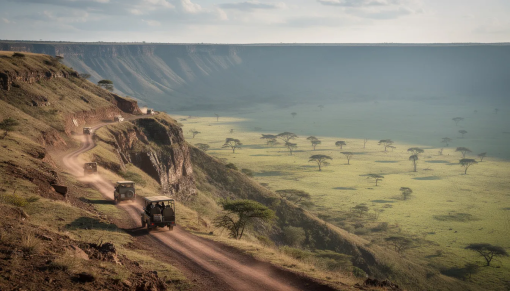
Getting to the Ngorongoro Crater – Your Guide to Transportation Options
Getting to Ngorongoro Crater isn’t too complicated – but its a bit of a trek from Kilimanjaro International Airport or Arusha Airport. The good news is that the roads are decent – the Northern Circuit route via tarmac roads makes it relatively easy to get from point A to point B. Kilimanjaro Airport is a hub for international travelers heading to the Crater and offers some really convenient flight options for those coming from abroad.
If you do find yourself flying into Arusha, the drive to Ngorongoro Crater usually takes around 3 to 4 hours. Still, the scenery is pretty sweet – you’ll pass through the charming town of Karatu and get some spectacular views of the volcanic highlands along the way. Plus, this route also passes by Lake Manyara National Park, making it possible to cram in a visit there too, if you’re so inclined.
Now, if you’re one of those people who just can’t wait to get there, charter flights are an option – they’ll get you into nearby airstrips in no time and give you some seriously stunning views of the highlands and surrounding conservation areas along the way.
Closest Airports & Airstrips
So, where do you land? The Ngorongoro Crater Airstrip is your best bet, but its only for charter flights, so you’ll need to book ahead of time. Lake Manyara airstrip is another option, about 60 kilometers east of the crater and offers regular domestic flights from Arusha and Kilimanjaro Airports. That one’s a bit more reliable and has pretty short ground transfer times to get you to the crater.
Lake Ndutu Airstrip, though seasonal, is a godsend during the annual migration season when the Serengeti and the Ngorongoro Conservation Area get a bit crazy with all the wildlife on the move.
Last but not least, Arusha Airport is about 180 kilometers from the crater and its a major hub for domestic flights in Tanzania. You can catch multiple daily connections to Dar es Salaam and other regional destinations – and the airport’s located just outside of Arusha City, so you can grab a hotel room and get your safari gear in order before heading out.
Kilimanjaro International Airport, on the other hand, is about 270 kilometers from the crater, but its still your best best for internationals – the airport’s got all the modern amenities and connects you up to the rest of the world, even if it does take a bit longer to get to the Ngorongoro region.
The Ngorongoro Crater – A Geological Wonder
So, how did this get here? Well, about 2.5 million years ago, a massive volcano (think: the equivalent of Mount Kilimanjaro in size) just collapsed in on itself during some pretty catastrophic eruptions. And that’s how you get a 16 to 19 kilometer wide caldera – the worlds biggest intact one, in fact.
When it collapsed, the volcano’s original peak was estimated to have been around 4,500 to 5,800 meters high – can you imagine? Today, the crater itself is around 264 square kilometers of some seriously diverse habitats – from the lake on the floor to the Lerai forest that’s home to a bunch of elephants.
It all adds up to some pretty unique ecosystems in a pretty compact space – the crater rim creates these pretty distinct climate zones that support everything from montane forests to grasslands and acacia woodlands.
And the wildlife? Well, the crater walls create natural barriers that just concentrate all the animal populations – you get some seriously high densities of big African mammals in this place. The wildlife inhabiting the crater and its various habitats includes a remarkable diversity of species, making it a vital area for biodiversity conservation.
Protection Efforts
So what does this mean for the wildlife? Well, the Ngorongoro Conservation Area is just a key example of how biodiversity conservation works in East Africa. Since 1979, it’s been a UNESCO World Heritage Site, recognized for its outstanding universal value due to its unique natural features, archaeological significance, and rich biodiversity. Its protection is governed by the Ngorongoro Conservation Area Authority (NCAA), which operates under the Ngorongoro Conservation Area Ordinance—the primary legal framework that establishes the area’s protected status and outlines management responsibilities. The NCAA has a management plan that balances out the needs of all the different groups that operate within the area – wildlife, people and tourists all have to be taken into account.
And that plan includes a whole bunch of conservation efforts – regular wildlife monitoring, anti-poaching patrols (especially for endangered species like the black rhinoceros), and even initiatives to make it easier for people and wildlife to coexist. These efforts are crucial for the protection of globally threatened species, such as the black rhinoceros and wild hunting dogs, which are found within the area.
Tourism is a major source of income, too, and its used to fund both research and community development projects. The involvement of resident communities is essential in conservation and sustainable management, ensuring that local people benefit from and contribute to the preservation of the area’s natural and cultural heritage. So its a pretty savvy set up – and with its UNESCO status, the Ngorongoro Crater’s protection is pretty high up on the list of priorities.
Ngorongoro’s patchwork of Micro-Ecosystems and Game Drive Spots
The Ngorongoro crater’s floor is a real mixed bag when it comes to habitats – and that diversity is what makes the place so great for wildlife spotting. About 70% of the crater floor is covered in short grass plains, which is perfect for grazing animals like zebras, wildebeest and buffalo and also happens to attract a lot of the area’s predators – which is just one reason why this is Africa’s highest concentration of them.
Lake Magadi right in the crater’s centre is a salty lake that dries up and dries out during the dry season – but by god, it’s a magnet for flamingos and other water birds during the wet. The surrounding alkaline grasslands do a bit of everything – they’ve got grazing species, and they’re also a hunting ground for lions and the odd spotted hyena.
Next door to that is the Lerai forest – basically a woodland area dominated by fever trees that’s a total refuge for elephants and other animals that are really struggling in the dry season. And yes, it’s a great place to see leopards – as well as loads of birds all year round. Wherever you look, you can see the Maasai communities and the wildlife coexisting in a really sustainable way, with a mutual respect that’s just amazing.
The Ngoitokitok Springs have permanent water sources which always seem to be attracting hippos and turning bits of the crater floor into lush swampland – and that in turn creates some of the most reliable game viewing in the whole area.
Gorigor Swamp, on the other eastern side, really comes alive during the wet season – at which point it’s a haven for all the water-loving species like antelopes and their predators.
Game Drives and Safari Connections: Seronera, Ndutu and Kogatende
Being where it is, Ngorongoro Crater basically hooks up with some of the other key wildlife areas in the Serengeti. Ndundu Lake, for example, is just over 55kms south west and it’s this amazing calving ground that’s got hundreds of thousands of wildebeest giving birth between January and March every year.
Seronera in the middle of the Serengeti National Park is 120kms north west – and that’s a place that’s always got resident wildlife because of this natural water source called Naabi Hill Gate. It’s a great place for Serengeti safari’s to start and end – so by joining up with Ngorongoro Crater you’ve got this incredible opportunity to see loads of different wildlife in close up.
Getting to Kogatende in the north, near the Mara River takes an extended safari but is well worth it if you want to see the annual migration between July and October – at which point the views of the river crossings are just absolutely breathtaking
Safari itineraries that combine all these different bits of the Ngorongoro landscape give you this amazing overview of all the animals and ecosystems that are here – and each bit offers its own unique experiences. So Ngorongoro gives you guaranteed wildlife spotting – while Ndutu has its spectacular migrations – and Seronera offers you the classic African savannah experience which is exactly what you’d expect.
Wildlife viewing and the Big Five
Ngorongoro Crater is one of the few places in the world where you can see all five of the Big Five species – lions, elephants, buffalo, leopards and black rhinoceros – all in one day. The best part is that the crater floor is only so big, so you know you’ve got a good chance of spotting these incredible animals. In fact, the crater is renowned for having the densest known population of large mammals, making it a hotspot for wildlife viewing and ecological studies.

Lions are incredibly common in Ngorongoro Crater – with 120 or so of them spread across multiple prides – that’s one of the highest lion concentrations anywhere in Africa.
The crater has over 1000 buffalo grazing the crater floor all year round – which is a truly spectacular sight and all the more so since they’re being stalked by the area’s big predators.
Elephants in the crater are a bit fewer than they used to be but still the sight of a mature bull with impressive tusks is something else – especially when they are majorly shagging it in the Lerai forest to avoid the heat of the day.
There are about 30 black rhinos in the crater that you’d stand a chance of seeing – they’re endangered, but still really interesting.
And then of course there are the leopards – which are always on the hunt and utterly elusive but found most often in either the forested crater rim or along the crater walls where they like to den.
You won’t find any giraffes however – because they can’t climb out of the crater – and the imala has the wrong type of habitat here but there are over 500 bird species here – so lots of fun to be had spotting the ostriches, raptors and the flamingos.
Best Time to Visit and Seasonal Considerations
The Ngorongoro Crater’s elevation really dictates its seasons and makes the dry season from June to October the prime time for wildlife viewing – as the animals cluster around the permanent water sources and the sparse vegetation means you can see them more easily. If you want to visit Ngorongoro Crater, these months are considered the best for planning your trip, as wildlife sightings are at their peak and the weather is pleasant. During the peak months of July to September, the crater is at its busiest – the time of year when we see the highest number of visitors. Road conditions remain good and the cooler highland climate provides pleasant daytime temperatures, ranging from a comfortable 20-25°C (68-77°F).
On the other hand, the wet season (November to May) brings lush green landscapes and fewer crowds but also some pretty challenging road conditions, which can make for tougher traveling. The cloud cover can also put a damper on viewing the crater rim. However, this time of year coincides with the calving season (January to March), when you get to see newborn animals and all the commotion that comes with them – and that means increased predator activity.
The calving season is a particularly special time because it coincides with migration patterns in the Ndutu Lake area, where you get to see the massive wildebeest herds giving birth on the nutrient-rich short-grass plains. That means visitors get to combine crater wildlife viewing with one of the most spectacular events in the animal kingdom.
Weather patterns also play a role in cultural tourism opportunities in the area. With clearer skies during the dry months, you get to visit Olduvai Gorge and explore the extensive archaeological research sites that document early hominid footprints dating back millions of years – a truly amazing experience.
Accommodation and Tourism Options
Visitors to the Ngorongoro Crater are spoiled for choice when it comes to accommodation, with something for every style and budget. For those looking to make some unforgettable memories, luxury lodges like the Ngorongoro Crater Lodge, Ngorongoro Serena Lodge, and Ngorongoro Sopa Lodge are perched right on the crater rim, offering breathtaking views and easy access to early morning game drives. These lodges have managed to strike a perfect balance between comfort and getting one with the wild surroundings – and offer first-class amenities and top-notch service.
For travelers on a budget, there’s a range of mid-range lodges, tented camps, and campsites both within the Ngorongoro Conservation Area and in the nearby town of Karatu. Many of the accommodations work closely with the Ngorongoro Conservation Area Authority to ensure they’re practising responsible tourism and supporting local communities.
The tourism activities on offer in the area are as varied as the landscape itself. The classic game drive on the crater floor gives you a chance to spot the Big Five and witness one of the densest populations of large mammals in Africa. Adventurous visitors can opt for a walking safari in the wider conservation area or take a hot air balloon safari for a real one-of-a-kind perspective on the landscape. Cultural tours give you a glimpse into the traditions of the Maasai tribe, where the cultural values of the local communities are central to both daily life and tourism experiences. Guided excursions to archaeological sites and cultural programs highlight the area’s rich cultural resources, including significant sites and the heritage of indigenous peoples, adding a fascinating historical dimension to your stay. Whether you’re after a luxurious experience or something more adventurous, the Ngorongoro Crater delivers a first-class safari experience.
Planning Your Ngorongoro Safari Experience
It’s worth doing some advance planning for a visit to the crater – not least because of the strict regulations and limited daily permits that are in place. The Ngorongoro Conservation Area Authority limits access to the crater floor to 6 hours per vehicle, which means you need to plan your game-drive itinerary carefully – and that also means a bit less stress on the environment.
Conservation fees currently run at $70.80 per adult per day, plus a $295 per-vehicle daily fee – and there are some additional charges for camping or specialized activities like hot-air balloon safaris. These fees go straight towards supporting biodiversity conservation programs and community development initiatives in the area.
Accommodation options include luxury lodges perched on the crater rim, which offer spectacular views but are in short supply – and more affordable options in nearby Karatu town. Crater rim lodges give you easy access for early-morning game drives, but they tend to book up quickly, especially during peak seasons.
Recommended safari duration can vary from a single-day visit to a 5-day experience that combines the crater with other Northern Circuit destinations. Multi-day itineraries allow you to explore the wider conservation area, including visits to Olmoti and Empakaai Craters, and cultural tourism programs with local Maasai communities.
To get into the crater, safari vehicles need to meet certain requirements, including proper insurance coverage and a registered operator’s license. Most visitors book through established tour operators who handle the permits, vehicle requirements, and guide services as part of a comprehensive package.
Cost and Budget Considerations
Planning a visit to the Ngorongoro Crater involves a range of costs, which you can tailor to fit your travel style and budget. Entrance fees to the Ngorongoro Conservation Area are approximately $70 per person per day, with an additional vehicle fee of around $40 per day. These fees go straight towards supporting conservation efforts and the upkeep of this incredible ecosystem.
Accommodation costs vary widely, of course. Budget-friendly campsites and guesthouses start at around $100 per night, while luxury lodges on the crater rim can set you back over $1,000 per night – offering premium amenities and breathtaking views. Mid-range options are also available, providing comfort and convenience without breaking the bank.
Tourism activities like game drives, walking safaris and hot air balloon safaris are usually arranged through tour operators or lodges. Game drives can cost anywhere from $50 to $200 per person, while a hot air balloon safari is a premium experience, often costing $500 or more per person. Cultural tours and guided visits to archaeological sites are generally more affordable and can be included in multi-day safari packages.
For a 3- to 5-Day Ngorongoro Safari
A budget to do the place justice typically falls anywhere from $500 to $1,000 per person but let’s be honest it heavily depends on your accommodation choices and what kind of activities you’re after. Working with a reputable tour operator can be a lifesaver though – they’ll help streamline costs and make the whole experience feel pretty seamless.
Cultural Heritage and Maasai Community
Ngorongoro is a place that’s more than just wildlife – it’s a chance to experience some of humanity’s earliest roots. It’s home to one of the most important archaeological sites out there and plays host to the Maasai way of life. Olduvai Gorge is a real highlight in this regard – it’s basically the cradle of mankind and has given us some pretty compelling evidence of human evolution over the past 3.6 million years.
You’ll be able to see early hominid footprints that date back millions of years, as well as some amazing fossil evidence that’s helped us better understand where we come from. The site is also a hotbed of research into human ecology and how early humans lived in their environment. We’re talking about some serious insights here into how our ancestors made a living and interacted with the world around them.
The Maasai tribe has a special arrangement with the Ngorongoro Conservation Area Authority which lets them continue their traditional way of life here. You’ll be able to see how the Maasai coexist with the wildlife in this area – it’s a pretty unique model of living in harmony with nature.
Cultural tourism is a big thing here too. You can experience Maasai culture firsthand by visiting their villages, watching traditional ceremonies and getting an education on what it means to be a pastoralist. These kinds of programs are a win-win – they bring in much-needed income for local communities while also helping to preserve their cultural heritage.
All of this sounds great but there are definitely some challenges to balancing conservation goals with tourism and community development. The Ngorongoro Conservation Area Authority is working hard to mitigate human-wildlife conflict and support biodiversity conservation, as well as community development through tourism revenues and sustainable development programs.
The combination of stunning natural beauty, incredible wildlife, archaeological significance and living culture makes Ngorongoro Crater a world class destination. Whether you’re coming to see the wildlife, visit the crater or experience Maasai culture, Ngorongoro has something for everyone.
The crater’s location in the north of Tanzania is pretty hard to beat. It’s nestled in the volcanic highlands and is a key part of the Northern Circuit – a must-visit for any serious safari fan. Whether you’re after a quick day trip or a longer adventure that takes in the best of East Africa, Ngorongoro is the place to be.

Nearby Attractions and Extensions
Ngorongoro’s location makes it the perfect base for exploring some of East Africa’s most famous safari destinations. The Serengeti is just a stone’s throw away – and what a place it is! The annual wildebeest migration is a sight to behold, and a hot air balloon ride over the Serengeti will give you a once-in-a-lifetime view of the action.
Tarangire National Park is another must-see – its famous baobab trees and massive elephant herds are not to be missed. Lake Manyara’s tree-climbing lions and incredible birdlife make it a great place to spend a day (or two) too. And then there’s Olduvai Gorge – a UNESCO World Heritage site and one of the most important paleoanthropological locations on the planet. Here you can learn all about human evolution and see the early hominid footprints for yourself.
If you’re looking for something a bit more laid back, the Ngorongoro Highlands are a great place to explore. You’ll find traditional Maasai villages, rolling volcanic landscapes and the chance to go hiking or visit local communities. And if you’re after some serious adventure, the Gol Mountains or Lake Eyasi are just a short drive away.
In short, Ngorongoro Crater is the perfect base from which to explore the best of northern Tanzania – from stunning natural scenery to incredible wildlife and living culture.
Safety and Precautions
Exploring the Ngorongoro Conservation Area is an adventure, but it’s important to keep safety top of mind to make the most of your visit. The Ngorongoro Conservation Area Authority has put a range of measures in place to ensure that visitors can enjoy the wonders of the conservation area with peace of mind. Always remain inside your safari vehicle during game drives, except at clearly marked picnic spots, and maintain a respectful distance from all wildlife—after all, you’re in their home.
Guides and park rangers are there to help, so be sure to follow their instructions and advice—they know the terrain, the animals, and the safest ways to experience the area. The landscape itself can be challenging, with steep crater walls, rocky paths, and unpredictable weather, so watch your step and stay alert, especially near the crater rim or in areas with dense vegetation. The NCAA also provides armed rangers and has established designated tourist routes and viewing areas to keep both visitors and wildlife safe. By staying aware and respecting the rules, you’ll help ensure a safe and memorable adventure in the heart of the Ngorongoro Conservation Area.
Conclusion and Final Thoughts
The Ngorongoro Conservation Area is more than just a destination—it’s a place where the wonders of nature, the story of human evolution, and vibrant Maasai culture all come together. Whether you’re gazing out over the Ngorongoro Crater at sunrise, floating above the plains on a hot air balloon safari, or exploring the wider Ngorongoro Conservation Area, every moment here is unforgettable. By visiting, you’re not only treating yourself to one of the world’s most spectacular wildlife experiences, but you’re also supporting vital conservation efforts and the livelihoods of local communities.
As you plan your adventure, remember to travel responsibly, respect the area’s rules, and embrace the opportunity to learn from both the land and its people. The Ngorongoro Conservation Area is a treasure for all of humanity—let’s work together to keep it thriving for generations to come.
Ready to Plan Your Tanzania Safari?
Discover tailored safari experiences designed to bring you closer to the action—whether you’re chasing the Great Migration, exploring Tanzania’s wilderness, or witnessing the magic of the Serengeti.
Start planning with these popular safari options:
- Great Migration Overview: https://discover.goshenisafaris.com/great-migration-en/
- Tanzania Safari Experiences: https://discover.goshenisafaris.com/tanzania-safari-en/
- 5-Day Serengeti Great Migration Safari: https://discover.goshenisafaris.com/5-days-serengeti-great-migration-safari-en/
- 7-Day Great Wildebeest Migration Calving Safari: https://discover.goshenisafaris.com/7-days-the-great-wildebeest-migration-calving-safari-en/
- 7-Day Tanzania Wilderness Safari: https://discover.goshenisafaris.com/7-day-tanzania-wilderness-safari-en/
- 5-Day Tanzania Mid-Range Safari: https://discover.goshenisafaris.com/5-days-tanzania-mid-range-safari-en/
- 5-Day Wildebeest Calving Safari: https://discover.goshenisafaris.com/5-days-wildebeest-migration-calving-safari-en/
- 7-Day Great Serengeti Migration Safari: https://discover.goshenisafaris.com/7-days-the-great-serengeti-migration-safari-en/
Your next unforgettable safari begins here.


