
From the Winding Streets of Stone Town to the Open Plains of Tanzania
Zanzibar’s story has always been written by the goods that sailed in through its ports. Before the island became synonymous with lazy days on the beach, Zanzibar was a major player on the Indian Ocean trade scene. Stone Town, the historic center of Zanzibar City, is located on the west coast of Zanzibar Island, making it a strategic hub for trade and tourism. Zanzibar itself is situated to the southwest of major East African trading routes and settlements, such as Bagamoyo. And right at the heart of that story – the one that transformed Zanzibar City, created the charm of Stone Town and hooked East Africa to the rest of the world – is the spice trade.
Take a walk down the narrow streets of Stone Town Zanzibar today and you’re walking through a thick layer of history that still shapes the island’s culture, architecture and everyday life. And if you want to get a real feel for Zanzibar, you really need to understand the spice trade. Past, present and future – it’s all a vital part of the island’s story, and a wildlife safari on mainland Tanzania just isn’t complete without it.

How Zanzibar Became the Spice King of the Indian Ocean
Zanzibar’s strategic location off the western coast of the Indian Ocean just made it the perfect spot for traders to set up shop. And from as far back as the first thousand years, Persian, Arab and Indian traders were coming in to exchange goods – the start of the Swahili culture that would blend together African, Arab and Asian influences.
But it was the 18th and 19th centuries that really saw Zanzibar take off as a spice powerhouse. When the Omani rulers realised that the island’s soil was perfect for growing cloves, nutmeg, cinnamon and pepper, they decided to make Zanzibar City their capital – and the island’s golden age as a spice empire was born.
What followed was a massive expansion of plantations across the main island – worked largely by slaves, and with the spice trade right at the centre of the slave trade. Before long, Zanzibar was one of the biggest spice exporters in East Africa, with markets in Asia and Europe clamouring for Zanzibar’s wares.
The Living History of Stone Town
Building a City on Trade
Stone Town, the historic heart of Zanzibar Town, is a UNESCO World Heritage site that’s just a fantastic example of how commerce has shaped cities. And the name ‘Stone Town’ comes from the coral stone that was used to build all those houses, palaces and forts.
Walking round Stone Town, you’ll notice that the architectural styles are a real mix of influences – from Omani and Arab arches, to Indian balconies and carved doors, to European elements that were introduced during the colonial era. And landmarks like the Old Fort, the Palace Museum and former palaces were all built to protect and manage the flow of trade. The House of Wonders, also known as Beit-al-Ajaib, stands out as the first building in East Africa to feature modern amenities such as electricity and an elevator, making it a pioneering and historically significant structure in the region.
Unraveling the Past in the Maze of History
Walking through the tight, winding streets of Stone Town, you’re passing moment by moment through a whole century of history. You’ll see:
- The Anglican Cathedral and Christ Church Cathedral, built right on top of the old slave market – complete with a preserved whipping post\
- Joseph’s Cathedral, with its European ecclesiastical style\
- Historic merchant houses with carved wooden doors, once owned by spice traders
These landmarks are among the most important historical buildings in Zanzibar, celebrated for their architectural and cultural significance.
Every single stone, every street corner tells a story about trade, power and cultural exchange.
Markets, Food and Daily Life Today
The spice trade may not be the global economic force it once was, but it’s still a big part of life on Zanzibar.
Darajani Market and Local Delights
Darajani Market is still the commercial heart of Zanzibar City, where you can see spices, seafood, fruits and household goods being traded on a daily basis. And just nearby, Forodhani Gardens comes alive at night with street food stalls serving up Zanzibar pizza, grilled seafood and spiced tea.
Visitors often stop off at a rooftop tea house, overlooking the sea, and watch the dhows drifting by while they sip on a clove-infused drink – a simple pleasure that’s been rooted in centuries of trade.
Culture and Music
Zanzibar’s cultural influence stretches way further than the island itself. Freddie Mercury, the lead singer of Queen, was born here, and his childhood house in Stone Town is one of the island’s biggest tourist draws. His legacy is just another example of Zanzibar’s openness to the world, a product of all those centuries of maritime exchange.
Outdoor Adventures Beyond the Spice Markets

While Stone Town’s spice-scented history is legendary, the real magic of visiting Stone Town is how seamlessly the past and present blend into a living adventure. This historic town, perched on the western coast of the main island in the Zanzibar Archipelago, is a UNESCO World Heritage Site that invites you to step beyond the spice markets and into a world of outdoor experiences, vibrant culture, and stunning natural beauty.
Start your exploration at the Old Fort, a fine example of Omani architecture built from coral stone. Today, this iconic fort is more than just a relic—it’s a lively cultural center where you can catch live music, art exhibitions, and festivals, all set against the backdrop of the Indian Ocean. Just steps away, Forodhani Gardens comes alive each evening as locals and travelers gather to sample Zanzibar pizza and other Swahili street food, with the sea breeze carrying the sounds and scents of the city.
Wandering the narrow streets of Stone Town, you’ll find yourself surrounded by historic buildings—former palaces, mosques, and churches—each telling a story of the town’s rich history and the diverse architectural styles that define East Africa. The main construction material here is coral stone, giving the old town its distinctive look, with intricately carved wooden doors and shaded verandas that hint at centuries of trade and cultural exchange.
For a deeper dive into the island’s past, visit Christ Church Cathedral, built on the exact spot of the former slave market. The site, along with its sobering museum, offers a powerful reminder of Stone Town’s role in the slave trade and the resilience of Swahili culture. The Palace Museum, once home to the sultans of Zanzibar, is another must-see, offering a glimpse into royal life and the town’s place at the crossroads of the Indian Ocean.
But Stone Town isn’t just about history—it’s also your gateway to outdoor adventures across the Zanzibar Archipelago. Take a boat trip from the western side of the city to Prison Island, where you can meet giant tortoises and snorkel in crystal-clear waters. Or simply relax on one of the beautiful beaches that fringe the coast, soaking up the sun and the laid-back rhythm of island life.
As the sun sets, there’s nothing quite like unwinding at a rooftop tea house, sipping spiced tea while gazing out over the sea and the maze of rooftops below. For music lovers, a visit to the Freddie Mercury House—birthplace of the legendary Queen lead singer—is a highlight, adding a modern note to Stone Town’s symphony of cultures.
All of these experiences are protected and enhanced by the Stone Town Conservation and Development Act, which ensures that new developments respect the town’s historic character. This commitment to preservation means that every stroll through the narrow streets, every visit to a market or museum, is a step through living history.
Whether you’re drawn by the promise of adventure, the allure of Swahili culture, or the simple pleasure of wandering a city where every stone has a story, Stone Town is a destination that rewards curiosity. Start planning your trip, and discover why this historic quarter of Zanzibar City is one of East Africa’s most unforgettable places—where the past is always present, and every day brings a new adventure.
Protecting the Past, Shaping the Future
Zanzibar today has semi-autonomous status within the United Republic of Tanzania, and it’s been that way since 1964. This status was established when Zanzibar joined the United Republic of Tanzania, making Stone Town the local government hub for the region. And with modern policies like the Stone Town Conservation and Development Act protecting this historic quarter, while also allowing for sustainable growth – the spice trade may be past its prime, but Zanzibar’s story is far from over. Spice farms still carry on across the island but on a much smaller scale now. A lot now welcome visitors in & offer guided tours that explain the traditional methods of cultivating spices & show how they continue to play an important part in people’s lives here on the island.
These are the kinds of efforts that line up with the broader goals of preserving historic town architecture, supporting local communities & managing tourism so that it doesn’t overwhelm the island’s infrastructure – all year round.
The Future of Zanzibar’s Spice Legacy
Looking to the future, Zanzibar’s spice trade is less about dominating exports & more about:
- Keeping the culture alive
- Making tourism an experience rather than just a sight to see
- Supporting sustainable development
Spice tours, cooking classes & heritage walks let travelers get close to history on their feet rather than just watching it from the sidelines. The focus has shifted from quantity to quality – telling Zanzibar’s story in a way that helps local people while also looking after the old part of the city.
This is a future that fits well with Tanzania’s conservation driven safari model on the mainland.
Stone Town Walking Guide: Walking Your Way Through Zanzibar’s Spice Trade
One of the best ways to understand Zanzibar’s spice trade legacy is to just go for a walk. Stone Town is a compact, layered place that’s best explored slowly – on foot, through its winding narrow streets, hidden courtyards & historic waterfront. A guided walk through the heart of Zanzibar City turns abstract history into something you can really get your head around.
Below is a practical walking route that lots of visitors follow when visiting Stone Town for the first time & wanting to get the most out of it.
1. Start at the Old Fort (Omani Fort)
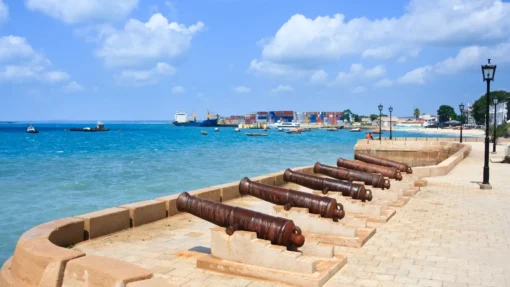
Begin your walk on the western side of Stone Town Zanzibar, near the Old Fort, also known as the Omani Fort. Built in the 17th century using coral blocks this old fort was one of the first defensive structures here & a symbol of Omani control over the spice trade routes.
From here you can see how Zanzibar functioned as a safe place for trades to take place, with goods moving around the coast, sea & inland.
2. Forodhani Gardens & the Waterfront
Just outside the fort lies Forodhani Gardens, a place where traders used to meet once they’d arrived by dhow from across the Indian Ocean. These days it’s a social spot but its location says it all about Zanzibar’s commercial rise.
Take a break here in the late afternoon to watch the boats pass by & imagine what the harbor must have been like – crowded with spice shipments heading off to Arabia, India & Europe.
3. The Palace Museum & Former Palaces
Walk inland to the Palace Museum & the former palaces that once housed the Omani sultans who were in charge of both the spice trade & the slave trade. These buildings show the wealth generated by cloves & nutmeg & they’re a mix of different architectural styles like Arab, Swahili & European.
The palace complex was the hub of Zanzibar’s power at its most powerful point.
4. Anglican Cathedral & Former Slave Market
A short walk takes you to one of the most emotionally moving sites in Stone Town: the Anglican Cathedral (also known as Christ Church Cathedral). It was built on the exact spot where the former slave market used to be, complete with a preserved whipping post.
This is a really important place for understanding the dark side of the spice trade & Zanzibar’s complicated history is crucial for getting a real sense of the place.
Nearby you’ll also see Joseph’s Cathedral, a great example of European influence in the later colonial period.
5. Darajani Market: The Heart of Town Zanzibar
From the cathedral head to Darajani Market, still the beating heart of Town Zanzibar. Here, spices aren’t just global exports anymore & they’re central to daily life.
You’ll see:
- Piles of cloves, cinnamon & turmeric
- Locals trading all sorts of things like fish, fruit & grains
- Zanzibar’s role as a commercial hub is still going strong – just adapted to modern needs now.
This is where past and present come together in a really special way.
6. Freddie Mercury House
Carry on into the historic quarter to visit the Freddie Mercury House, where the Queen lead singer was born. It’s a small & unassuming place but it’s a great reminder that Zanzibar’s influence goes way beyond spices.
It’s one of the island’s most famous stops & a real treat for fans.
7. The Narrow Streets of the Old Town
Take your time to wander around. The maze like narrow streets of the Old Town is where Stone Town really reveals itself. Keep an eye out for:
- Carved wooden doors that used to mark the homes of the wealthy merchants
- Balconies that show the influence of Indian design* Homes built entirely from stone, stacked so tightly together you can barely see a gap between them
This part of the walk has no fixed route and that’s what makes it so brilliant. Stone Town loves nothing more than to surprise and reward those curious enough to wander
8. Finish up at a Rooftop Tea House or Watch the Sun go Down by the Sea
You end your walk at a rooftop tea house where you can sit back and take in the views of the sea. Alternatively you can head back to the waterfront for sunset – just the right moment to reflect on how Zanzibar’s spice trade connected continents – and how that history still completely shapes the island to this day.

Why This Walk Matters for People Doing a Safari in Tanzania
For anyone putting Zanzibar together with a safari in Tanzania, this walking guide really helps to put things into context. After watching the wildlife migrations and marveling at the natural wonders on the mainland, Stone Town helps explain how human history played out along the same East African coast.
Its a game-changer – transforming Zanzibar from “just a quick beach stop” into a really important part of your Tanzania trip – one that complements the wild landscapes of the Serengeti with stories of trade, culture and survival.
Why Zanzibar Pairs So Perfectly with a Tanzania Safari
For a lot of travelers, especially first-timers in Africa, Zanzibar just feels like the natural next step after a safari trip. After days of early starts and wildlife encounters in Tanzania’s national parks, the island offers a much slower pace of life – one rooted in history, culture and the sea.
A typical journey might look something like this:
- Safari in the Serengeti or Ngorongoro
- A short flight over to Zanzibar
- Exploring the culture of Stone Town
- Time relaxing on the beautiful beaches along the coast
This combination of wildlife and history really connects two sides of Tanzania’s story – its ancient trade routes and its world-famous wildlife ecosystems.
Planning a Safari with a Zanzibar Add-On
If you’re just getting started with planning a trip that combines wildlife and history, a lot of people begin by exploring safari routes on the mainland and then adding Zanzibar on at the end.
Its not uncommon for these itineraries to be customized to include Zanzibar extensions:
- Tanzania Safari Experienceshttps://discover.goshenisafaris.com/tanzania-safari-en/
- Great Migration Overview
https://discover.goshenisafaris.com/great-migration-en/ - 5-Day Serengeti Great Migration Safari
https://discover.goshenisafaris.com/5-days-serengeti-great-migration-safari-en/ - 7-Day Tanzania Wilderness Safari
https://discover.goshenisafaris.com/7-day-tanzania-wilderness-safari-en/
These routes, such as the popular Marangu route, often take you through Dar es Salaam or right on to Zanzibar, making the island a really easy and rewarding add-on rather than a separate trip.
Final Thoughts: From Spices to Safaris
Zanzibar’s spice trade shaped the island’s history, architecture, and its place in the world. Today that same heritage enriches every visit – whether you’re wandering the streets of Stone Town, visiting museums and forts, or reflecting on the complex legacies of trade and culture.
When you pair Zanzibar with a Tanzania safari, its like you get two halves of a bigger picture – the savannah shows you nature in motion, Stone Town shows you how human civilization has been shaped by centuries of exchange.
Together they make a journey that is so much more than just sight-seeing – its a deeper understanding of Tanzania’s past, present and future.


