
Answer First: How Many Days Do You Really Need in Tanzania?
If you’re heading out on a Tanzania safari for the very first time, the simple answer is this: 7 to 10 days is probably the sweet spot for a safari that will leave you feeling pretty satisfied. This gives you enough time to get a real taste of the iconic northern circuit parks – Serengeti National Park, Ngorongoro Crater, and either Tarangire National Park or Lake Manyara – without feeling like you’re constantly racing to get from one place to the next. Many travelers choose to spend three nights in the Serengeti or other best locations for wildlife viewing to maximize their experience.
If you’re a first-timer, you might be wondering if you really need that long in Tanzania, and to be honest, 5 days can still be a great option. Just be aware that you won’t get to see everything that Tanzania has to offer, but you will get to experience some of the most incredible wildlife spectacles on the planet. The Great Wildebeest Calving season is an especially good time for a 5-day safari, as the predator action really ramps up.
If you’re serious about getting the best wildlife photos, or you want to take your time and really explore all Tanzania has to offer, then 10-14 days is the way to go. This gives you the time to visit multiple regions, add in some beach time on Zanzibar Island, or even venture to some of the more off-the-beaten-path parks like Ruaha National Park or Nyerere National Park in the Southern Circuit. Families, honeymooners, and those who want to travel in style particularly benefit from longer stays that let you really soak up the atmosphere and see the wildlife in all its glory.
In this article, we’ve put together two sample itineraries – a 5-day and a 7-day Great Wildebeest Calving Migration safari – along with some guidance on how to add in some extra time for the things that interest you most. When planning your trip, be sure to select the best locations within Tanzania to enhance your safari experience and ensure you see the highlights that matter most to you. Whether you’ve only got a week to spare or you’re planning the trip of a lifetime, we’ve got a plan that will fit your schedule.
Key Factors That Decide How Many Days to Spend in Tanzania
So, how many days should you spend in Tanzania? Well, it’s not just about what you want to see – it’s also about your budget, your travel plans, and the kind of safari experience you’re after. Here are the main factors to consider:
Flight time and jet lag matter, big time. If you’re flying in from Europe or North America (those 8-hour flights to Kilimanjaro International Airport don’t help much) you’ll lose at least one day to getting over the travel fatigue. But if you’re coming from East Africa or somewhere a bit closer, you might be able to hit the ground running and get straight into the action.
Budget – every day on safari adds up. Every day you spend on safari adds to the cost of park entrance fees (Serengeti and Ngorongoro are among the pricier options in Africa), plus the cost of your vehicle, guide, and accommodation. And trust us, it’s worth it – but it’s not something you want to take on lightly. Adding an extra day or two can make a huge difference to your chances of seeing some of the more spectacular wildlife events.
Internal distances can be a real killer. Tanzania is a big place, and getting from one end to the other can be a time-consuming business. The drive from Arusha to the Serengeti can take anything from 6 to 8 hours, depending on the traffic and the roads. And if you want to visit some of the parks in the Southern Circuit, you’ll need to factor in some domestic flights and at least half a day of travel. A short trip of just 3-4 days means you’ll be spending a lot of time in the car or plane, rather than out on game drive.
Safari only, or safari plus coast? Many of our clients want to combine their wildlife experience with some time on the beach on Zanzibar Island or Mafia Island. If that sounds like you, then plan on spending at least 10 days in Tanzania – or you’ll end up shortchanging one or both experiences.
Seasonal variations mean different amounts of time in each area. The wildebeest migration is a big deal in Tanzania, and it moves around throughout the year. During the calving season (mid-January to March), the herds concentrate in the Southern Serengeti and Ndutu, making it a great time for a focused 5-7 day itinerary. But if you want to see the famous Mara River crossings (June-October), you’ll need to allow for some extra time to get to the Northern Serengeti and sit back and wait for the action to start.
Suggested Durations: 3-5, 7, 10 and 14+ Day Tanzania Trips
Before we dive into the sample itineraries, here’s a quick rundown of what you can realistically expect to achieve with each trip length.
3-4 days in Tanzania is best suited to regional travelers from East Africa, business travelers looking to add in a quick safari, or those who just can’t manage any more time. You’ll be able to visit the Ngorongoro Crater and one or two nearby national parks – but that’s about it. It’s a taste, not a full-on safari experience. For those with limited time, to visit Lake Manyara is a popular option, offering unique attractions like birdwatching and tree-top walks.
5 days is a good option for a focused, intensive safari experience, like our Calving Season itinerary. You’ll be able to cover Ndutu, the Southern Serengeti short grass plains, and Ngorongoro Crater – all the highlights, in other words. It’s a bit of a rush, but it’s worth it if that’s all the time you have.
5 days suits a focused, intensive safari in Tanzania such as the Calving Season itinerary detailed below. You’ll cover Ndutu, the Southern Serengeti short grass plains, and Ngorongoro Crater—hitting the highlights during the best time to visit for calving drama. It’s compressed but worth visiting if that’s your available window.
7 days is the most common “first-timer’s” visit and its the absolute minimum for getting a real taste of a Tanzanian safari. You will have time to spend 3–4 days in the Serengeti ecosystem (that means a day or two in the Central Serengeti around Seronera, plus Ngorongoro Crater, and maybe even a night near Tarangire or Lake Manyara National Park). Many itineraries include three nights in the Serengeti or other key parks for a deeper and more immersive experience. That pace is nice and relaxed, with less driving fatigue and more time for taking photos and tracking predators. During the dry season, Tarangire National Park is famous for attracting many animals to the Tarangire River, making it an excellent spot for wildlife viewing.
10 days opens up tons of options: you can put the Northern Circuit on one leg and then fly to Zanzibar for 3–4 nights, or take the Serengeti time and head up to the Northern regions during the river crossing season. You’ll find yourself spending 1 night in Arusha, 5–6 nights on safari across multiple parks, and 3–4 nights on the east coast enjoying some well-deserved R&R.
14+ days is for those who want the whole Tanzanian safari experience. You can combine the northern circuit parks with the southern circuit (Ruaha, Nyerere, Selous), stop off in Dar es Salaam for some culture, go diving on Mafia Island, or add some gorilla trekking in a neighbouring country. With two weeks, you can take your time and really get to know Tanzania’s wildlife reserves and lush green landscapes.
5-Day Great Wildebeest Calving Migration Safari (A Southern Serengeti & Ngorongoro Special)
This is a 5-day itinerary that’s perfect for people asking “how long do I need for a Tanzanian safari” and who want to see the great migration calving season in all its glory. The calving season runs from December to April, but the best time to visit is mid-January to March – it’s the wildebeest’s biggest time of year and the scenery is just stunning. The itinerary typically includes three nights in the Serengeti or Ndutu area to maximize wildlife viewing.
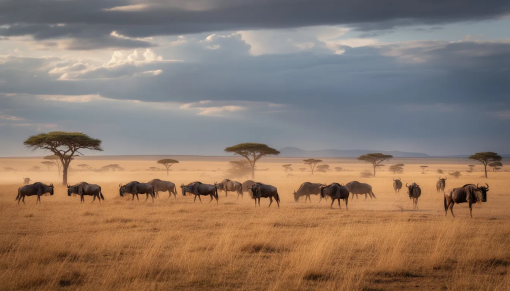
This safari takes you to the best places to see tens of thousands of wildebeest giving birth on the short grass plains in the Southern Serengeti, Lake Ndutu, and the world-famous Ngorongoro Crater. You’ll get to see baby animals taking their first wobbly steps, predators capitalising on those vulnerable calves, and the highest wildlife densities anywhere on the planet, with many animals gathered in the area during this time.
Accommodations can range from camping to mid-range tented camps to luxury lodges – the core safari route stays the same. Here’s a day-by-day breakdown of what to expect.
Day 1 – Arriving in Arusha and Transferring to the Ngorongoro Highlands
Your Tanzanian safari adventure starts with a flight into Kilimanjaro International Airport (JRO) or a connecting flight from Dar es Salaam. Most international flights land in the morning or early afternoon, leaving you with time to get a transfer to Arusha (about 1 to 1.5 hours). This bustling city is the gateway to Tanzania’s northern circuit parks and your introduction to the African safari experience.
From Arusha, you’ll head west towards Karatu or the Ngorongoro highlands – that’s a 3-4 hour drive along good roads. You’ll see a variety of landscapes, from the foothills of Mount Kilimanjaro through coffee plantations and Maasai villages before getting up to the cooler highlands. Plan to spend the night in Karatu or on the Ngorongoro Crater rim. Even if your flight arrives early, you might have time that afternoon for a village walk or browsing local crafts for authentic Tanzanian souvenirs, or simply resting your weary bones.
Day 1 is all about logistics – getting you in position to hit the Ngorongoro Conservation Area on Day 2.
Day 2 – Ngorongoro Conservation Area to Lake Ndutu (Southern Serengeti)
Get up early from your Karatu or Crater rim lodge, and head into the Ngorongoro Conservation Area as the sun rises over the highlands. You’ll pass some dramatic viewpoints over the crater floor before heading down onto the vast Serengeti plains.
What a change from the highlands to the open grasslands – it’s quite breathtaking! By late morning, you’ll reach the Lake Ndutu area, where the migration congregates during calving season. The short grass plains here are perfect for grazing because of volcanic soil and seasonal rains – that’s why the wildebeest come back year after year.
Your afternoon game drive starts right away. Between January and March, expect to see thousands of wildebeest and zebra spread across the plains – with many wildebeest newborn calves still getting to grips with being able to stand on their legs! You’ll also see all the predators – lions, cheetahs, hyenas, and leopards – capitalising on the vulnerable young.
Spending the night near Lake Ndutu keeps you close to the action – with the sounds of hyenas and lions carrying through the night.
Day 3 – Full Day Calving Season Game Drives in Ndutu & Southern SerengetiThis is Your Immersion Day – a full on day of game drives across the Ndutu woodlands, lakeshores and open plains lets you follow the herds and get up close to the calving spectacle.
The scene’s almost unbelievable: vast stretches of migrating animals spreading out in every direction with nursery groups of calves clustered together for protection. During peak calving (late january to mid february), a staggering 8,000 wildebeest are born every single day. That concentration of vulnerable prey is a magnet for predators who turn out in droves – some researchers reckon over 1,000 kills occur daily during peak weeks.
Your guides know where the action is & will track down fresh activity to put you in the right spot for cheetah hunts at first light (when cheetahs are at their most successful, around a 50% hit rate), lion prides stalking near these rocky outcrops called kopjes, and spotted hyenas hanging out on the edges of the herds. For wildlife photography, the conditions are perfect – soft wet season light, stormy skies and low grass that gives you an unobstructed view.
Pack a picnic lunch so you can stay out and make the most of your time in the field, or head back to camp mid-day and start again in the afternoon when the predators come out to play in the cooler temperatures.

Day 4 – Ngorongoro Crater Game Drive
Today you leave Ndutu & head back to the Ngorongoro Crater, a UNESCO World Heritage Site and one of the most amazing wildlife destinations on the planet.
Get up early to hit the road so you can get to the crater’s edge by mid morning – the drive from Ndutu will take about 2-3 hours, climbing up to the highlands. Once you get to the top you can take in the view, then you’ll start to make your way down to the crater floor where you’ll find an entirely different ecosystem.
The Ngorongoro Crater is an incredible spot – 260 square kilometers in size with about 25,000 large mammals calling it home. Unlike the big open spaces of the Serengeti, this is a compact little bowl of grasslands, soda lakes, fever tree forest and marshland. Wildlife here is incredibly dense – this is one of the best places in Tanzania to see black rhino (the population is now around 120 individuals), massive elephant bulls and big lion prides.
You’ll spend 4-6 hours exploring the crater floor, with a picnic lunch at a designated site. The flamingos on Lake Magadi are a sight to see, as are the hippos wallowing in the pools, and buffalo herds grazing alongside zebra, wildebeest & every other animal.
By late afternoon, you’ll climb back up to the crater rim and carry on to Karatu for your last night, thinking about how different the open migration plains are from this enclosed volcanic wonder of the world.
Day 5 – Back to Arusha & Departure
Your final morning is a relaxed one. After breakfast in Karatu, start the 3-4 hour drive back to Arusha and then off to Kilimanjaro International Airport for your departure.
If your flight is later in the day, consider a trip to a coffee plantation near Arusha – the slopes of Mount Meru produce some of the best coffee in the country. Alternatively, a quick visit to Arusha National Park offers a chance to see colobus monkeys, giraffes & flamingos on the Momela Lakes, all within an hour of the city centre. If you have extra time in Dar es Salaam, you can explore the lively Kivukoni Fish Market at sunrise, where fishermen sell their fresh catches in a vibrant local setting, or relax at Coco Beach, known for its white sandy shores, clear waters, and tropical scenery.
This last day drives home a reality – even on a 5 day safari, you often spend a day getting set up and one day getting wound down. Your middle three safari days delivered the Southern Serengeti calving grounds and the Ngorongoro Crater, a pretty full plate for a short trip and a great place to start your Tanzania adventures.
7 Day Great Wildebeest Calving Migration Safari (Lake Ndutu, Southern & Central Serengeti, Ngorongoro)
If 5 days feels a bit rushed, the 7 day version of this itinerary is what I’d recommend for anyone serious about the great migration calving season. The itinerary typically includes three nights in the Serengeti, one of the best locations for witnessing the Great Migration. You’ll have two extra days to explore the central Serengeti, get some more game drives in at Ndutu, and just take it easier.
This route will take you: Arusha – Ngorongoro Highlands – Lake Ndutu/Southern Serengeti – Central Serengeti (Seronera) – Ngorongoro Crater – Arusha. The best time to visit is mid-january to March when the herds are concentrated in the south and the predators are at their most active.
Day 1 – Arrival in Arusha
You arrive at Kilimanjaro International Airport or Arusha Airport, where a representative from your safari company will meet you for a 45 minute to 1 hour transfer into town.
Check into your lodge or hotel, take some time to rest, get a briefing from your safari team, and check your gear – cameras charged, binoculars clean, and your layers sorted for the highland mornings and hot plains afternoons. Some visitors try to cram in a bit of exploration of the city before focus shifts back to recovery from their journey. A quick visit to the national museum, maybe some poking around local markets like Kariakoo market to shop for local crafts and experience authentic Tanzanian artistry, or grabbing a sunset drink with a view of the town might do the trick. But first things first – everyone needs some down time to recharge. The 7-day safari itineraries usually start off with an easy night in Arusha, helping to build anticipation and excitement for the big day ahead on Day 2.
Day 2 – Arusha to Ngorongoro Highlands, Ndutu Territory
After breakfast we hit the road, westward bound along the Great Rift Valley escarpment. The 4-5 hour journey takes us through Maasai country, past Tarangire’s baobab trees on the outskirts, and along the shores of Lake Manyara before we start to climb up into the highlands. Travelers may wish to visit Lake Manyara for its unique birdwatching opportunities and tree-top walk experiences.
We make a few stops to take in the views over the Ngorongoro Crater, getting a sneak peek of what’s in store for Day 7. Then it’s on through the Conservation Area and into the Lake Ndutu area. By lunchtime we’re down onto the open plains.
The first of many game drives commences as we approach camp, where we’re treated to early sightings of wildebeest herds streaming across the grasslands, zebra youngsters and their mums, and hopefully even the first glimpse of a cheetah. The dry season residents – Thomson’s gazelles, Grant’s gazelles, and topi – are all mingling with the incoming migration masses.
We spend the night in a comfy tented camp near Ndutu, surrounded by the sights, sounds and smells of the African bush.
Day 3 – Full-Day Migration Safari in the Lake Ndutu Area
Before the sun comes up we’re out on a sunrise game drive. The Lake Ndutu area is a patchwork of acacia woodlands, soda lake shores and short grass plains – each habitat luring in different species and hunting strategies.
This is when the calving real magic happens. We get to watch wildebeest calves struggling to stand just minutes after they’re born – they have to, because predators are always on the lookout. Big nursery groups form in no time, confusing the predators and giving them the slip. But cheetahs, lions and hyenas still find a way, and we might just be lucky enough to spot the drama of a hunt from start to finish.
Experienced guides know this place like the back of their hand – they know where the storm clouds bring fresh green growth, where the lion prides call home, where the cheetahs use their termite mounds as a vantage point, and where the hyenas call their dens. We get to enjoy truly exceptional photography conditions – lush green landscapes, dramatic skies and soft diffused light. With all the animals concentrated in one spot, getting clean shots of predator-prey interactions is way easier than at any other time of year.
We head back to our Ndutu camp as the sun sets, in time for some campfire chat and gazing up at the star-filled sky.

Day 4 – Southern Serengeti Plains and Good Old Predator Action
Today we expand our horizons and take a look around the broader Southern Serengeti, moving further afield from the immediate Ndutu area to some hotspots of predator activity and rocky outcrops.
This is your day to really get up close and personal with sustained predator behaviour. With two full days of calving action under our belts (Days 3 and 4) you get to follow hunts from a distance and observe the stalking and chasing and coordination between pride members or clan allies. You’ll get a real insight into predator prey dynamics that just isn’t possible in a crammed 5-day version.
Cheetahs often use termite mounds to get a better view, scanning out for isolated calves or vulnerable adults. Lion prides stake out their positions near the rocky outcrops, waiting for the herds to get close enough. African wild dogs make an occasional appearance, adding to the variety of predators we get to see.
We might stick with our Ndutu camp or move on to another spot in the Southern Serengeti depending on where the herds are most concentrated. Our guides will be keeping a weather eye on the situation and making decisions on the fly.
Day 5 – Transfer to Central Serengeti (Seronera Region)
Today we start the journey northwards from Ndutu, into the Central Serengeti – about a 4-5 hour drive with a fair bit of wildlife watching thrown in.
The landscape changes as we enter the classic rolling savannah – scattered acacia trees, golden grass (or green, depending on the rain) and the rocky outcrops called kopjes that are such an iconic part of Serengeti scenery. This is the heart of the Serengeti National Park, home to a year-round crowd of resident wildlife, no matter where the main migration herds are calling home.
We arrive at our Central Serengeti camp or lodge in time for an early afternoon game drive in the Seronera Valley. This is lion and leopard country – big cat country – with lion prides frequently spotted and leopards lounging in sausage trees along the seasonal river courses, waiting for the evening to start hunting.Even though the main migration has begun heading north by late March Central Serengeti still delivers a top-notch game viewing experience. Resident herds of zebra, buffalo, giraffe, and topi stick around, bringing with them the year-round predators that rely on them for survival.
Day 6 – Central Serengeti: Big Cats and an Optional Hot Air Balloon Ride
Spending a full day in Central Serengeti gives you the chance to slow down and focus more on getting quality sightings rather than constantly on the move. Early morning and late afternoon game drives are timed to catch the predators when they’re most active – around midday when lions wake up from their nap and cheetahs start scanning for a quick snack.
If you want to treat yourself to an unforgettable experience, consider taking a hot air balloon ride at sunrise. Watching herds of wild animals as the sun rises over the endless plains from 5,000 feet is one of the most iconic safari experiences out there. Be prepared to fork out around $550-$600 per person, but you get a champagne breakfast in the bush thrown in.
Back down on the ground, continue to explore the kopjes and acacia woodlands – Central Serengeti’s got some seriously impressive bird species diversity on offer – martial eagles, secretary birds, kori bustards, and loads more for bird enthusiasts.
As the sun sets, head back to camp for dinner under the stars. No artificial light to ruin the view – the Milky Way puts on a stunning show – a perfect way to cap off your Serengeti evenings.

Day 7 – Ngorongoro Crater & The Return Journey
The final day kicks off early with an early departure from Central Serengeti, off to head east to the Ngorongoro Conservation Area. This journey takes around 3-4 hours, and you’ll be arriving at the crater’s descent road by mid-morning.
Then it’s down to the crater floor for a concentrated 3-5 hour game drive. You’ll be covering similar ground to Day 4 on the 5-day itinerary, but this time round it feels different after your immersion in the Serengeti. The crater’s unique density really comes into its own – where else can you see black rhinos, elephants, lions, and flamingos all in a few hours?
Grab a picnic lunch inside the crater before heading back up to the crater rim in the early afternoon. Then it’s on to Arusha (another 3-4 hours) – you’ll be arriving by late afternoon or early evening.
Depending on your flight schedule, you might head straight to Kilimanjaro Airport, or spend an optional extra night in Arusha (not counted as part of the original 7 days) before departing the next morning.
This 7-day calving safari delivers the lot – Lake Ndutu’s calving spectacle, Southern Serengeti predator drama, Central Serengeti big cats, and Ngorongoro Crater’s condensed wildlife wonderland. For anyone asking how many days in Tanzania for the Great Migration calving season, this itinerary’s the answer.
Best Time of Year & How Timing Affects Trip Length
While the 5 and 7-day itineraries above are geared up for the December to April calving season, the ‘how many days’ question changes depending on when you travel.
Mid-January to March (Calving Season): The herds are concentrated in Ndutu and the Southern Serengeti, making 5-7 day itineraries super effective. You don’t need to travel long distances to find the action – it’s all in one place.
June to October (Dry Season & River Crossings): The migration’s in the Northern Serengeti and Kenya’s Masai Mara, famous for the dramatic Mara River crossings. To reach the far north from Arusha takes a lot longer, so 7-10 days is more realistic. You may also want to factor in some buffer days to wait for crossing events, which are as unpredictable as ever. Tarangire National Park is especially famous during this time for attracting many animals to the Tarangire River, making it a prime spot for wildlife viewing in the dry season.
November and Early December (Short Rains): A shoulder season with fewer crowds, lower rates, and good wildlife viewing as the herds start moving south. A bit longer stay will help you hedge against wet weather affecting road conditions.
April and Early May (Long Rains): The heaviest rainy season can reduce road access in some areas, particularly around Ndutu. If you do travel at this low season, make sure to build in extra buffer days for potential delays and look into lodges with all-weather access.
Getting your head around these patterns will help you match your trip length to realistic expectations. Dry season safaris benefit from knowing where to find the wildlife at the right water sources; rainy season trips may require a bit more flexibility.
Working Out How to Split Your Days Between Parks, Beach and Cities
Once you’ve decided on your total number of days (5, 7, 10 or more) the next step is dividing that up between your destinations. Here are some practical templates to help you allocate your time:
7 days (safari only)
- 1 night in Arusha (where you arrive)\
- 3-4 nights in the Serengeti (Southern & Central, or Central & Northern, depending on the season)\
- 1 night in the Ngorongoro Crater area\
- 1 night in Tarangire or Lake Manyara (or a direct departure)
10 days – the perfect Tanzania safari + Zanzibar combo
- 1 night in Arusha to break up the long journey\
- 5-6 nights exploring the incredible national parks of the North (Serengeti, Ngorongoro, Tarangire) – the ultimate safari experience\
- 3-4 nights relaxing on the stunning beaches of Zanzibar Island – the perfect way to unwind after a few days of adventuring
14 days – the ultimate extended exploration
- 7-8 nights on the Northern Circuit safari – get ready to explore the best that the North has to offer (Serengeti, Ngorongoro, Tarangire, Lake Manyara National Park)\
- 5-6 nights relaxing on the beaches of Zanzibar OR if you’re feeling adventurous, why not add on a Southern Circuit experience (Ruaha National Park, Nyerere National Park or Mafia Island diving for a spot of diving)
First-time visitors always head straight for the Serengeti and Ngorongoro Crater – and if time allows, add in a visit to Tarangire or Lake Manyara. The Indian Ocean coastline, Zanzibar, Mafia or the beaches near Dar – works best with 10+ days. Near Dar es Salaam, Coco Beach is a popular spot for relaxation with its white sandy shores and tropical scenery, while the Kivukoni Fish Market offers a vibrant local experience where fishermen sell their fresh catches at sunrise.
But if you’re after a truly off the beaten path experience like chimpanzee trekking in the Mahale Mountains, exploring Lake Tanganyika or the seasonal wildlife concentrations in Katavi National Park – plan for 14+ days with domestic light aircraft connections. Mikumi National Park is a great alternative for those on the Southern Circuit but short on time.
Budget Considerations: How Does Extra Time Affect the Cost?
Every extra day on safari adds up – entrance fees, guides and vehicles, accommodation – but also gives you exponentially more wildlife spotting opportunities.
When researching Tanzania safari cost, expect private safari packages to average $200-$500 per person per day – luxury safari companies can charge a lot more. Budget options exist but typically involve group departures, camping and less flexibility.
Here’s how duration impacts budget, for example, in a combined Kenya safari and Zanzibar beach holiday:
| Duration | Experience Level | Budget Impact |
| 5 days | Intense, focused | Lower total cost, higher per-day stress |
| 7 days | Comfortable, complete | Moderate cost, balanced experience |
| 10+ days | Relaxed, comprehensive | Higher total, lower per-day fatigue |
Adding Zanzibar or Dar es Salaam days at the end is often cheaper than lodge rates in the Serengeti. This affects how you allocate your total budget – some travelers opt for a shorter safari and more beach time.
Ways to save money on longer trips:
- Choose mid-range tented camps over ultra-luxury lodges\
- Travel in the low or shoulder seasons (April-May or November)\
- Share vehicles with 4-6 guests rather than private safari arrangements\
- Use the Southern Circuit where entrance fees are lower than the Serengeti/Ngorongoro
Deciding: Is 5 Days, 7 Days or Longer Right for You?
There’s no one-size-fits-all answer – just a better fit for different travelers. Here’s how to decide:
Choose 5 days if:
- You’re short on time but want an intense, focused Great Migration calving safari experience\
- You want to see Ndutu and Ngorongoro Crater during peak season (mid-January to March)\
- You’re happy with longer driving days and fewer backup options if the weather gets in the way\
- This is a trial run to see if you love safari before committing to a longer trip in the future
Choose 7 days if:
- You want the complete calving itinerary with the Southern and Central Serengeti plus Ngorongoro Crater\
- A relaxed pace is a priority – time for photography, repeat visits to productive areas and some rest between drives\
- This is your first visit and you want to experience the breadth of what Serengeti National Park has to offer\
- Budget allows for a week but not extended beach time
Choose 10 days or more if:
- You want to add some beach time in Zanzibar to recover from the dusty game drives\
- You’re visiting during river crossing season (June-October) and need some travel time to the Northern Serengeti\
- You’d like to include some quieter Southern Circuit parks like Ruaha or Nyerere\
- Wildlife photography is a serious goal and you want maximum time in the field
The calving season (mid-January to March) works a treat for both 5 and 7-day itineraries because the herds concentrate in one accessible region. Remember that the wildebeest migration is a year-round phenomenon – the 1.5 million animals never stop moving around the Serengeti-Mara ecosystem.
Ready to Plan Your Tanzania Safari?
Discover tailored safari experiences designed to bring you closer to the action—whether you’re chasing the Great Migration, exploring Tanzania’s wilderness, or witnessing the magic of the Serengeti.
Start planning with these popular safari options:
- Great Migration Overview: https://discover.goshenisafaris.com/great-migration-en/
- Tanzania Safari Experiences: https://discover.goshenisafaris.com/tanzania-safari-en/
- 5-Day Serengeti Great Migration Safari: https://discover.goshenisafaris.com/5-days-serengeti-great-migration-safari-en/
- 7-Day Great Wildebeest Migration Calving Safari: https://discover.goshenisafaris.com/7-days-the-great-wildebeest-migration-calving-safari-en/
- 7-Day Tanzania Wilderness Safari: https://discover.goshenisafaris.com/7-day-tanzania-wilderness-safari-en/
- 5-Day Tanzania Mid-Range Safari: https://discover.goshenisafaris.com/5-days-tanzania-mid-range-safari-en/
- 5-Day Wildebeest Calving Safari: https://discover.goshenisafaris.com/5-days-wildebeest-migration-calving-safari-en/
- 7-Day Great Serengeti Migration Safari: https://discover.goshenisafaris.com/7-days-the-great-serengeti-migration-safari-en/
Your next unforgettable safari begins here.


