
Planning to learn how to make the most of the calving season safari? This guide provides all the tips you need, from the best time to visit to selecting the right tour operator and activities. Get ready for an unforgettable Serengeti adventure.
Key Takeaways
- Book your calving season safari months in advance, ideally from late December to early March, to witness the spectacular birth of over 8,000 wildebeest calves daily!
- Choosing a local and reliable tour operator enhances your experience, providing expert knowledge of wildlife and culture for an unforgettable adventure.
- Maximize your experience by staying in Ndutu for at least three nights and partake in thrilling activities like hot air balloon rides and guided 4X4 trips to capture the magic of the calving season!
Best Time to Book Your Calving Season Safari

The calving season in the Serengeti calving season is a well-defined period from January to March, marked by an awe-inspiring influx of newborn wildebeest calves. Pregnant wildebeests migrate to the nutrient-rich plains of the southern Serengeti, where the abundance of fresh grazing makes it the ideal birthing ground. To catch this natural marvel at its peak, the best time to plan your visit is from late December to early March.
The synchronization of births during this period is no accident. It’s a fascinating survival tactic where thousands of calves are born almost simultaneously, overwhelming predators and increasing the chances of individual survival. This phenomenon not only ensures a higher survival rate for the calves but also provides a breathtaking spectacle for safari goers.
Due to the high demand for calving season safaris, booking your trip well in advance is advisable. Secure your dates at least six to eight months ahead, focusing on February, the peak month for this extraordinary event. Planning your safari early guarantees you a front-row seat to one of nature’s most captivating performances.
Choosing a reliable tour operator

Choosing a reliable tour operator is key to a successful safari adventure. An experienced and reputable operator will make your experience seamless, educational, and unforgettable.
Local tour operators bring distinct advantages. Their deep knowledge of the terrain and wildlife, along with strong community ties, can enrich your safari in unique ways. They can provide insights into the local culture and ecosystem that add depth to your safari adventure.
Read reviews and seek recommendations from past safari goers. Look for operators with high ratings and positive feedback on their guides, vehicles, and overall service. This research will help ensure that your safari is in capable hands, allowing you to immerse yourself fully in the wonders of the Serengeti.
Choosing the Perfect Accommodation

Your accommodation plays a pivotal role in your calving season safari experience. The Ndutu region in the southern Serengeti is renowned for offering some of the best lodgings during this period, providing direct access to the migration and calving events. Staying in this area allows you to be at the heart of the action, maximizing your wildlife viewing opportunities.
To fully immerse yourself, spend at least three nights in the Ndutu area. This allows ample time to witness the dramatic moments of the calving season and partake in various safari activities. Consider extending your stay to other parts of the Serengeti or nearby national parks for a more diverse safari experience.
Enkutoto Migration Camp is an excellent option, featuring spacious canvas tents with en-suite bathrooms and hot showers, providing all the comforts of home after a day of adventure. Such accommodations not only provide comfort but also enhance your overall safari experience with their close proximity to wildlife.

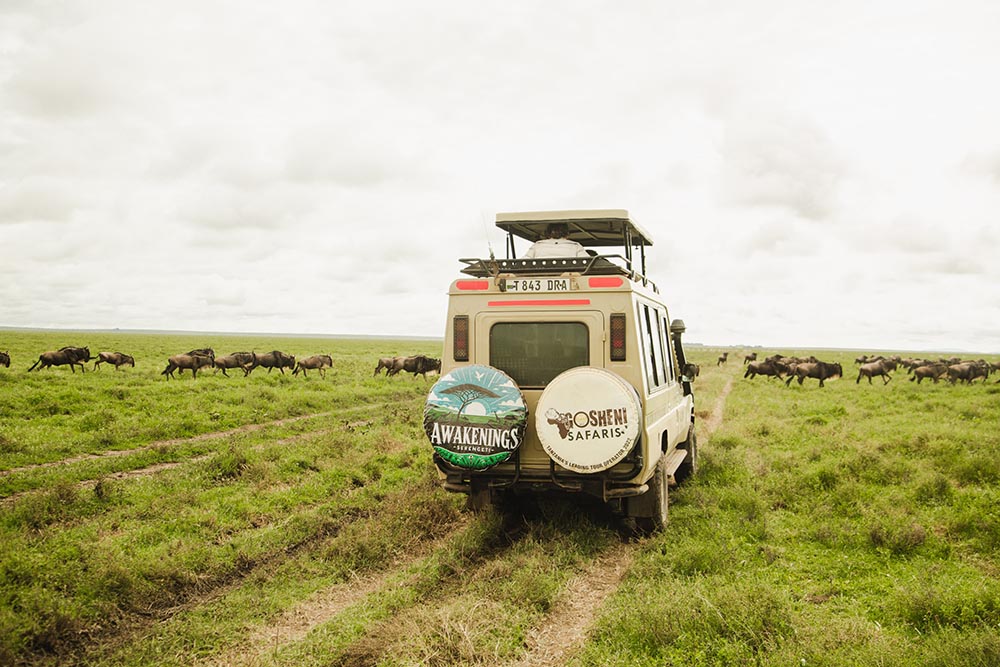
The calving season in the Serengeti offers a plethora of thrilling activities beyond traditional game drives. One of the most popular options is guided 4X4 drives, which allow you to traverse the vast plains and get up close to the wildlife. These private safaris often use custom vehicles designed for optimal viewing, giving you a front-row seat to the action.
For a unique perspective, consider a hot air balloon ride over the Serengeti. Floating above the plains at sunrise provides a breathtaking view of the landscape and the herds below. It’s an experience that adds a magical touch to your safari adventure.
Marked by dramatic predator-prey interactions, the wildebeest calving season sees up to 8,000 wildebeest calves born daily, attracting active predators like lions and cheetahs for unforgettable wildlife spectacles. Witnessing these moments of survival and resilience is an essential part of any calving season safari.
Witnessing the Great Wildebeest Migration

The Great Wildebeest Migration is one of the most awe-inspiring natural spectacles on earth, and the calving season is a crucial part of this epic journey. During this period, millions of wildebeest migrate across the Serengeti, with over 8,000 calves born daily in the southern Serengeti. This mass birthing event attracts a host of predators, making it a thrilling time for wildlife enthusiasts.
Lions, cheetahs, and hyenas thrive during the calving season, thanks to the abundance of vulnerable calves. This intense dynamic provides a rare glimpse into the raw essence of the natural world.
Besides wildebeest, species like zebras and gazelles also give birth during this period, enhancing the diversity of the wildlife spectacle. The calving season and breeding season offer unique photographic opportunities, capturing emotional moments between mother wildebeests and their calves, making it an unforgettable adventure for photographers.
Exploring Nearby Attractions
Though the calving season in the Serengeti National Park is the main attraction, nearby locations also warrant exploration to enrich your Tanzania safari experience. Lake Manyara and the Ngorongoro Crater are two destinations that should be on every safari goer’s list.
Lake Manyara National Park is renowned for its stunning scenery, including thousands of flamingos and rare tree-climbing lions. The mix of forest and savannah landscapes, set against the Great Rift Valley escarpment, offers a picturesque and serene environment for wildlife viewing.
The Ngorongoro Crater, a UNESCO World Heritage Site, is another must-visit. Known for its diverse wildlife, including elephants, lions, and black rhinos, the Crater offers excellent game drive opportunities. Tracking the Big 5 in this unique volcanic caldera enhances your overall safari adventure in the Ngorongoro Conservation Area, making it unforgettable.

Photography Tips for Capturing Wildlife
Capturing the essence of the calving season requires strategic planning and timing. The southern Serengeti, especially the Ndutu region, is ideal for photographing wildebeest calves and their interactions with their mothers. Early mornings and late afternoons are optimal for wildlife photography, as animals are most active and the lighting is perfect.
For those eager to capture images of young wildebeest calves, the ideal period is from February to April when most calves are born. This period provides ample opportunities to photograph these adorable and vulnerable young animals as they take their first steps in the vast Serengeti plains.
Understanding the Serengeti Ecosystem
The Serengeti ecosystem balances life and death, underscored by the annual Great Migration. The defined calving season, from January to March, coincides with fresh grazing from November rains. This timing ensures ample food supply, especially calcium-rich grass shoots, crucial for the health of newborn calves during calving seasons.
Predators like lions and hyenas are more active during the calving season due to abundant prey. This dynamic maintains the natural balance of the ecosystem by controlling populations of wildebeests and other grazers.
The broader Serengeti life cycle includes the calving season and the annual migration of millions of wildebeests and other herbivores. This migration balances the ecosystem, supporting diverse wildlife species and maintaining the health of the Serengeti plains.
Preparing for Your Safari Adventure
Preparation is key to a smooth and enjoyable safari adventure. Tanzania has three main international airports, with Kilimanjaro International Airport being the most convenient for safari goers. Have a valid visa, obtainable on arrival or through an online application.
Health precautions are crucial. A Yellow Fever vaccination is mandatory if arriving from a risk country, and travel insurance is highly recommended for unexpected incidents during the safari. Tanzania is generally considered safe for travelers, particularly those on organized safaris.
For packing, light layers and neutral-colored clothing are advisable. Camouflage clothing is not permitted unless you are a member of the Tanzania People’s Defence Force. Don’t forget to bring a hat or cap for sun protection, and sturdy walking shoes for those walking safaris.
Ensure your passport is valid for at least six months beyond your arrival date in Tanzania. With these preparations, you’ll be set for an unforgettable Serengeti adventure.
Summary
The calving season safari in the Serengeti offers a once-in-a-lifetime opportunity to witness the circle of life in one of nature’s most pristine settings. From the synchronized births of wildebeest calves to the thrilling predator-prey interactions, every moment is a testament to the beauty and complexity of the natural world.
We hope this guide has provided you with valuable insights and tips to plan your own safari adventure. Embark on this journey with an open heart and a curious mind, and you’ll return with memories that will last a lifetime. Ready to witness the magic of the calving season? Your adventure awaits!
Frequently Asked Questions
When is the best time to visit the Serengeti for the calving season?
The best time to visit the Serengeti for the calving season is from late December to early March, with February being the peak month to witness the adorable newborns! Don’t miss this incredible experience!
What are the must-do activities during the calving season safari?
Don’t miss out on guided 4X4 drives, breathtaking hot air balloon rides, and the thrilling predator-prey interactions during the calving season safari! It’s an adventure of a lifetime!
What should I pack for a calving season safari?
You won’t want to forget those light layers and neutral-colored clothes! Pack a hat for sun protection and sturdy walking shoes, and make sure your passport is ready for an adventure!
Are there other attractions to visit near the Serengeti?
Absolutely! You can explore Lake Manyara National Park, famous for its stunning flamingos and tree-climbing lions, and the incredible Ngorongoro Crater, teeming with diverse wildlife and the Big 5!


