Tanzania has some of the best safari country in Africa: the Serengeti National Park, the Ngorongoro Crater, Tarangire National Park with its ancient baobabs and large elephant herds, Ruaha National Park's remote wilderness, Nyerere National Park in the south, and the spice-scented beaches of Zanzibar. Add Lake Tanganyika and Mount Kilimanjaro, where the Machame Route is a popular climbing path, and it's easy to see why Tanzania anchors the East Africa safari circuit alongside neighboring Kenya and its Maasai Mara and Amboseli parks. What you get out of a Tanzania safari package, though, comes down entirely to who you book it with.
Most safari packages here are priced per person and run best during the dry season, July to December, when wildlife viewing and the Great Migration are at their peak. Comparing those per-person prices between operators is where things get complicated.
Tanzania has hundreds of safari operators, from large international agencies to one-vehicle local outfits, all chasing the same pool of travelers. Some are excellent. Plenty aren't. Knowing the difference before you hand over a deposit is what this guide is for.
Here are 15 questions worth putting to any operator you're seriously considering. The answers, and the dodges, tell you most of what you need to know. If you'd like to put them to us directly, get in touch with us.
1. Are You A Locally-Owned and Operated Tanzania Safari Company?
This is the big one, and it matters more than it sounds. An operator based in Arusha or Dar es Salaam, employing Tanzanian guides and staff and running its own vehicles, has a different relationship with the country than an overseas agency reselling third-party suppliers with a mark-up on top. Local ownership means the people planning your safari know the Serengeti's seasonal rhythms firsthand and have built relationships with lodges and camps over years, not weeks.
We were founded in 2009 by Peter Robert, a Tanzanian who started out as a safari guide and driver. We're fully Tanzanian-owned, our guides and ground staff are Tanzanian, and we're based in Arusha, the gateway to the northern safari circuit. That's the difference between a trip assembled from a spreadsheet overseas and one planned by people who live here.
2. Do You Own Your Safari Vehicles, Or Do You Farm Them Out?
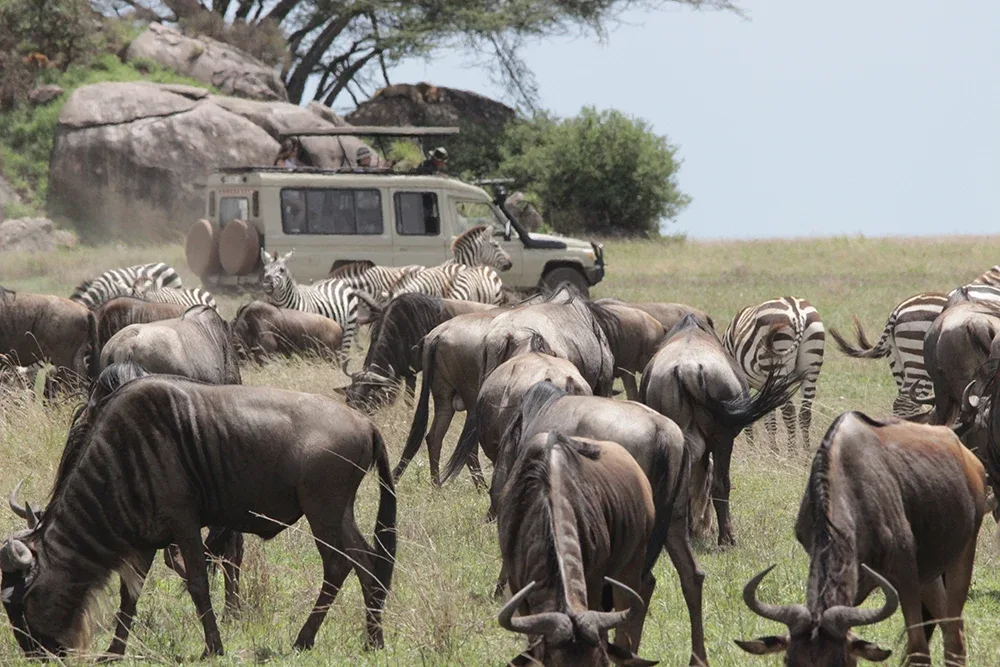
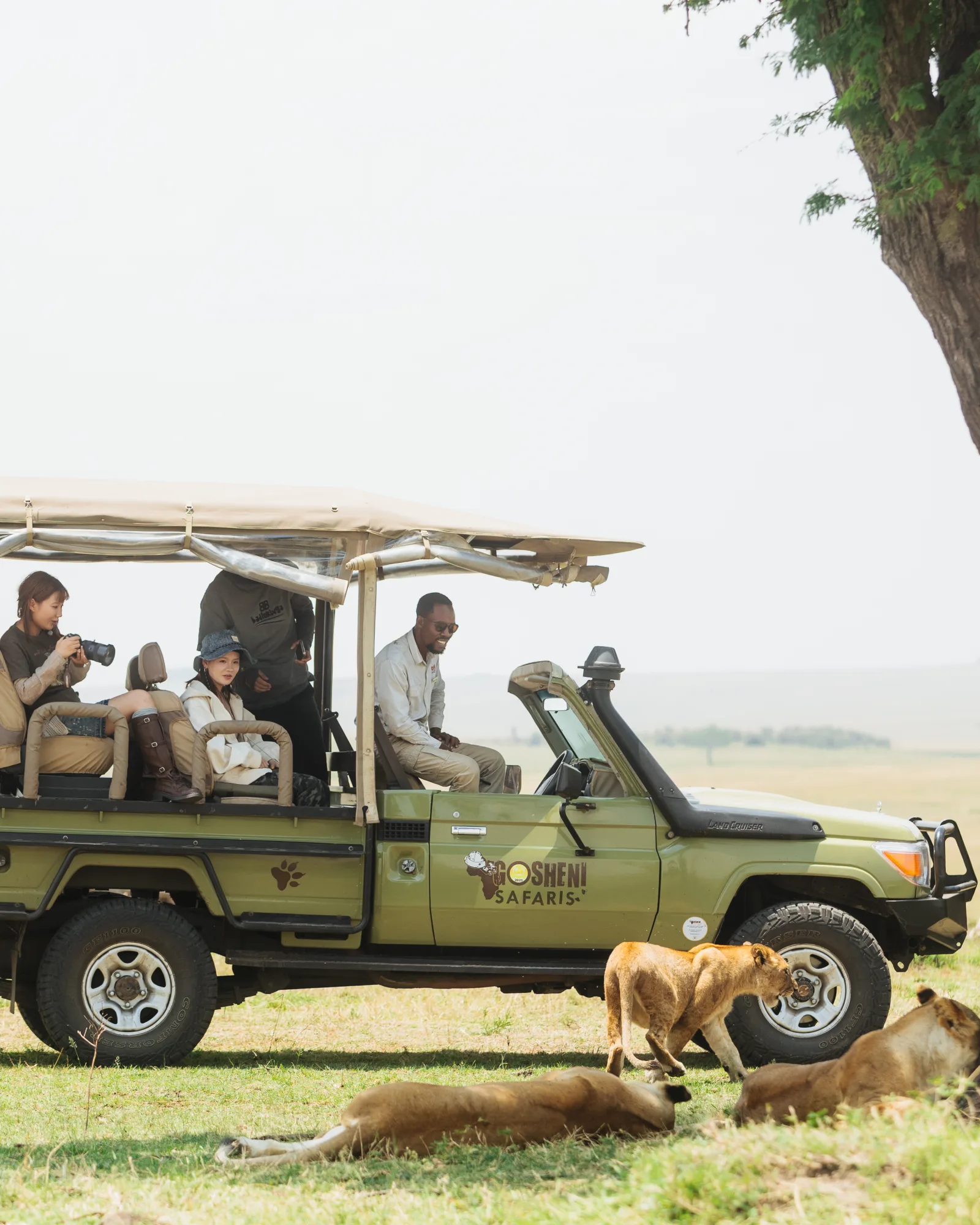
Your safari vehicle is where you'll spend most of each day, whether that's on the Serengeti plains or around the Ngorongoro Conservation Area. It affects your comfort, safety and how much wildlife you actually see. An operator that owns and maintains its own fleet controls all three. One that sub-contracts vehicles to whoever's free that week doesn't.
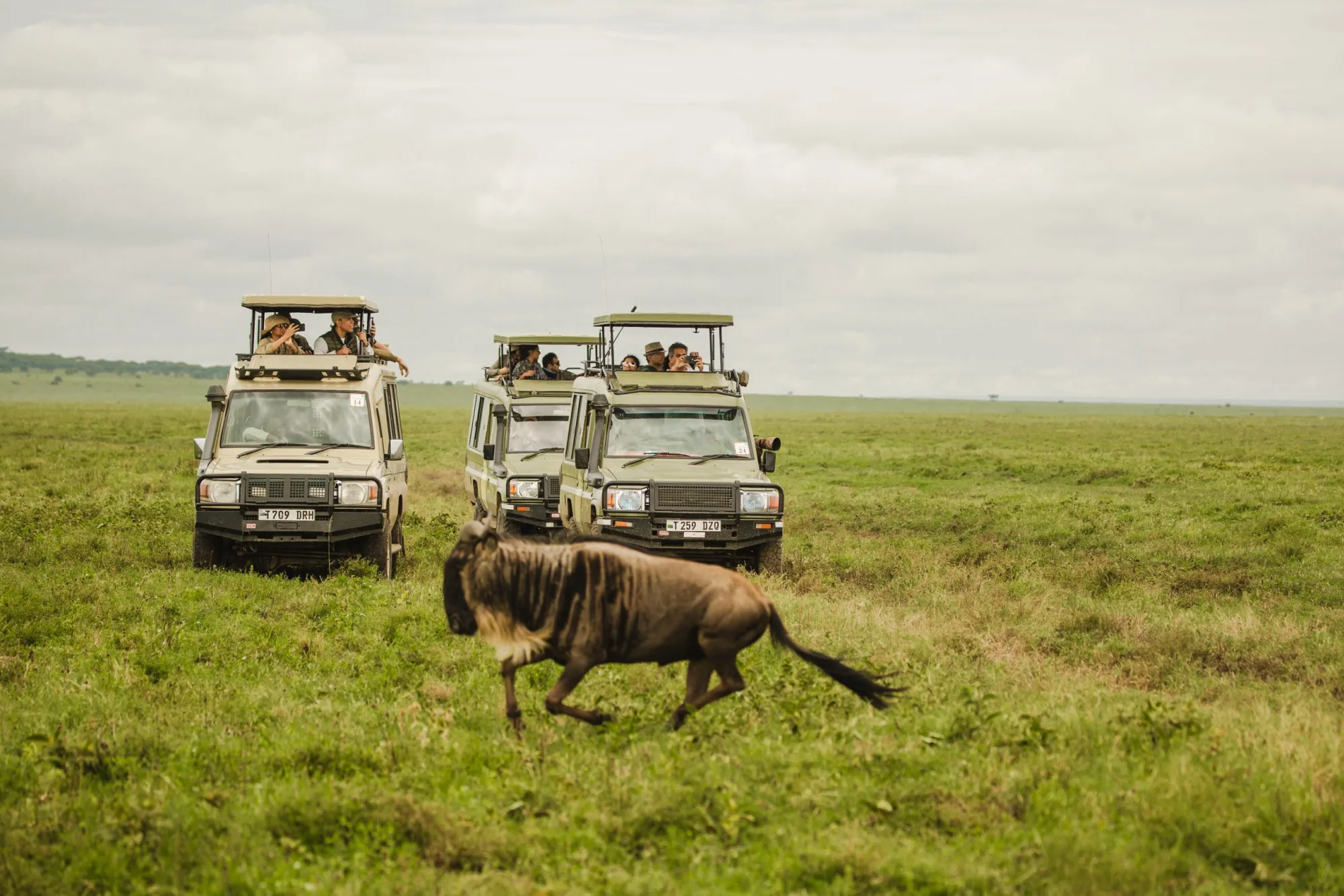
Ask specifically: how old is the fleet, what's been modified for safari use, what communications gear is on board, and how often do vehicles get serviced. We run more than 50 of our own Land Cruisers, extended and modified for passenger comfort, with pop-up roofs for standing game viewing, power inverters for camera gear, wildlife reference books, HF long-range radios, and a spare tyre and heavy-duty jack as standard. If an operator can't give you detailed answers about their vehicles, treat that as a red flag.
3. Who Will Actually Be My Guide On The Day? And What's Their Experience?
Your guide is the single biggest variable in how a Tanzania safari actually feels. A good one can track a leopard through dense cover, read animal behaviour in real time, and find a vantage point before three other vehicles arrive. A mediocre one drives you to the popular spots and waits for someone else to find something first.
Ask the operator about their guides directly: years of experience, qualifications, what parks or wildlife they specialise in, whether they speak your language. Ask whether you'll have the same guide for the whole trip or get handed between drivers. Ask whether guides are employed directly or hired as freelancers for the season. An operator who can speak specifically about individual guides on their team has invested more than one who can't name them.
4. What Actually Comes Included in That Tanzania Safari Package and How is the Tanzania Safari Cost Determined?
Comparing Tanzania safari costs between operators is frustrating unless you know exactly what each package includes, from a short 3 days classic Serengeti safari to a longer itinerary. Travelers sometimes discover on arrival that their low price didn't include park fees, that "lunch" was a packed sandwich, or that airport transfers cost extra. Occasionally the "luxury lodge" turns out to be fairly ordinary.
Confirm exactly what's included in the per-person rate before you book. A transparent package covers all accommodation as specified, all meals during the safari (including a proper hot lunch, not a packed sandwich), all national park and conservation area entry fees, a private safari vehicle with a professional guide, bottled water during game drives, and airport transfers on arrival and departure. Ask for an itemised quote, and if an operator is vague about park fees, saying they're "still to be confirmed" or "subject to change" without explanation, ask them to sort it out before you pay anything.
5. Can You Tailor the Itinerary to My Specific Interests and Timeline?
Tanzania has enough safari options that first-time visitors often feel overwhelmed. The northern circuit, Serengeti, Ngorongoro Crater, Tarangire, Lake Manyara National Park, is the classic route and a solid starting point if you're new to safaris. If you want something less visited, the southern circuit covering Ruaha and Nyerere National Park (formerly the Selous Game Reserve) is quieter and wilder. If you're chasing the Great Migration river crossings in July and August, plan around the northern Serengeti and book accommodation well ahead, since access there is harder. For something different, a day trip to Olduvai Gorge shows stone tools and fossils that put millions of years of human history into perspective.
A good operator sits down and listens to what you actually want, whether that's the migration, big cats, rhino and buffalo, or a few days in Zanzibar tacked on at the end, and builds an itinerary around it rather than sending you the same package they send everyone else. If the response to your specific request is a generic itinerary, keep looking.
6. What Sustainability and Conservation Commitments Do You Have?
Tanzania's wildlife only stays healthy if the ecosystems around it stay healthy, and tourism plays a direct part in that. Ask what your operator actually does about it.
A responsible operator can tell you specifically how it supports conservation: employing people from local communities, minimising environmental impact in the parks it operates in, supporting anti-poaching work, keeping to wildlife-viewing ethics in the field (no crowding animals for a photo, no driving off-track in sensitive areas), and contributing to community development beyond the standard tourist package. We have a sustainability policy in place, and the Gosheni Foundation works alongside it on conservation and community projects. If an operator can't answer clearly when you ask, that tells you something.
7. What Reviews and Independent Recognition Do You Have?
With so many travel review sites available, there's no excuse for booking an overseas safari without checking an operator's review record first. Volume matters: hundreds of consistent reviews across several years is a stronger signal than a handful from the last month. So does content: look for reviews that mention specific guides and experiences, from travelers whose trip looks like the one you're planning, whether that's a family on a budget, solo travelers, or a couple on a luxury safari.
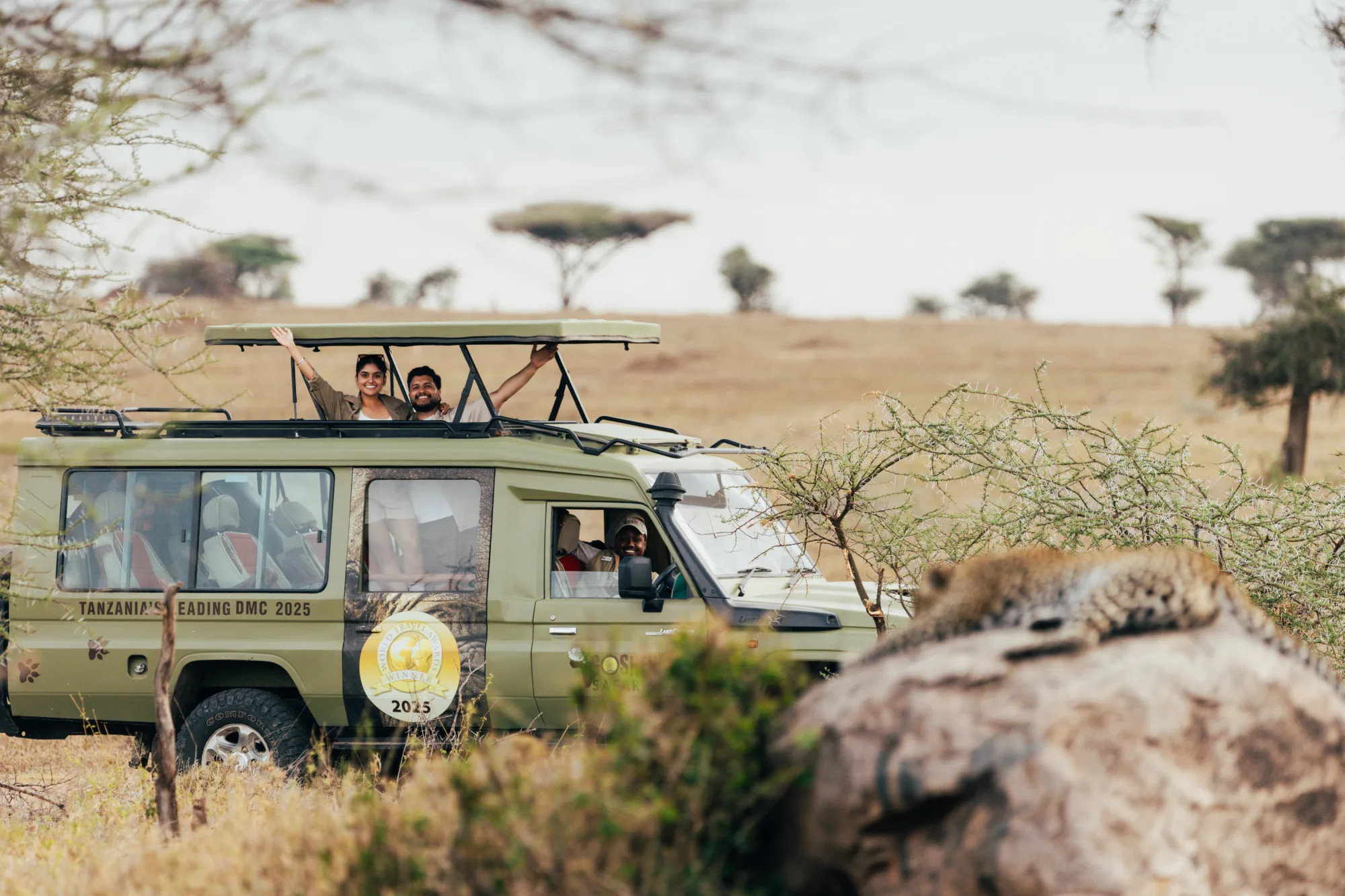
Independent recognition, where an operator actually has it, adds another layer on top of guest reviews. We hold a Tripadvisor Certificate of Excellence from 2015, and we've picked up a run of World Travel Awards: Tanzania's Leading Tour Operator in 2021, Africa's Leading Tour Operator in 2024, Zanzibar's Leading Tour Operator every year from 2023 through 2026, Zanzibar's Leading DMC in 2025 and 2026, and Tanzania's Leading DMC in 2025. When you're checking another operator's claims, ask for the specific award, the year and the issuing body, and follow up to confirm it's current rather than a badge bought from a directory site.
8. What Happens If Something Goes Wrong on the Ground?
Africa is beautiful, wild and occasionally unpredictable. Vehicles break down. Weather changes fast. Animals don't keep schedules, and medical emergencies happen when you least expect them. The real question isn't whether something will go wrong, it's what your operator does when it does. Ask specifically: is there 24/7 support during the trip? What's the plan if a vehicle breaks down in the middle of the Serengeti? How is a medical emergency handled when the nearest facility is hours away? What happens if a guest needs to cut the trip short?
A good operator has clear, rehearsed answers to all of this. Our answer is yes to 24/7 support for the length of your trip, vehicles equipped with long-range radios, guides trained in first aid and emergency response, and a standard emergency kit on board. A vague or flippant answer to "what if something goes wrong" is a major red flag.
9. Do You Need Us to Get Travel Insurance, and Can You Point Us in the Right Direction for Coverage?
Any decent Tanzania safari operator will insist you have proper travel insurance before you leave. This isn't a formality: a medical evacuation from a remote national park or game reserve can cost $30,000 to $50,000, and that's not a bill you want to discover you're liable for.
If an operator doesn't mention insurance or can't give real advice on the right kind of cover, that's a sign they don't take your safety seriously enough. Ask whether they can point you to a good provider, and make sure any policy includes medevac and emergency repatriation in African countries.
10. Can I Talk to a Recent US Traveler Who Booked with You?
Most people don't think to ask this, but it's worth asking. A confident operator will happily put you in touch with a previous guest, ideally one with a similar trip to the one you're planning. American travelers have specific expectations around service and communication, and an operator used to working with them will know how to meet them.
If an operator pushes back hard on this request, ask yourself why. Operators who know their work is good tend to welcome the scrutiny.
11. What Types of Safaris Do You Offer, and Which Is Right for Me?
One size doesn't fit all on a Tanzania safari, so we offer a range of experiences built around your interests, travel style and budget: a fully private trip, a more budget-conscious itinerary, or a higher-end option with fewer compromises.
If wildlife viewing is the priority, we can base your trip around the Serengeti's game drives or the Ngorongoro Crater, where the Big Five share a volcanic caldera. For travelers who want to get further off the main circuit, we also run safaris to the Selous Game Reserve and Ruaha National Park.
We can add a Maasai village visit, or combine your safari with a few days on the beach in Zanzibar. Whatever the shape of the trip, our team can help put together an itinerary for families, couples or solo travelers.
12. How Transparent Are You About Budget and Costs?
A Tanzania safari is a real investment, and you should know exactly where the money goes. From the first quote, we provide a breakdown of costs, covering park fees, accommodation, guide costs and transportation, rather than a single bottom-line number.
There shouldn't be hidden charges or last-minute additions on any safari quote, from us or anyone else. Ask for the breakdown before you commit, and compare it line by line against any other quote you're considering.
Curated Journeys
Safaris to Inspire This Journey
Handcrafted itineraries that bring this story to life.
13. Are You Certified, Accredited, and Compliant with Tanzania Safari Regulations?
We operate as a licensed Tanzania tour operator, and our vehicles are maintained to meet safety and environmental standards. TANAPA, the Tanzania National Parks Authority, named us Best Tour Operator for Quality and Innovation in Service Provision in 2022. Ask any operator you're considering for their licensing details directly, and be wary of one that can't produce them.
Compliance isn't just paperwork. It's part of how an operator protects both its guests and the land it operates on.
14. How Do You Support Local Communities and Community-Based Tourism?
A good Tanzania safari connects you with more than wildlife and scenery. Our safaris often include visits to Maasai villages and other local communities, giving guests a chance to see the culture and traditions behind the landscapes.
We work with communities near the Serengeti National Park, Lake Manyara and the Ngorongoro Conservation Area, supporting local businesses and conservation initiatives alongside them. Ask any operator how tourism revenue actually reaches the people who live in these areas; the answer tells you a lot about how seriously they take it.
15. The Right Operator Makes All the Difference
Tanzania has some of the best scenery and wildlife in Africa: the Serengeti at its most dramatic, the Ngorongoro Crater thick with predators, the remote wilderness of Ruaha and Nyerere, the beaches of Zanzibar, and Kilimanjaro rising above it all. These parks are open year-round, across every budget. Whether this is your first safari or your fifth, who takes you there matters more than which park you start with.
What makes Tanzania worth the trip, the moments you end up telling people about for years, comes down to the people who take you there. Ask these questions, listen to the answers, and book with whoever answers them clearly.
We've been doing this since 2009, and we'd be glad to show you how we do it.
Where You'll Stay