
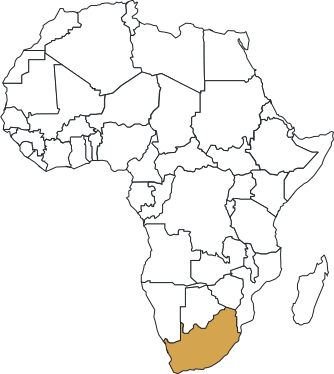
Quick Facts About the Serengeti National Park
This guide is all about helping you squeeze every last bit of wildlife out of your time in the Serengeti. Whether you’re out to catch a river crossing, stalk the big cats, or just want to spend hours watching the herds flow across the endless plains, the tips in this guide will take your safari from good to amazing.
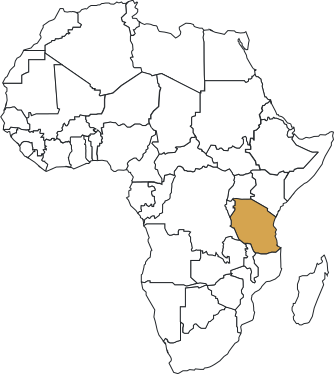
The Serengeti National Park has been around since 1951, making it the oldest national park in Tanzania. And with UNESCO World Heritage Site status since 1981, it’s clear that it’s a very special place indeed. This vast park covers a whopping 14,763 square kilometres in northern Tanzania, right up against the border with Kenya’s Maasai Mara National Reserve – one of the most important wildlife corridors on the planet.
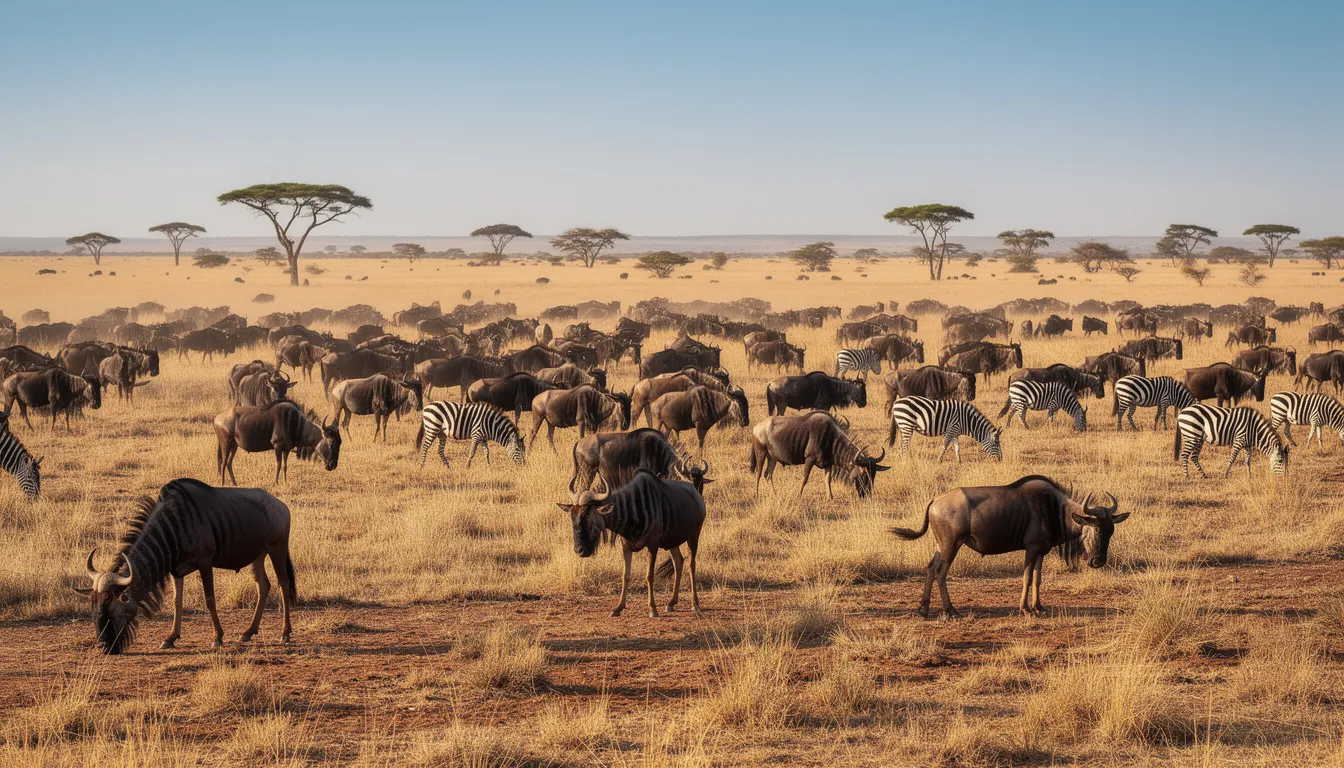
It’s the Great Migration that really makes the Serengeti tick. Every year, around 1.5 million wildebeest, 200,000 zebras and 300,000 Thomson’s gazelles make a grand clockwise loop through the Serengeti, chasing the rains and following the fresh grazing. This is the biggest wildlife migration on Earth, and it’s the main reason why so many visitors plan their trip around specific months.
The Serengeti’s landscape is as diverse as it is beautiful – here are the different habitats you can find in the park:
- Serengeti plains – vast, open grasslands stretching out as far as the eye can see in the south
- Acacia woodlands – scattered woodlands in the central and western regions
- Riverine forests – lining the Grumeti and Mara rivers
- Rocky outcrops (kopjes) – granite formations that make perfect vantage points for predators
Understanding the lay of the land is key to getting the most out of your game drives. After all, animals tend to congregate in certain areas, and knowing where to look can really pay off.
You’ll find the Big Five (lion, leopard, elephant, buffalo, and rhino) as well as cheetah, spotted hyena, crocodiles, hippos, giraffes, and over 500 bird species in the Serengeti. And with around 3,000 lions spread across 41 prides, this is one of the best places in Africa to see predators in action.
This guide runs 2,000-2,500 words and is structured to help you pick the right time, region, and daily rhythm to get the most out of your peak wildlife hours.
Getting to the Serengeti – How to Plan Your Game Drives
The Serengeti is right in the heart of Tanzania’s famous Northern Circuit, which also includes Ngorongoro Crater, Tarangire National Park and Lake Manyara. Most safari itineraries combine multiple Tanzanian national parks – but be aware that this can mean sacrificing some of your precious time in the vehicle.
Getting Here
The main access points for the Serengeti are:
| Entry Method | Route | Approximate Time |
|---|---|---|
| Fly-in | Kilimanjaro Airport → Arusha → Seronera/Kogatende airstrip | 1.5–2 hours total flight time |
| Fly-in | Dar es Salaam → Seronera | 2–3 hours |
| Overland | Arusha → Ngorongoro → Central Serengeti | 6–8 hours driving |
| Overland | Arusha → Lake Victoria route → Western Corridor | 8–10 hours |
Fly-in safaris drop you right into the action, with airstrips in central and northern Serengeti, Grumeti, and Ndutu. The catch: flights cost a pretty penny but save you precious game-drive time.
Taking the overland route through Ngorongoro Conservation Area saves you some cash but you’ll lose your first afternoon and last morning to transit – that’s 6-10 hours less on the game drives over a typical 4-night stay.
Park Entry Gates
The main entry points are:
- Naabi Hill Gate – Main southern entrance, ideal for getting to Ndutu and central Serengeti
- Ndabaka Gate – Western entrance near Lake Victoria
- Klein’s Gate – Northern entrance for those coming from or going to Kenya
Get to the gates before 7 am to make the most of your first day. Park fees are processed quickly in the morning, and you can be on the road within 30 minutes while other visitors are still queuing.
Which Serengeti Region to Choose and When to Go
Picking the right region at the right time is the key to making the most of your game drives. The Serengeti splits into four main safari zones, each with its own character and seasonal highlights.
| Region | Best Months | Primary Appeal |
|---|---|---|
| Southern Serengeti (Ndutu) | December–March | Calving season, huge herds, predator action |
| Central Serengeti (Seronera) | Year-round | High predator density, reliable game viewing |
| Western Corridor (Grumeti) | May–July | River crossings, remote atmosphere |
| Northern Serengeti (Mara River) | July–October | Dramatic crossings, fewer vehicles |
Each area of the Serengeti – central, north, south – has its own unique expectations and needs when it comes to planning your trip. If you’re a predator enthusiast, the central Serengeti is the place to go for year-round lion sightings. On the other hand, if you’re after the Great Migration, you’ll want to follow the herds as they seasonally move from south to north to west and back again. Photographers looking to avoid the crowds often head to the north or eastern parts of the park.
Given that you can only be in one place at a time, it makes sense to base yourself within or next to the area you’ve decided to focus on. Lodges that are more than 30 minutes away from the action just consume time that could be better spent watching the wildlife instead.
Regional combinations to consider for 5-7 night itineraries:
- Central + Northern – The classic predator viewing experience, plus the thrill of the Mara River crossings
- Southern + Central – If you’re visiting during calving season, head south to see the action, then head to Seronera for year-round game viewing
- Central + Western – Reliable game viewing all year round, plus the occasional spectacle of the Grumeti River in season
Southern Serengeti and Ndutu – calving season magic
The southern Serengeti and Ndutu (which is actually in the Ngorongoro Conservation Area) comes alive between December and March, when the short grass plains of the southern Serengeti become the heart of the Great Migration. This is calving season, when hundreds of thousands of wildebeest are on the plains. For those interested in exploring more of Africa’s extraordinary wildlife and landscape, consider this 6-day safari through Botswana’s Okavango Delta, Chobe, and Victoria Falls.
At the height of calving in January and February, researchers estimate that over 8,000 wildebeest calves are born every day. It’s a real-life soap opera of predator and prey, as every animal in the ecosystem comes out to take advantage of the vulnerable new arrivals. If you’re lucky enough to be there during this time, the game drives are some of the most intense wildlife viewing you’ll ever experience.
What makes Ndutu drives so special:
- Because it’s part of the conservation area, off-road driving is allowed in certain areas, giving you a much better chance of seeing those elusive animals
- The short grass plains give you unobstructed views of the wildlife, making it easier to track and spot them
- Cheetahs love the open plains for hunting, so you’re likely to see them on the hunt
- Lion, hyena and jackal activity is higher around the herds
- And of course, you’ll see all the migratory birds that come during the wet season
Allow at least 3-4 nights to fully experience the morning and afternoon drives, plus a full-day drive out onto the plains to really immerse yourself in the experience. And don’t forget to check the rainfall patterns – the herds follow the rain, so you need to be flexible with your plans.
Central Serengeti (Seronera) – year-round game viewing
The central Serengeti is the classic Serengeti landscape that most people imagine – sweeping grasslands punctuated by acacia trees and the winding Seronera River. And the reason it’s so good for game viewing is that there are permanent water sources in the Seronera Valley, keeping the wildlife concentrated even when it’s dry. You’ll see all the usual suspects – hippos and crocodiles on the river, leopard snoozing in the trees, and even the odd elephant.
What you can expect to see on central Serengeti drives:
For a different adventure, you might also be interested in our 4 Days Best Of Kenya Walking Safari, offering unique wildlife and nature experiences beyond the Serengeti.
- Lion prides – it’s one of the areas with the highest density of lion prides in the park
- Leopard – find them in the sausage trees and fig trees along the river
- Cheetah – out on the open plains, doing what they do best
- Large buffalo herds – often hundreds of them
- Elephant, giraffe and all the usual plains game
- And of course, all the birds – superb starlings, lilac-breasted rollers, and secretary birds
It can get a bit busy in the central Serengeti, especially with vehicles. But there are a few things you can do to get around this – head out of camp before 06:30, take the secondary trails, or stay out a bit longer in the morning when the other vehicles are back for breakfast. It’s a great place to base yourself if you’re not sure what the migration timing is going to be like – the wildlife is always there.
Northern Serengeti – Mara River crossings and peaceful drives
The northern Serengeti around Kogatende and Lamai is where the huge herds of wildebeest and zebra congregate at the Mara River from about late June to October. And it’s here that you get to see the classic Mara River crossings – the wildebeest massing at the water’s edge, the crocodiles waiting to strike, and the drama of the crossing itself. It’s not just about the crossings, though – the northern Serengeti is also a great place to see predators, with fewer vehicles than in the central area.
What to keep in mind when visiting the northern Serengeti:
- Book a camp that’s close to the known crossing points, so you’re not wasting any time getting to the action
- Be flexible with your plans – the crossings are unpredictable, so you need to be prepared to wait
- If you’ve got time, combine your visit to the northern Serengeti with a few nights in the Maasai Mara National Reserve for a real cross-border adventure
- And finally, be prepared for some pretty remote atmosphere and some of the most immersive game drive experiences you’ve ever had.
Western Corridor – Grumeti River and seasonal excitement
The western corridor stretches right on out towards Lake Victoria and its all centred on the mighty Grumeti River. Migration herds tend to come through & have some amazing crossing opportunities with the largest Nile crocodiles in Africa between May and July.
Game drives here feel a lot more unpredictable & wild than what you get in central areas. The vegetation is way denser with thickets of riverine trees and woodlands, which means you’re going to need more patience and a different set of tracking skills. Mind you, the trade-off is seclusion – the number of vehicles out on the roads drops off dramatically compared to Seronera.
If you’re willing to spend a little extra, there are private concessions just outside the park, including Singita’s properties, that can offer you some really unique experiences like night drives, off-road driving and walking safaris that you can add on to the standard game drives. These are usually at a higher price point but they can really make a trip for someone who’s interested in getting up close and personal with the wildlife.
We’d recommend spending 2-3 nights in the west as a bit of an add-on rather than trying to go there for the entire trip.
Best time to visit Serengeti for game drives and the Great Migration
There’s wildlife in the Serengeti all year, but where you go and what you see will change completely with the seasons and the migration patterns.
Seasonal overview
| Season | Months | Characteristics |
|---|---|---|
| Short rains | October–December | Migration returns south, green landscapes, early November brings new growth |
| Long rains | March–May | Challenging road conditions, fewer visitors, lower prices |
| Dry season | June–October | Peak game viewing, river crossings, dry season ends with short rains |
| Dry season ends | Late October | Transition period with excellent conditions |
Month-by-month migration positioning
- Jan-March: In the southern Serengeti and Ndutu, the calving seasonis in full swing in January and February
- April-May: The herds are moving through the central Serengeti, but you might find the rain gets in the way of getting to some areas
- Late June to July: In the western corridor and Grumeti, the herds are making their way up to the north
- Aug-Oct: In the northern Serengeti, it’s the Mara River crossing that’s all the drama
- Southern Hemisphere summer and autumn (Nov-Feb): And the herds are down in the south
Migration timing is all dependent on how much rain makes it in – it can vary by two to three weeks each year. So, if you’re looking for some decent sightings, you want to think about which region and which season will be best for you, rather than trying to pin down a specific date. The herds are going to be somewhere – now it’s just a matter of matching up your visit with where they are likely to be.
Shoulder season advantages
Discover the unique shoulder season advantages when joining the 5 Days Ndutu Migration Safari Calving Season, such as fewer crowds and exceptional wildlife viewing opportunities.
- Fewer vehicles on the roads
- Lush, photogenic landscapes
- Strong resident wildlife even without the migration herds
- Your wallet will thank you – lower lodge rates and better availability
For anyone who isn’t really fussed about the wildebeest migration, the central Serengeti still offers a lot. Reliable predator viewing and a good supply of plains game all year round.
How to get the most out of your game drives in Serengeti
Safari days in Serengeti have a pretty standard rhythm, dictated by how the wildlife behaves and the temperature patterns.
- Morning drive: 06:00-10:00 (3-4 hours)
- Afternoon drive: 15:30-18:30 (2.5-3 hours)
- Full-day option: 06:00-18:00 with a picnic lunch
Most of the action happens in the cool morning hours when the temperature is around 15°C. By midday, the heat peaks at 28°C and most of the wildlife takes a siesta in the shade. Later in the day, things start to get going again, just in time for the end of the day and the sun going down.
Strategies for getting the best out of your sightings
- Get out of camp by 06:00-06:30 before the other guests start to stir
- Stay out a bit later in the afternoon for the golden hour and to catch any nocturnal predators that might be on the move
- Try to get in at least one or two full-day drives every 4-6 nights you’re staying
- Get an experienced, certified guide who’s got a handle on the seasonal patterns
- Use vehicles that are good for 360-degree views – 4x4s with pop-top roofs are your friends
- Make sure you communicate your priorities with your guide each day – do you want to see the big cats, get some bird photography or just have some peace and quiet?
Choosing the right camp or lodge for better drives
Lodge location can make all the difference – where you are in relation to the prime wildlife areas can cost you anywhere from 45 minutes to an hour of prime game-drive time each day.
Selection criteria:
| Factor | What to Look For |
|---|---|
| Location | Within 20 minutes of prime game-viewing areas |
| Vehicle sharing | Private vehicles or maximum 4–6 guests per vehicle |
| Flexibility | Ability to depart early, stay late, or do full-day drives |
| Guide quality | Experienced, licensed guides with local knowledge |
A lot of the lodges inside the park work to a fixed schedule, but smaller camps and private concessions tend to be a bit more flexible. Mobile camps that follow the migration keep their guests right in the thick of it.
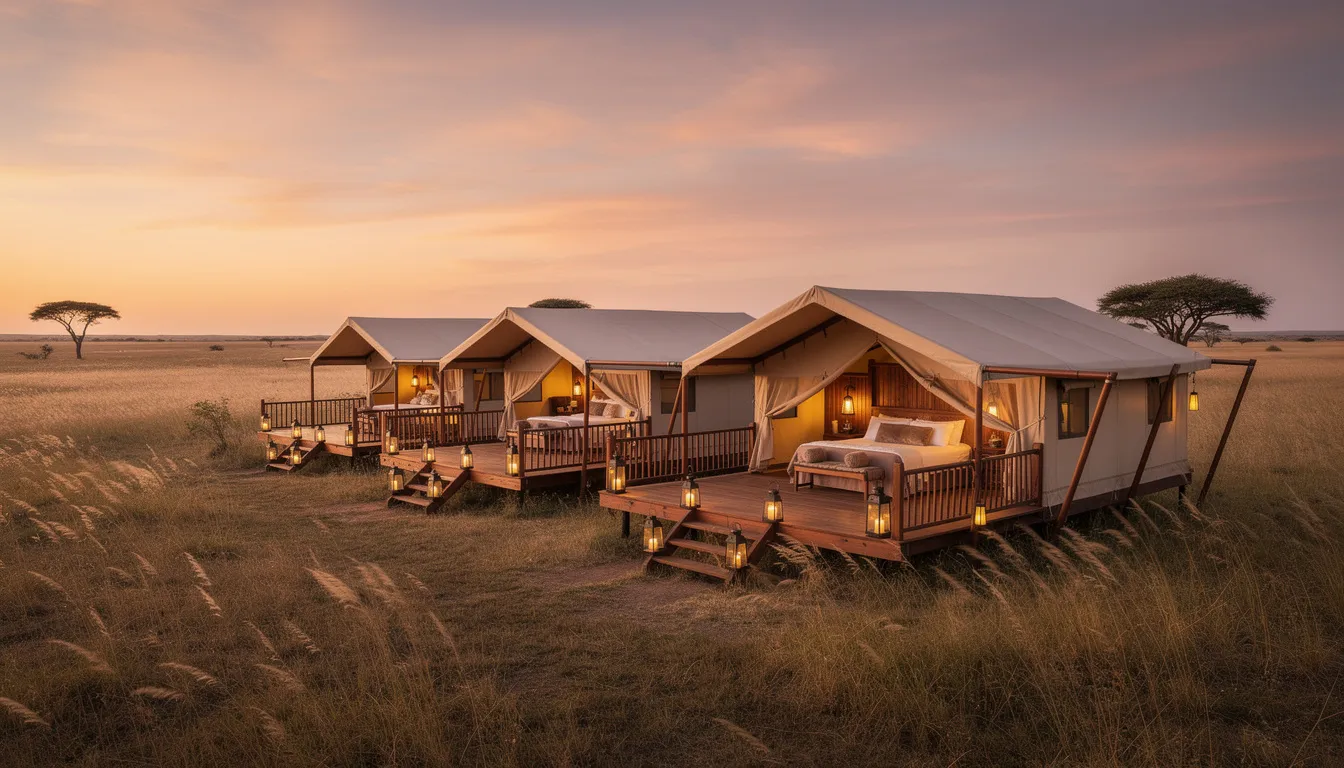
Serengeti lodges cover the full range, from affordable tented camps up to luxury properties that’ll leave a dent in your wallet. Higher rates usually mean private vehicles, expert guides and flexibility – all of which can make a big difference in how good your game drives are.
Daily rhythm: timing your game drives
This is the time of day we come back to time and again – how you manage your game drives to get the most out of them.
- Early morning drive: 06:00-10:00 (3-4 hours)
- Afternoon drive: 15:30-18:30 (2.5-3 hours)
- Full-day option: 06:00-18:00 with a picnic lunch
You want to be out there when the temperatures are cool and the wildlife is active – that’s usually in the morning. By midday, it gets hot and the wildlife takes a break. Then in the late afternoon, things pick up again just in time for the golden hour and the end of the day.Predators are usually at their most active during the cooler parts of the day. Lions get up to mischief before 9am and after 4pm. Cheetahs prefer to be out and about in the early morning, when it’s still cool, so the heat doesn’t get in the way of their sprinting abilities. Leopards tend to surface just as the sun starts to set.
Timing tips
- Make sure you’re vehicle-ready and out in the bush before dawn – have breakfast out there too, after you’ve made the initial circuit. It’s also a good time to get a feel for the area.
- Use the hottest part of the day for waterhole observation – even when it’s roasting, the animals will still come to drink.
- Be flexible with your schedule. If the lions are on the hunt, or you spot a river crossing happen, then extend the drive – the schedule is there to see the wildlife, not the other way round.
Full-day game drives vs half-day drives
Full-day game drives with a picnic lunch have some real advantages:
- You get access to parts of the park that wouldn’t be possible on a shorter drive
- You get to see all the midday action – like river crossings, predator interactions at kills, and herd movements
- You can follow the migration deeper into the Serengeti ecosystem\
- You spend less time in the vehicle, and more time actually out watching wildlife
Half-day drives are better suited to longer safaris, when fatigue starts to become an issue, or for people who aren’t too fond of the heat and dust.
Recommended balance: 1-2 full days for every 4-6 night stay, with some shorter drives in there too.
Full-day drive essentials:
- 4+ litres of water per person – you don’t want to get stuck out in the bush without enough to drink
- Wide-brimmed hat, sunscreen, and sunglasses – all the usual suspects to keep you safe from the sun
- Light jacket for those cool mornings
- Camera gear – with spare batteries and memory cards, of course
- Binoculars
- Basic medication and some insect repellent
Other safari experiences beyond the standard game drive
While game drives are the main event, there are plenty of other ways to experience the Serengeti – and its wildlife.
- Walking safaris: Take a stroll on foot in the buffer zones or private concessions – you’ll see all the little things that are invisible from the vehicle\
- Night drives: And then there’s the option to drive around at night – in nearby concessions, not in the national park itself – you might spot civets, genets, owls, and some nocturnal predators\
- Hot-air balloon safaris: Get a bird’s eye view of the Serengeti just before dawn – you can see the herds and the landscape stretching out as far as the eye can see\
- Cultural visits: Experience some of the local culture – like a visit to a Maasai community – without sacrificing any of your prime game-drive time
Tips for a successful game-drive safari
Preparation is key, and so is having some realistic expectations. Long days in the safari vehicle can be brutal – but they can also be some of the most exhilarating experiences of your life.
Packing essentials
- Beige or khaki clothing – that sort of thing
- Layers for when it’s cool in the mornings and warm in the afternoon
- A good hat and some quality sunglasses – and don’t forget your sunscreen
- Comfortable shoes, closed-in so you don’t get any dust in them
- Binoculars – and you can’t go wrong with 8×42 or 10×42
Camera gear tips
- Bring some spare batteries and memory cards – you won’t always have a chance to charge up\
- A beanbag or some sort of monopod can help you get some better shots from the vehicle\
- And don’t forget your telephoto lenses – 300mm+ is a good starting point
Health and safety
- Drink lots of water – at least 3-4 litres a day in the dry season
- Use plenty of insect repellent – especially in the woods
- Follow your guide’s instructions – no getting up to get a closer look at the lions, okay?
- Just generally be respectful of the park rules – and keep your distance from any wildlife
Etiquette
- Keep your voice down around any wildlife you might see
- Try not to block other vehicles up at all the popular spots
- Don’t pressure your guide to go chasing after any wildlifeSchedule a lighter day in either morning or afternoon if your stay is longer than 4 nights. Take a breather, book some spa time, or just sit back and enjoy watching the elephants from your lodge veranda – it’ll keep you energized for the rest of those drives.
Looking after the land – park rules and responsible touring
The Serengeti’s protected status and conservation history mean we all need to be responsible tourists. What we have today developed from those early game reserves that were set up back in the 1920s to safeguard the Serengeti against rampant lion poaching.
Rules for game drives:
- Stay on the proper roads inside the park – don’t take any short cuts
- Don’t exceed the posted speed limits, we all want to get there in one piece
- Keep the park clean – no littering, feeding the wildlife, or driving off-road ( except when in designated areas like Ndutu )
- Keep a safe distance from any animals you come across
- Always follow any instructions given by your guide and the park rangers
There’s no excuse for irresponsible driving – its a recipe for stressing out the animals and spoiling the experience for the rest of us. The anti-poaching teams patrol this massive 14,763 km² park with all sorts of tech, including planes and 4WDs. We’ve come a long way since the 1980s when there were over 100 elephant killings a year – now they’re down to less than ten in 2020.
Challenges that still need to be faced:
- Poaching just keeps on targeting rhinos and elephants
- In the villages nearby, we’ve got humans and wildlife constantly clashing (its estimated elephants come in and claim up to 1,000 tons of maize each year )
- Proposed roads that would bisect the park and split the habitats in two
- And, as you might expect, climate change is already starting to get in the way – its shifted the migration by 2-3 weeks since the year 2000
Support the lodges and tour operators that are putting in real effort on conservation projects and community development – it all adds up to a better protected park and a healthy wildlife population, which is what makes game drives in Serengeti so special.
Just think about it – with some planning, a bit of respect, and a flexible attitude, every single game drive you do in Serengeti will deliver the raw Africa experience youre after. Visit the Serengeti with the right attitude and this incredible heritage site will leave you with memories that’ll stay with you for the rest of your life.
Ready to Plan Your Tanzania Safari?
Discover tailored safari experiences designed to bring you closer to the action—whether you’re chasing the Great Migration, exploring Tanzania’s wilderness, or witnessing the magic of the Serengeti.
Start planning with these popular safari options:
- Great Migration Overview: https://discover.goshenisafaris.com/great-migration-en/
- Tanzania Safari Experiences: https://discover.goshenisafaris.com/tanzania-safari-en/
- 5-Day Serengeti Great Migration Safari: https://discover.goshenisafaris.com/5-days-serengeti-great-migration-safari-en/
- 7-Day Great Wildebeest Migration Calving Safari: https://discover.goshenisafaris.com/7-days-the-great-wildebeest-migration-calving-safari-en/
- 7-Day Tanzania Wilderness Safari: https://discover.goshenisafaris.com/7-day-tanzania-wilderness-safari-en/
- 5-Day Tanzania Mid-Range Safari: https://discover.goshenisafaris.com/5-days-tanzania-mid-range-safari-en/
- 5-Day Wildebeest Calving Safari: https://discover.goshenisafaris.com/5-days-wildebeest-migration-calving-safari-en/
- 7-Day Great Serengeti Migration Safari: https://discover.goshenisafaris.com/7-days-the-great-serengeti-migration-safari-en/
Your next unforgettable safari begins here.


