Discover The Unexpected
Mt. Kilimanjaro
Overview of Mt. Kilimanjaro
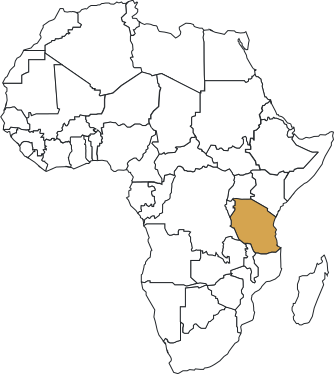
Rising 5 895 meters (19 341 ft) above the surrounding landscape, Mount Kilimanjaro holds the dual records of being Africa’s highest and the world’s tallest freestanding mountain. With habitats ranging from rainforest to alpine desert, it is an ecologically diverse environment blessed with outstanding scenic beauty. As a non-technical, yet challenging climb, it is easily accessible via the nearby towns of Arusha and Moshi, close to Kilimanjaro International Airport. Whether novice or experienced, seen from its base or the summit, Mount Kilimanjaro promises a rewarding experience equal to the challenge of scaling its weathered, sheer slopes.
Popular Mt. Kilimanjaro Tours
- Marangu
- Machame
- Lemosho
- Shira
- Rongai
- Umbwe
- Northern Circuit

Marangu Route
Description
Dubbed the “Coca-Cola” route, it is popular with inexperienced climbers who’d prefer to stay in huts than tents. This leads to a false belief that it is easier, when in fact, the short duration allows little time for acclimatisation, and a subsequent low summit success rate. To improve chances, it is recommended to tackle over 6 days.
Landscape
Starting on the southeast of Kilimanjaro, the trail progresses from forest to moors, before taking on a more alien, rugged appearance. The gradient is relatively gentle until the last day, when it gets very steep until the summit. Trekkers use the same path up and down the mountain, limiting the scenery.
Highlights
For some, the sheltered accommodation in huts with cold beverages on offer
Dificulty Level
Difficulty Level Relatively easy until summit day, with lowest success rate.
Distance
Distance 70 km over
5 - 6 Days
Machame Route
Description
Nicknamed the “Whiskey Route”, it is definitely a stiffer challenge than the Marangu Route. However, the extra day or two for acclimatisation to altitude and the ‘climb high, sleep low’ nature of the route makes all the difference and the higher summit success rate is testimony to this. There are some steep sections, but even the fierce-looking Barranco Wall is manageable with the right preparation.
Landscape
Starting in the southwest of the mountain the trek passes through forests, moors and 4 distinct climatic zones to reach the beautiful lunar landscape of the Shira Plateau and famed Lava Tower en route to the summit.
Highlights
Spectacular scenery.
Dificulty Level
Moderately Difficult with 85% success rate
Distance
61 km over 6 - 7 Days
Lemosho Route
Description
Both the most scenic and the most expensive route (due to the longer duration), the Lemosho Route begins west of Kilimanjaro, running parallel to the Shira Route. It then heads across the Shira Plateau and up the Barranco Wall before the challenging summit day to Uhuru Peak. The descent is via the Mweka Route on the south of the mountain.
Landscape
The trail begins with two days of forest trails before heading over moorlands to the Shira Plateau and the spectacular rock formations that follow. With views of distant Mount Meru, it is regarded as possibly the most breath-taking for its diverse scenery.
Highlights
Diverse scenery and high summit success rate, with relatively few people.
Dificulty Level
Moderate difficulty with 90% success rate.
Distance
67 km over 7 - 8 Days
Shira Route
Description
Despite similarities to the Lemosho Route for the latter part of the trek, it eliminates two days spent in the rainforest in favour of a direct steep climb up a 4x4 path, which means you can be driven to the official start at 3500m. So, while it might be shorter, this means that there is inadequate time to get used to the altitude, and this in turn leads to a low success rate amongst climbers. Even those that are acclimatised will need to be confident of their ability.
Landscape
Missing out entirely on the forest and moors at lower altitudes, much of the hike is spent on the starkly beautiful Shira Plateau (from which the route takes its name), before tackling the Barranco Wall and scree slopes en route to the summit.
Highlights
The views of the surrounding landscape below and Mount Meru in the distance. Less people than the Marangu and Machame Routes.
Dificulty Level
Difficult with 80% success rate
Distance
58 km over 6 - 7 Days
Rongai Route
Description
As the only route that starts on the northern side of the mountain, it is drier than all the other routes - and hence, preferred in the Wet Season. While it is less scenic as a result, the trail gradient is sufficiently gradual and the camps nicely spaced, meaning that there is ample time to acclimatise. As fewer people choose this route, it also feels wilder and trekkers may even see some wildlife. From day three, the terrain is gentle if rocky and the shortened stage on the day before summiting is a welcome opportunity to rest before setting off at midnight for the summit. The descent trail follows the Marangu Route to the southeast, taking up to 2 days.
Landscape
The trail begins in the farmlands before passing through the rainforest. This gives way to woodlands, moors and ultimately the alien landscape of the ‘Saddle’. The descent via Marangu entails moors and rainforest once the rocky upper slopes are left behind. Highlights: For most, the scenic location of the campsite in the shadow of the Mawenxi Peak is the most memorable day of the hike (besides the summit, of course).
Dificulty Level
Relatively easy with 85% success rate.
Distance
74 km over 6 - 7 Days
Umbwe Route
Description
The rapid ascent to Barranco Camp in two – as opposed to the usual 3-4 – days, gives trekkers little time to acclimatise to the sharp change in altitude. The trail is steep and exposed, and not for those with a fear of heights. From Barranco, it shares the Machame Route to the summit. Umbwe Route should only be attempted by highly experienced trekkers and using all 7 days.
Landscape
The first two days take trekkers through the rainforest before emerging onto that rock flanks of Kilimanjaro.
Highlights
It is quiet and remote. Reaching Uhuru Peak – only the most experienced climbers do.
Dificulty Level
Very difficult. Experienced climbers only – 70% success rate.
Distance
48 km over 5 - 7 Days
Northern Circuit
Description
Due to its length, the Northern Circuit, extra time for acclimatisation and ‘climb high, sleep low’ routing, trekkers on the Northern Circuit enjoy the highest success rate. The first two days follow the Lemosho Route before veering toward the Lava Tower and around the empty northern flanks of the mountain at around 4000m, until linking up with the Rongai Route which is followed to the summit at Uhuru Peak. The descent follows the Mweka Route, where the abundance of trekkers stands in stark contrast to the solitude at the start of the climb.
Landscape
The first two days pass through rainforest and moorlands before venturing onto the open slopes at altitude.
Highlights
The solitude for much of the route and spectacular views, particularly on the northern slope.
Dificulty Level
Relatively easy but long, with 95% success rate.
Distance
88 km over 8 - 9 Days
Best Time To Go
- When to Climb
- Best Time
- Experienced Climbers Only
While it is possible to climb Mount Kilimanjaro throughout the year, for reasons of comfort and safety it is recommended that you time your trek during either of the two Dry Seasons, especially if this is your first high-altitude climb.
June to October – Generally dry, cooler conditions make this the preferred climbing window
January to March – Although warmer, the landscape is lush after the recent rains
Wet Season – Two wet seasons occur; from April to May and during November.
Climbing trails can be very difficult to negotiate, with frequent rainfall.
Inspiring Videos of Successful Climbers
Planning
“If you fail to plan, you plan to fail”. High-altitude treks can be risky endeavors, so proper planning is essential. Always select a reputable tour operator with a proven track record of successful summit attempts. Climbing Kilimanjaro is very popular, so be sure to book well in advance. We highly recommend choosing the longest route you can afford to ensure proper altitude acclimatization. Don’t forget travel insurance, which includes medical repatriation, in case of emergency. You will require some specialist clothing and gear, so check out our comprehensive guide on what to pack for Kilimanjaro. Be sure to field test any gear or clothing before you depart for your expedition.
Training
Guides and Porters
Daily Routine
Typically, you are woken early; around 06h00, with a nourishing breakfast served before breaking camp. You will be given a lunch hamper and set off on the day’s leg, stopping for lunch before continuing into the late afternoon, when you reach the next campsite. Most people retire after dinner for a good rest. It is a good idea to have a dry set of comfortable clothes to wear inside your tent. There are no toilets or washing facilities whatsoever on the mountain. Remember to drink plenty of liquids to stay hydrated.
Who Can Climb Kilimanjaro?
Ready to conquer Mount Kilimanjaro?
Make sure you’re fully prepared! We’ve created a comprehensive packing list to help you get ready for the adventure of a lifetime.
After Climbing Kilimanjaro
Arusha After Party
Celebrate your summit success with a night on the town, visiting the town’s bustling restaurants, bars and entertainment venues
Safari
Seek out the Big 5 and more on an exciting safari at one (or more) of Tanzania’s world-famous wildlife destinations
Hot Springs
Soak your muscles and rejuvenate your body at the Kikuletwa Hot Springs near Arusha
Beach Holiday
Enjoy a well-deserved beach break in Zanzibar; where fun, culture and cuisine collide
Related Articles
Frequently Asked Questions
Where is Mt Kilimanjaro and how do I get there?
When can I climb Mt Kilimanjaro?
Who can climb Mt Kilimanjaro?
How much does it cost to climb Mt Kilimanjaro?
What overnight arrangements should I expect when climbing Mt Kilimanjaro?
Do I need to bring a tent and camping gear for Mt Kilimanjaro?
What type of food is served?
How many days do I need to climb Mt. Kilimanjaro?
Do I need a guide and support team to climb Mt Kilimanjaro?
What should I expect from my Mountain Guide?
What physical preparation is necessary to climb Mt Kilimanjaro?
While climbing Kilimanjaro is not regarded as a technical climb, it is nevertheless an arduous expedition that should not be underestimated. Even for physically fit people, the main reason people fail to reach the summit is altitude sickness. It is advised that participants establish a progressive training program, beginning 12 weeks prior to the attempt. It is prudent to get a medical assessment beforehand, to identify potential underlying health risks.
Are there any safety/health concerns that I should be aware of when climbing Mt Kilimanjaro?
Should I get travel insurance for my Mt Kilimanjaro climb?
Do I need any vaccinations or immunizations prior to entering Tanzania?
Any guidelines regarding gratuities for the staff?
How can I make my trip eco-friendly?
What should I pack for my trek on Mt Kilimanjaro?
While space and weight are prime considerations, it is better to have something and not need it, than vice versa. Porters will assist in carrying the bulk of your belongings but you should limit yourself to essentials, ideally items that are tried and tested. Read our comprehensive Kilimanjaro Packing List.


