Tanzania in one paragraph
Tanzania is an East African country on the Indian Ocean, made up of the mainland and the Zanzibar islands. Its capital is Dodoma, its largest city is Dar es Salaam, and the 2022 census counted 61,741,120 people. Swahili and English are spoken, the currency is the Tanzanian shilling, and it is home to Kilimanjaro, the Serengeti and Zanzibar.
We are a Tanzanian company based in Arusha, and most of the questions in this guide come straight from guests before their first trip. It covers the facts you will want in your head before you land, then the cities, a short history, religion and manners, and the flag. For parks and itineraries, go to our Tanzania safari page or the safari guide.
Tanzania quick facts
| Fact | Answer |
|---|---|
| Official name | United Republic of Tanzania |
| Capital | Dodoma |
| Largest city | Dar es Salaam |
| Population | 61,741,120 (2022 census: 59.85 million on the mainland, 1.89 million in Zanzibar) |
| Languages | Swahili (Kiswahili) and English |
| Currency | Tanzanian shilling (TZS). Safari and park prices are usually quoted in US dollars |
| Time zone | East Africa Time, UTC+3, no daylight saving |
| Electricity | 230 V; mostly the British three-pin plug (type G) |
| Driving | On the left |
| Dialling code | +255 |
| Highest point | Mount Kilimanjaro, 5,895 m |
Most visitors need a visa. Our visa and entry guide covers how to apply.
Capital and major cities of Tanzania
Dodoma is the capital of Tanzania. It became the official capital in 1996, when Parliament moved there from Dar es Salaam, which is still the largest city, the main port and the business centre. Most travellers never go to Dodoma: safaris in the north start from Arusha or Moshi, and the coast and Zanzibar are reached through Dar es Salaam.
| City | What it is | Why travellers go |
|---|---|---|
| Dodoma | Capital and seat of Parliament, in the centre of the country | Rarely on a safari route |
| Dar es Salaam | Largest city and main port, with Julius Nyerere International Airport | Flights, ferries to Zanzibar, the southern parks |
| Arusha | Northern city at the foot of Mount Meru; our office is here | Start of most northern safaris |
| Moshi | Town on the southern slopes of Kilimanjaro | Base for Kilimanjaro climbs |
| Mwanza | Port city on Lake Victoria | Western Serengeti and the lake |
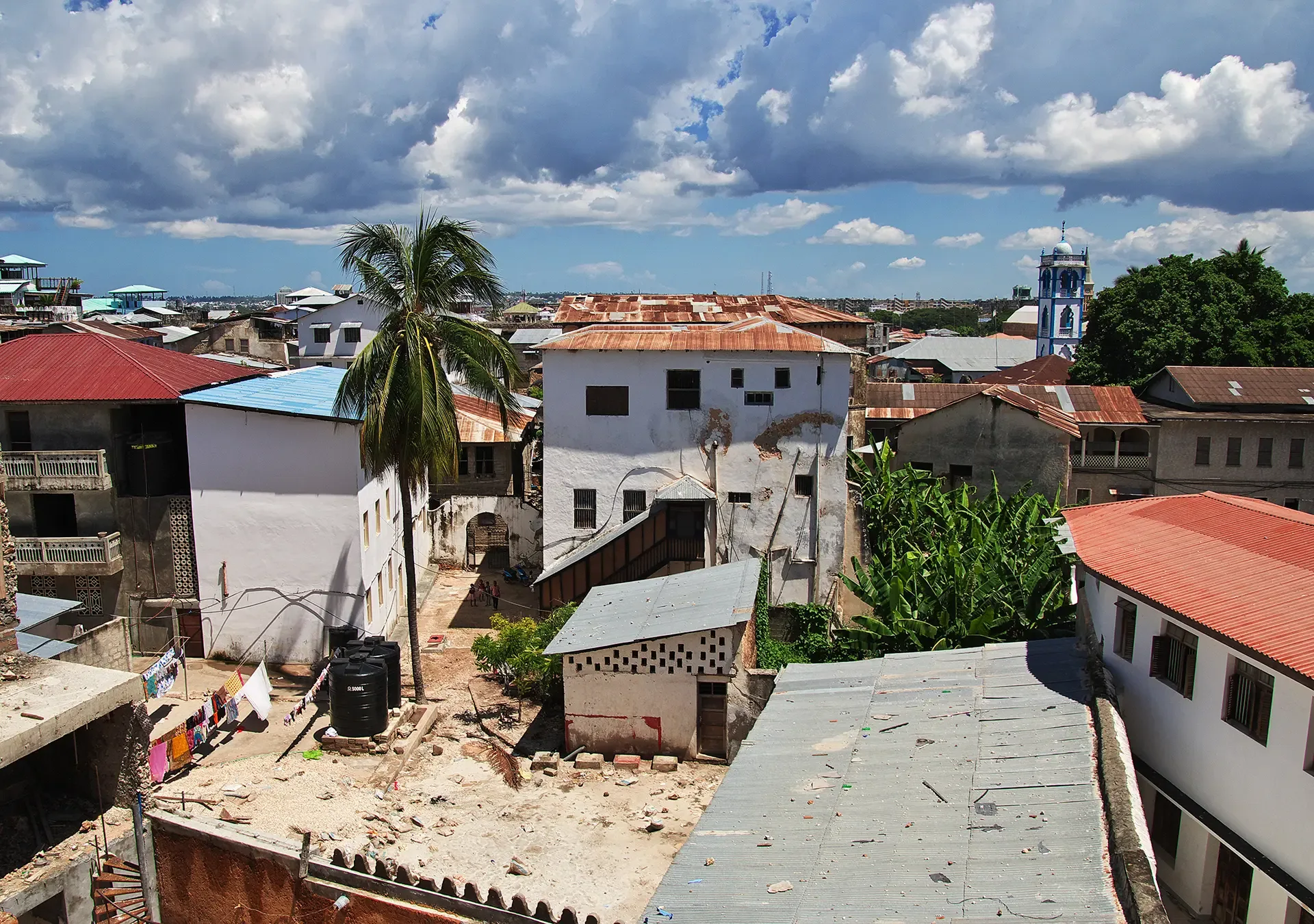
| Stone Town | The old town of Zanzibar City | History, markets and the Zanzibar coast |
A short history of Tanzania
People have lived here for a very long time. At Olduvai Gorge, between the Ngorongoro Crater and the Serengeti, Mary and Louis Leakey found some of the most important early human fossils, and at nearby Laetoli a trail of footprints was left in volcanic ash about 3.6 million years ago. Most northern safaris drive past the gorge, and it is worth the stop.
From around the 10th century the coast was part of the Indian Ocean trade. Swahili towns such as Kilwa Kisiwani traded gold, ivory and other goods with Arabia, Persia and India, and Swahili grew out of that meeting of Bantu languages and Arabic. In 1840 the Sultan of Oman moved his court to Zanzibar, which became the centre of the clove trade and, for decades, of the East African slave trade.
Germany took the mainland as German East Africa in the 1880s and met fierce resistance, most of all in the Maji Maji war of 1905 to 1907. After the First World War, Britain ran the mainland as Tanganyika. Tanganyika became independent on 9 December 1961 under Julius Nyerere, and on 26 April 1964 it joined with Zanzibar to form the United Republic of Tanzania.
Religion in Tanzania
Tanzania has a Christian majority and a large Muslim minority, and the two have lived side by side for generations. There are no official figures: the census has not asked about religion since 1967. The Pew Research Center's estimate for 2020 put about 63% of Tanzanians as Christian and 34% as Muslim, and the Zanzibar islands are almost entirely Muslim.
A few habits will make your trip easier:
- In Stone Town and the villages of Zanzibar, cover your shoulders and knees when you walk around. Beachwear is fine at the hotel and on the beach.
- During Ramadan, avoid eating or drinking in the street in Zanzibar during daylight. Hotels still serve meals as normal.
- Ask before you photograph people. Most say yes; some, especially Maasai elders, may ask for a small payment or prefer not to.
- Greetings matter. A slow "Habari?" and a handshake go further than any phrasebook.
For the people behind those greetings, read our guide to the tribes of Tanzania. For what is on the plate, see Tanzanian food: 12 dishes to try.
A few words of Swahili
| Swahili | Meaning |
|---|---|
| Jambo / Habari? | Hello / How are you? |
| Nzuri | Good, fine (the usual reply) |
| Asante (sana) | Thank you (very much) |
| Karibu | Welcome, and "you're welcome" |
| Pole pole | Slowly, slowly. You will hear it all the way up Kilimanjaro |
| Hakuna matata | No problem |
Flag and national symbols
The flag was adopted in 1964, after the union. A black diagonal band edged in gold runs from corner to corner, with a green triangle above and a blue one below. Green stands for the land, gold for the country's minerals, black for its people and blue for the lakes, rivers and the Indian Ocean. The green came from Tanganyika's flag and the blue from Zanzibar's.
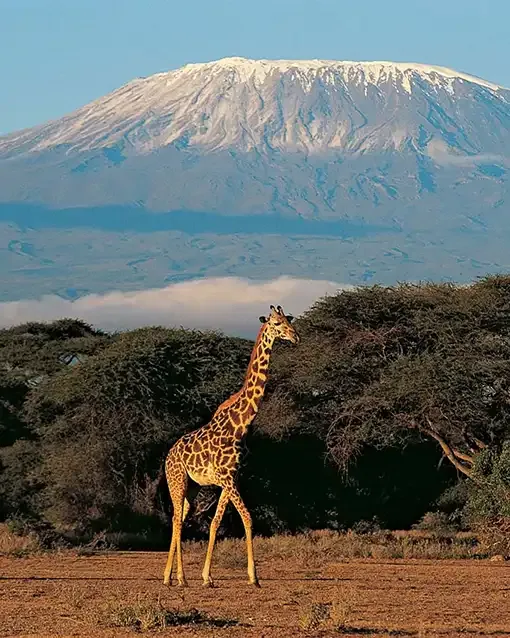
The coat of arms shows a shield standing on Mount Kilimanjaro, held by a man and a woman, with the motto Uhuru na Umoja, "Freedom and Unity". The torch on the shield is the Uhuru Torch, first lit on the summit of Kilimanjaro in 1961 at independence and still carried around the country every year. The national animal is the giraffe.
Questions
Tanzania questions
<p>Dodoma. It has been the official capital since 1996. Dar es Salaam, the former capital, is still the largest city and the main business centre.</p>
<p>Yes. Zanzibar joined Tanganyika in 1964 to form Tanzania. It keeps its own president and government for local matters, and a Tanzanian visa covers Zanzibar too.</p>
<p>Swahili is the national language and almost everyone speaks it. English is the other official language and is widely spoken in the safari industry, in hotels and by our guides.</p>
<p>Bring some clean, recent US dollar notes for tips and extras, and a card for hotels. Local shops and markets use Tanzanian shillings, which you can get from ATMs in the towns.</p>