
The Heart of African Safari
Safaris in Tanzania
Tanzania is the complete safari country, home to the Serengeti's Great Migration, the wildlife-packed Ngorongoro Crater, elephant-rich Tarangire and Africa's highest peak, Mount Kilimanjaro. No other destination combines so many icons in one journey, and as a Tanzanian-owned company this is the land we know street by street and track by track.
Best time to go
Jun · Jul · Aug · Sep · Oct · Jan · Feb
Climate
Warm year-round. Dry seasons June to October and January to February; long rains April to May, short rains in November. Cooler on the crater highlands and Kilimanjaro slopes.
Currency
TZS
Languages
Swahili, English
The country
About Tanzania
Tanzania is the complete safari country, home to the Serengeti's Great Migration, the wildlife-packed Ngorongoro Crater, elephant-rich Tarangire and Africa's highest peak, Mount Kilimanjaro. No other destination combines so many icons in one journey, and as a Tanzanian-owned company this is the land we know street by street and track by track. The classic northern circuit strings Tarangire, Lake Manyara, Ngorongoro and the Serengeti into one loop, while the wilder south (Nyerere, Ruaha, Mikumi) rewards travellers seeking solitude. Finish on the spice-scented beaches of Zanzibar, the perfect bush-and-beach combination.
Visas & entry
Most nationalities obtain a Tanzania eVisa online or a visa on arrival (USD 50; USD 100 for US citizens). Passports need six months' validity. We advise applying online ahead of travel, requirements change, so confirm with your nearest embassy.
Not sure where to start?
Tell us your dates and dreams, a specialist builds your Tanzania route within 24 hours, free.
Start planningWhy Tanzania is Africa's benchmark safari destination
Close to a third of Tanzania is under some form of protection, and the country holds the Serengeti, the Ngorongoro Crater, the largest elephant populations in East Africa and the full Great Migration cycle. A Tanzania safari is also unusually easy to combine: the mountain, the plains and the Indian Ocean sit within one country and one visa.
What confuses most first-time visitors is not whether to come but which part. Tanzania's parks fall into three distinct safari circuits, and they are genuinely different trips, in cost, in crowd levels, and in what you will see. Choosing the right circuit is the single most useful decision you will make.
Tanzania's three safari circuits
Most itineraries stay within one circuit. The distances between them are large. Combining circuits is very possible, but it usually means an internal flight rather than a drive.
Northern Circuit
The classic and by far the most visited: Serengeti National Park for the Great Migration and big cats, the Ngorongoro Crater for the highest concentration of the Big Five in East Africa, Tarangire for enormous elephant herds among baobabs, and Lake Manyara for tree-climbing lions and birdlife. All within driving distance of Arusha, which makes it the most practical circuit for a first safari or a shorter trip.
- Best for
- First safaris, the Migration
- Typical length
- 5-9 days
- Access
- Drive from Arusha
- Season
- Rewarding year-round
Southern Circuit
Remote, far quieter and wilder. Nyerere National Park (the former Selous Game Reserve, and one of the largest protected areas in Africa) adds boat safaris on the Rufiji River and walking safaris that the northern parks cannot offer. Ruaha is Tanzania's largest national park, with exceptional lion prides and a striking mix of northern and southern species. Mikumi is the most accessible of the three from Dar es Salaam.
- Best for
- Second safaris, solitude
- Typical length
- 5-8 days
- Access
- Fly from Dar es Salaam
- Season
- June to October
Western Circuit
The least-travelled corner of Tanzania, and the only one where you can trek wild chimpanzees. Mahale Mountains rises straight out of Lake Tanganyika and holds one of the best-studied chimpanzee populations in Africa; neighbouring Katavi delivers extraordinary dry-season concentrations of buffalo, elephant and hippo with almost no other vehicles. Expensive and logistically demanding, and unlike anywhere else.
- Best for
- Chimpanzees, true remoteness
- Typical length
- 6-10 days
- Access
- Charter flight only
- Season
- July to October
Tanzania safari packages by length
A Tanzania safari with us starts at US$1,370 per person for three days. Most guests choose six to eight days, which covers the Serengeti, the Ngorongoro Crater and one more park without long days in the car.
| Length | From | Example trip |
|---|---|---|
| 3 days | US$1,370 | 3 Days Serengeti Classic Safari |
| 4 days | US$1,999 | 4 Day Serengeti Safari Game Package |
| 5 days | US$1,620 | 5-Day Tanzania Low Season Safari (low-season dates) |
| 6 days | US$1,705 | 6-Day Tanzania Low Season Safari (low-season dates) |
| 7 days | US$2,580 | 7-Day Off-Peak Tanzania Safari |
| 8 days | US$3,365 | 8 Days Calving Migration Safari with Cultural Hike |
| 10 days | US$7,335 | 10 Days Tanzania Luxury Sky Safari |
Prices are per person, from our live tour pages on 27 October 2026. The price moves with the season, the lodges and the size of your group, and international flights are not included. Every trip is private and can be changed.
Northern Tanzania safaris
Almost every first safari in Tanzania is a northern Tanzania safari: Tarangire, Lake Manyara, the Ngorongoro Crater and the Serengeti, all within driving distance of Arusha. The 6 Days Best Northern Tanzania Safari visits all four, and it is the trip we suggest most often to people who have not been before.
Beyond the game drives
Most of our Tanzania itineraries add at least one of these. They are what makes the country combine so well into a single trip.
Zanzibar & the coast
Three to seven nights of Indian Ocean beach after the dust of the parks, plus Stone Town, spice farms and some of the best diving in East Africa. A 90-minute flight from the Serengeti.
Zanzibar guideMount Kilimanjaro
Africa's highest point at 5,895 m, and a non-technical climb, no ropes, no prior mountaineering. Most climbers pair the summit with a short northern-circuit safari afterwards.
Climbing guideNgorongoro Crater
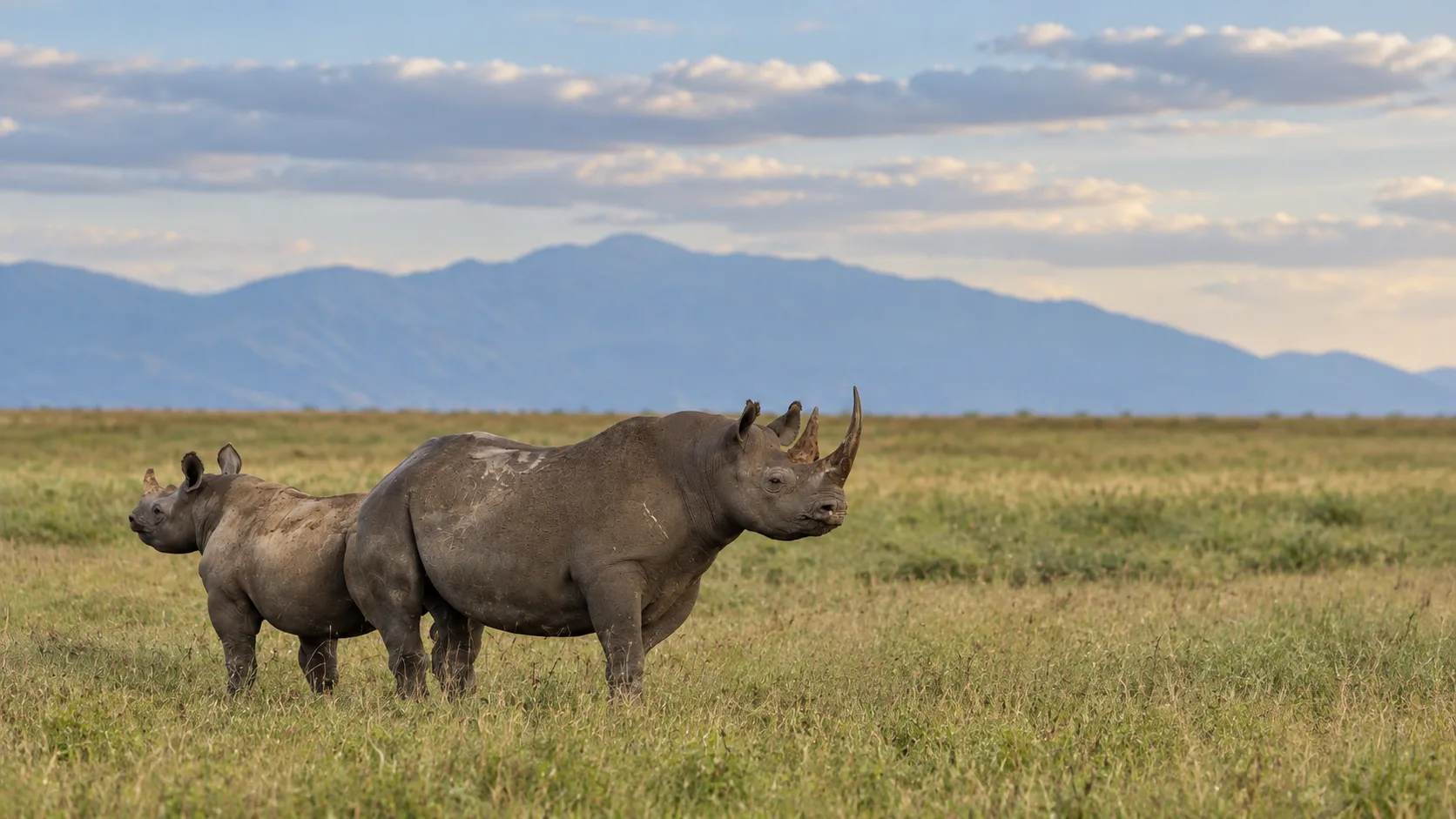
A collapsed volcanic caldera holding roughly 25,000 large animals year-round, including one of the last reliable places in Tanzania to see black rhino.
Crater guideOlduvai Gorge
The Leakey excavations that reshaped our understanding of human origins, on the road between Ngorongoro and the Serengeti, an easy and worthwhile stop.
Olduvai GorgeCultural days around Arusha
Maasai villages at Monduli Juu and Olpopongi, the Mto wa Mbu market, and Lake Eyasi, where the Hadzabe are among the last hunter-gatherer communities in East Africa.
Lake EyasiBalloon over the Serengeti
A dawn flight over the plains followed by a bush breakfast. Expensive, and the one add-on almost nobody regrets.
Serengeti safarisTanzania safari packages by length
Prices are per person, from, checked on 6 November 2026. Trips marked "on request" are quoted for your dates.
3 to 4 days
The 3 Days Classic Serengeti Safari (from US$1,440), the 4 Day Serengeti Safari Game Package (from US$1,999) and, from January to March, the 4 Days Ndutu Migration Safari for the calving season (from US$2,660).
5 to 7 days
The most popular length. Try the 5 Days Tanzania Mid-range Safari (on request), the 5 Days Serengeti Great Migration Safari (from US$3,570), the 6 Days Best Northern Tanzania Safari (from US$3,095) or the 7 Day Tanzania Wilderness Safari (from US$2,598). On a tighter budget, our low season deals start with the 5 Day Tanzania Low Season Safari (from US$1,620).
8 days and more
Time for the full northern circuit or a beach at the end: the 8 Days Tanzania Migration Safari (from US$4,724), the 9 Days Wildlife Safari and Zanzibar Beach Holiday (from US$2,605) and the 14 Days Ultimate Tanzania Safari (on request).
Planning around the herds? See every Great Migration safari, or add the coast with a Tanzania safari and Zanzibar trip.
Wildlife in Tanzania: where to see what
Tanzania has the Big Five and a great deal more, but each animal has its best address. This is where our guides would take you.
| Animal | Best places | Best months |
|---|---|---|
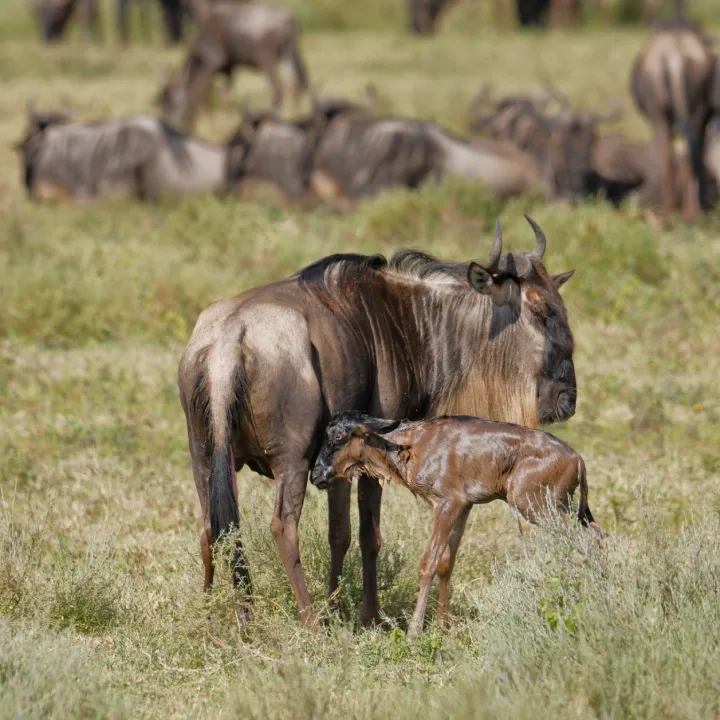
| Wildebeest migration | Serengeti, moving by season | Calving January to March, crossings July to September |
| Lion | Serengeti, Ruaha | All year |
| Black rhino | Ngorongoro Crater | All year |
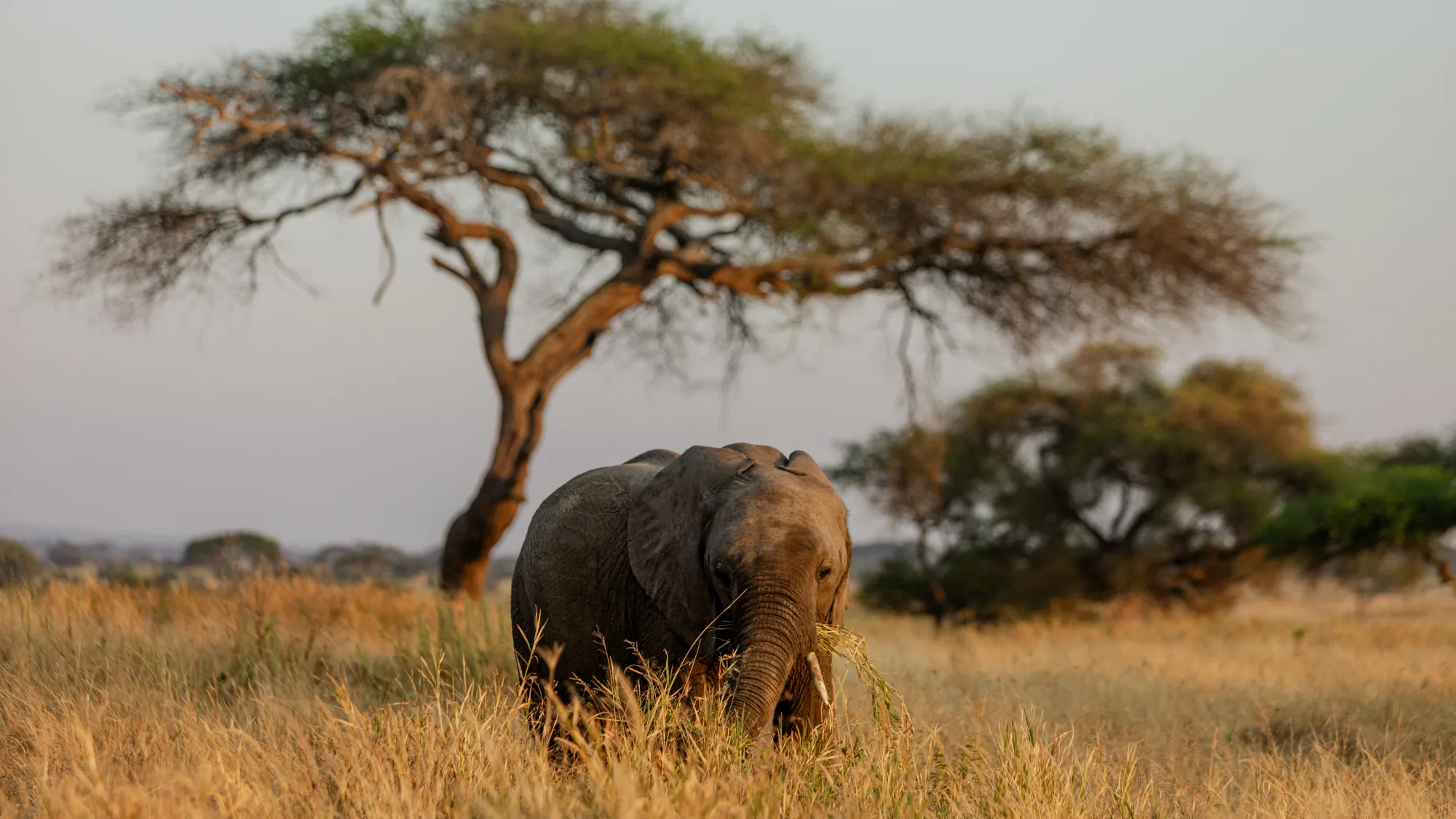
| Elephant | Tarangire, Ruaha | June to October in Tarangire |
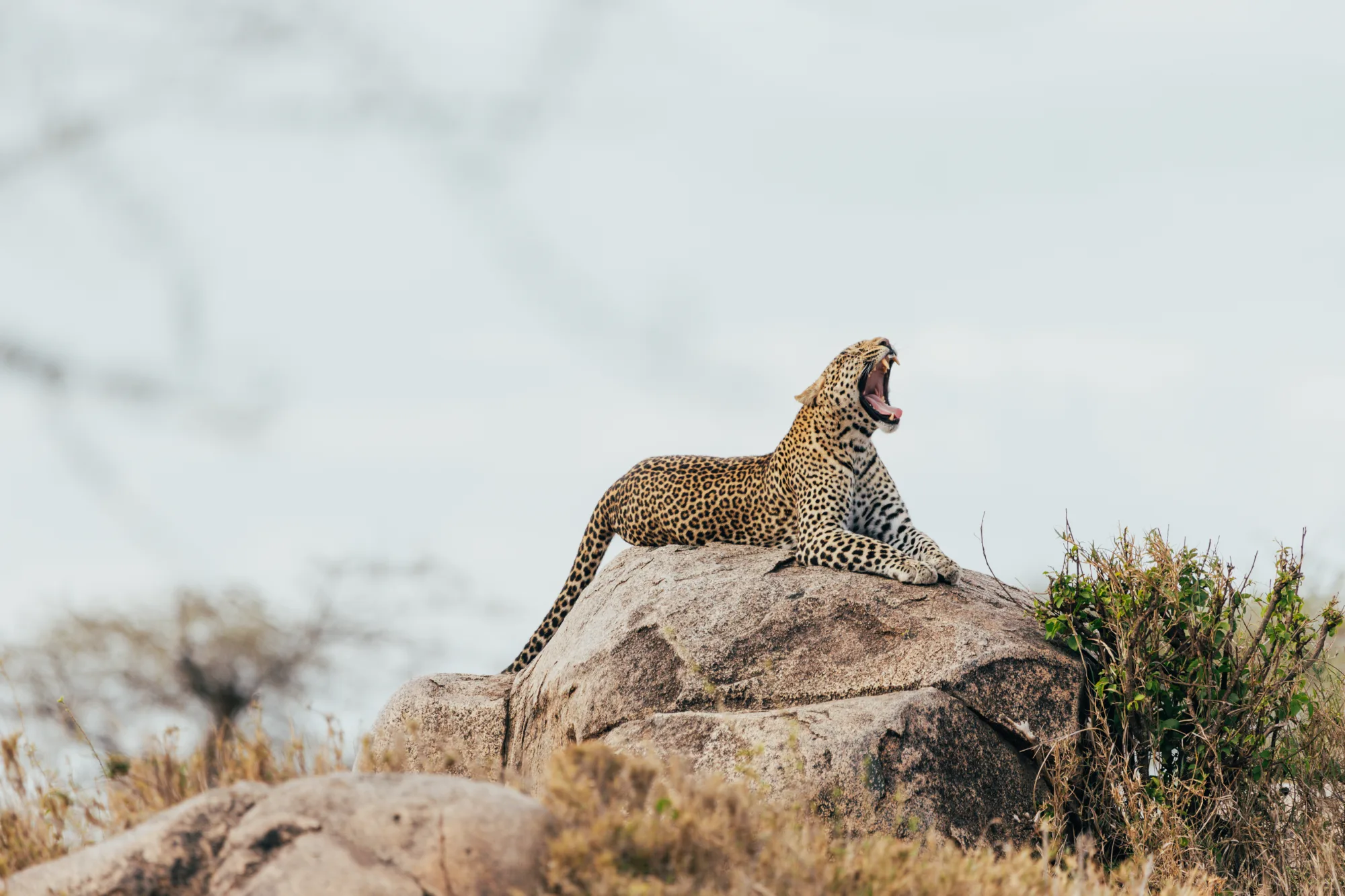
| Leopard | Central Serengeti around Seronera | All year, easiest in the dry season |
| Cheetah | Southern Serengeti plains | December to March |
| Tree-climbing lions | Lake Manyara, sometimes the Serengeti | All year, never guaranteed |
| African wild dog | Nyerere, Ruaha, Mikumi | June to October |
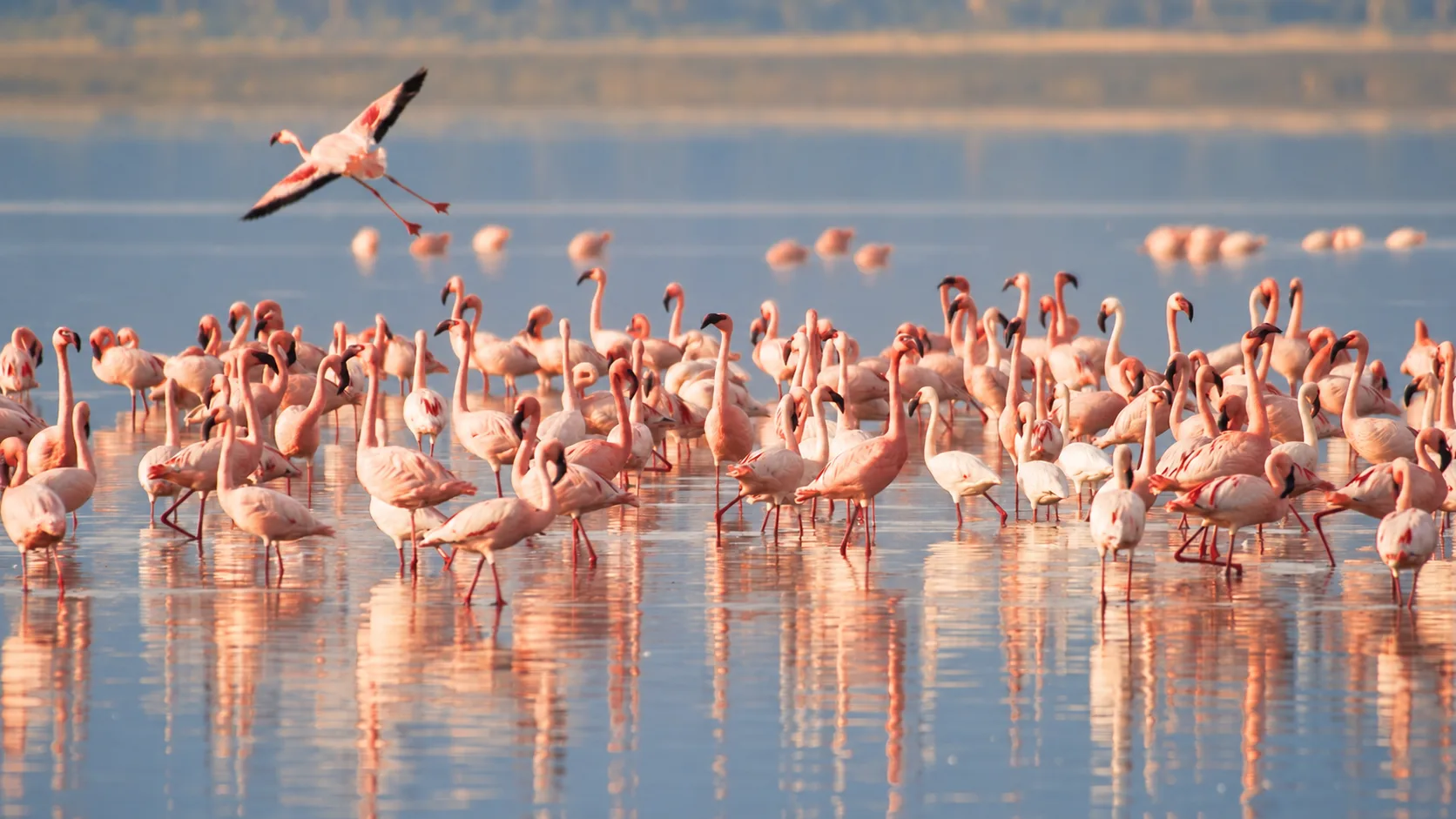
| Flamingo and water birds | Lake Manyara, Ngorongoro | Varies with water levels |
Ruaha, Nyerere and Mikumi are not on our ready-made trips, so we plan them as a private route. Ask us and we will tell you honestly what your dates are likely to bring.
Questions
Planning a Tanzania safari
June to October is the classic dry season: sparse vegetation, animals concentrated around water, and the Mara River crossings in the northern Serengeti. January and February bring calving season on the southern plains and outstanding predator action. April and May are the long rains, the cheapest and quietest months, with genuinely good game viewing if you accept wet afternoons. The southern and western circuits are strongly seasonal and best from July to October.
Kilimanjaro International Airport (JRO) is the right choice for the northern circuit and for climbing Kilimanjaro. Julius Nyerere International in Dar es Salaam serves the southern circuit and Zanzibar. Zanzibar has its own international airport (ZNZ) if you are starting with the beach.
Most nationalities need a visa, available online in advance or on arrival. A yellow fever certificate is required if you are arriving from a country where yellow fever is a risk; hepatitis A, typhoid and routine vaccinations are commonly recommended. Malaria prophylaxis is advised for all safari areas. Check current requirements with your travel clinic before you fly, as they change.
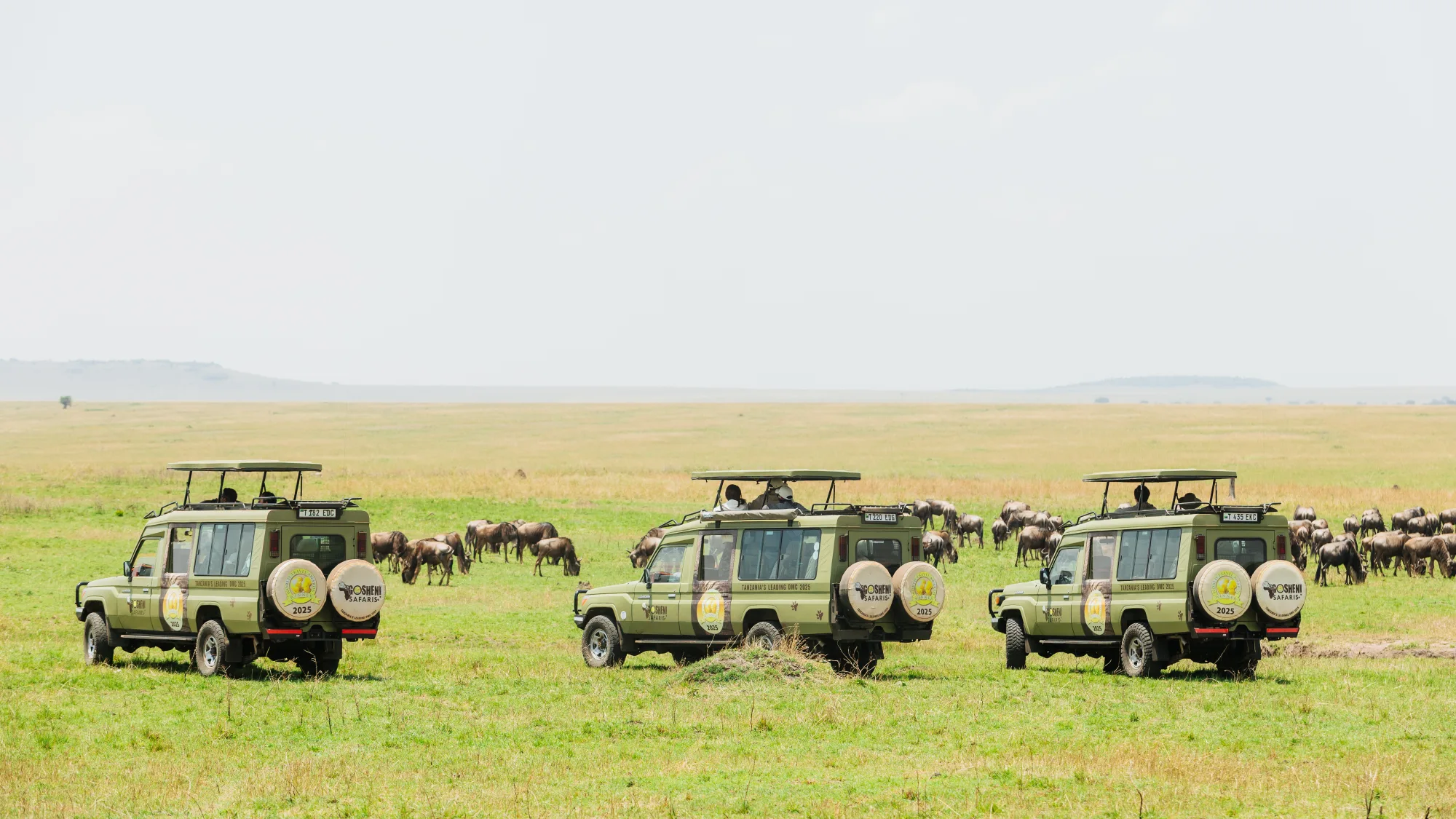
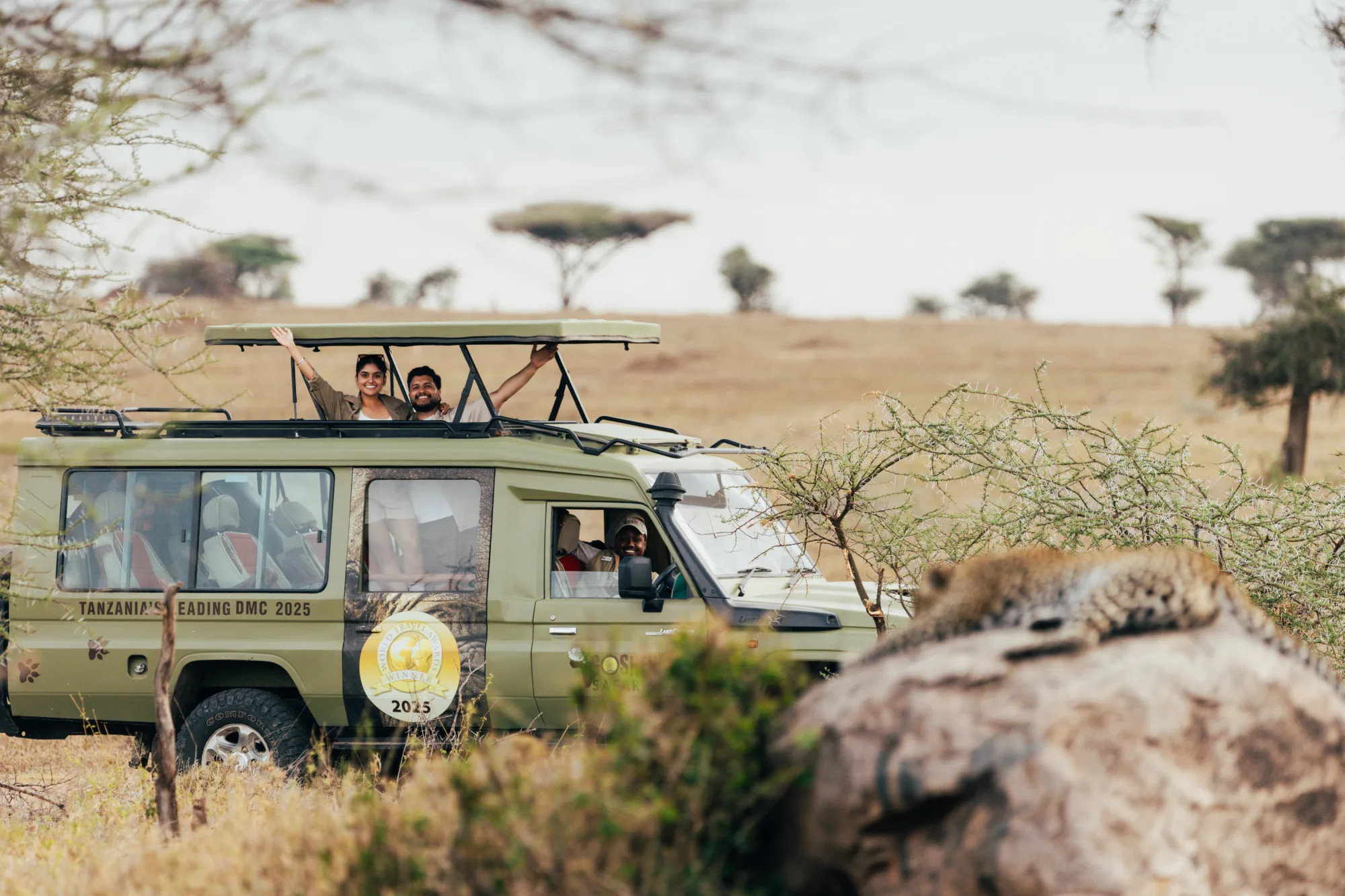
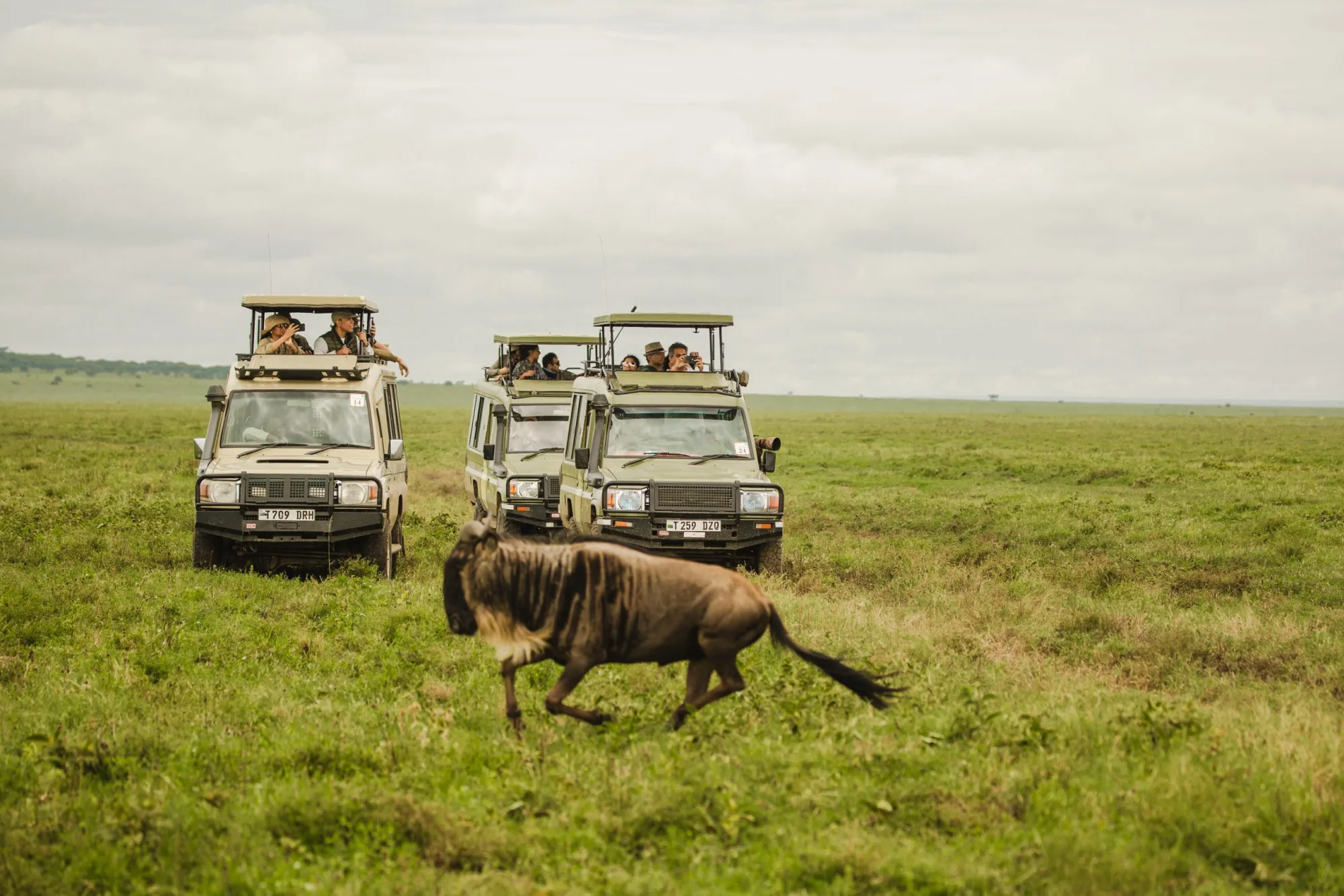
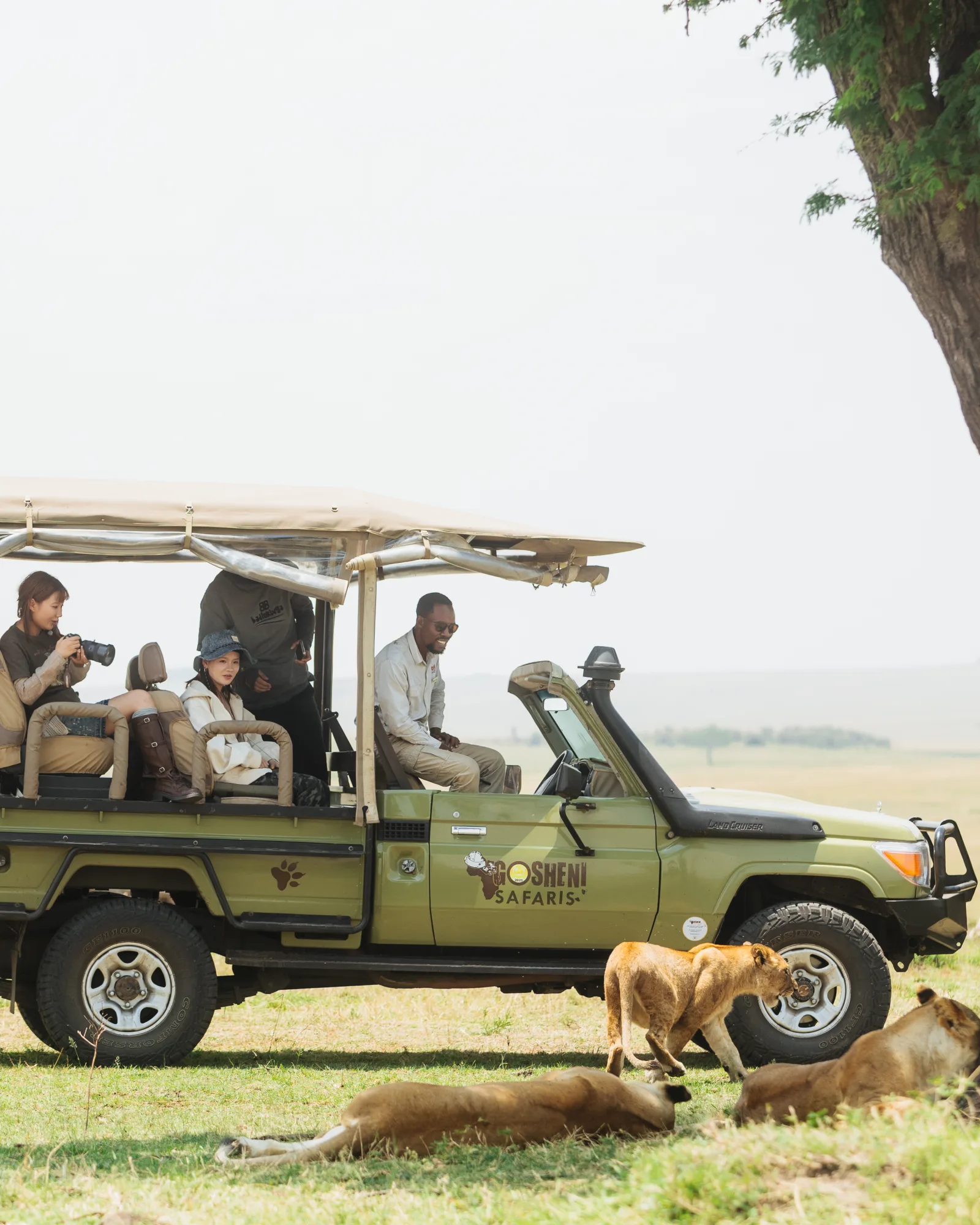
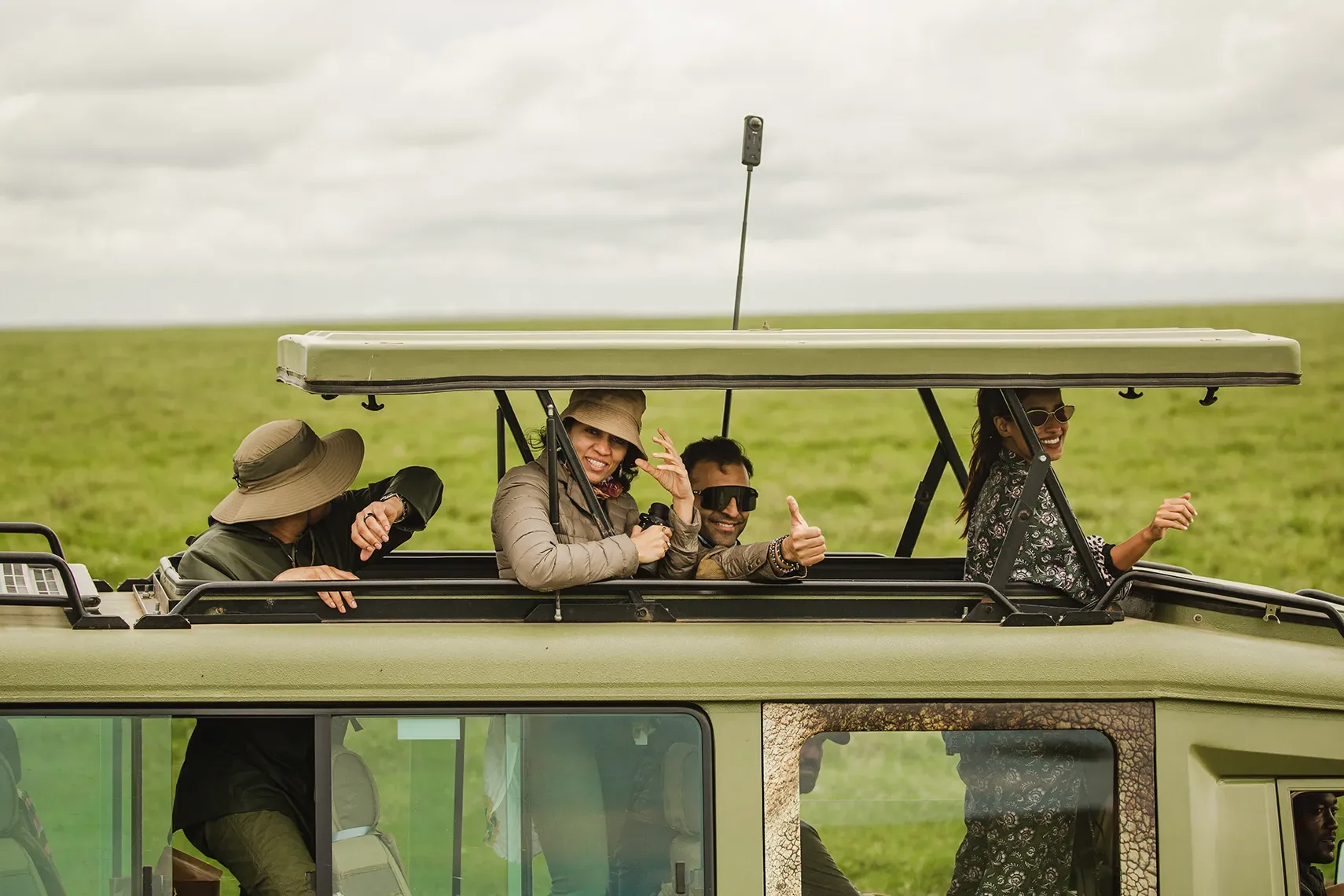
We own and maintain our own fleet of extended-body Land Cruisers with pop-up roofs, four and seven seaters. Every guest is guaranteed a window seat. We do not fill the middle. Vehicles carry a cooler box, charging points, a two-way radio, first aid kit and reference books.
All of our driver-guides work in English and Swahili. Spanish, French, German and Italian-speaking guides can be arranged with notice, and Mandarin by special arrangement. Tell us at enquiry stage and we will confirm availability for your dates.
Full board is standard. Lunches on game-drive days are usually served hot under a canopy in the bush (soup, a starter, a main and dessert) rather than a packed box. Vegetarian, vegan, halal and allergy requirements are catered for with advance notice.
Around US$20 per guest per day for the driver-guide is the customary guideline, with camp and lodge staff tipped separately into a shared box. Tipping is genuinely discretionary and should reflect the service you received.
Tanzania is politically stable and tourism is a major part of the economy; the safari circuits are well established and well policed. Normal precautions apply in cities, use hotel or operator transport rather than hailing taxis on the street, and do not display valuables. Your guide is with you throughout the safari itself.
Tanzania at a glance
Tanzania sits on the east coast of Africa, south of the equator. Kenya and Uganda lie to the north. Rwanda, Burundi and the Democratic Republic of the Congo are to the west, and Zambia, Malawi and Mozambique to the south. To the east is the Indian Ocean, and just off the coast sits Zanzibar, which is part of Tanzania and has its own beach, spice and Swahili story.
The country is known for its wildlife, but the wildlife is only part of it. The landscapes change from volcanic highlands to open plains, forest, lakes and white coral sand. The people are as varied, and a trip that includes a market, a village visit or a meal in a family home tells you as much about Tanzania as a game drive does.
The northern parks are the best known, and each one has its own page. Start with the Serengeti and the Ngorongoro Crater, then Tarangire and Lake Manyara.
Things to do in Tanzania
See the Great Migration
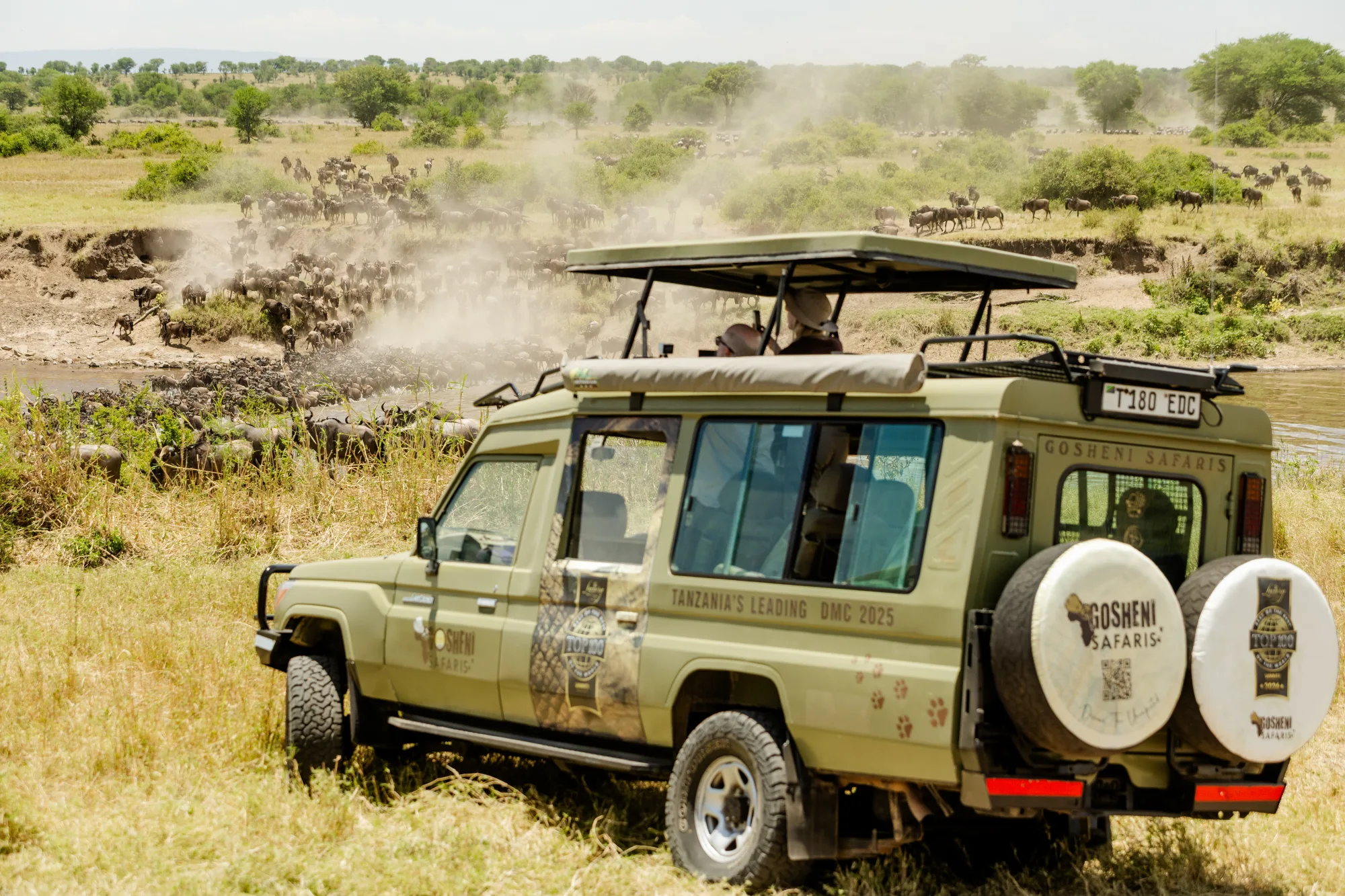
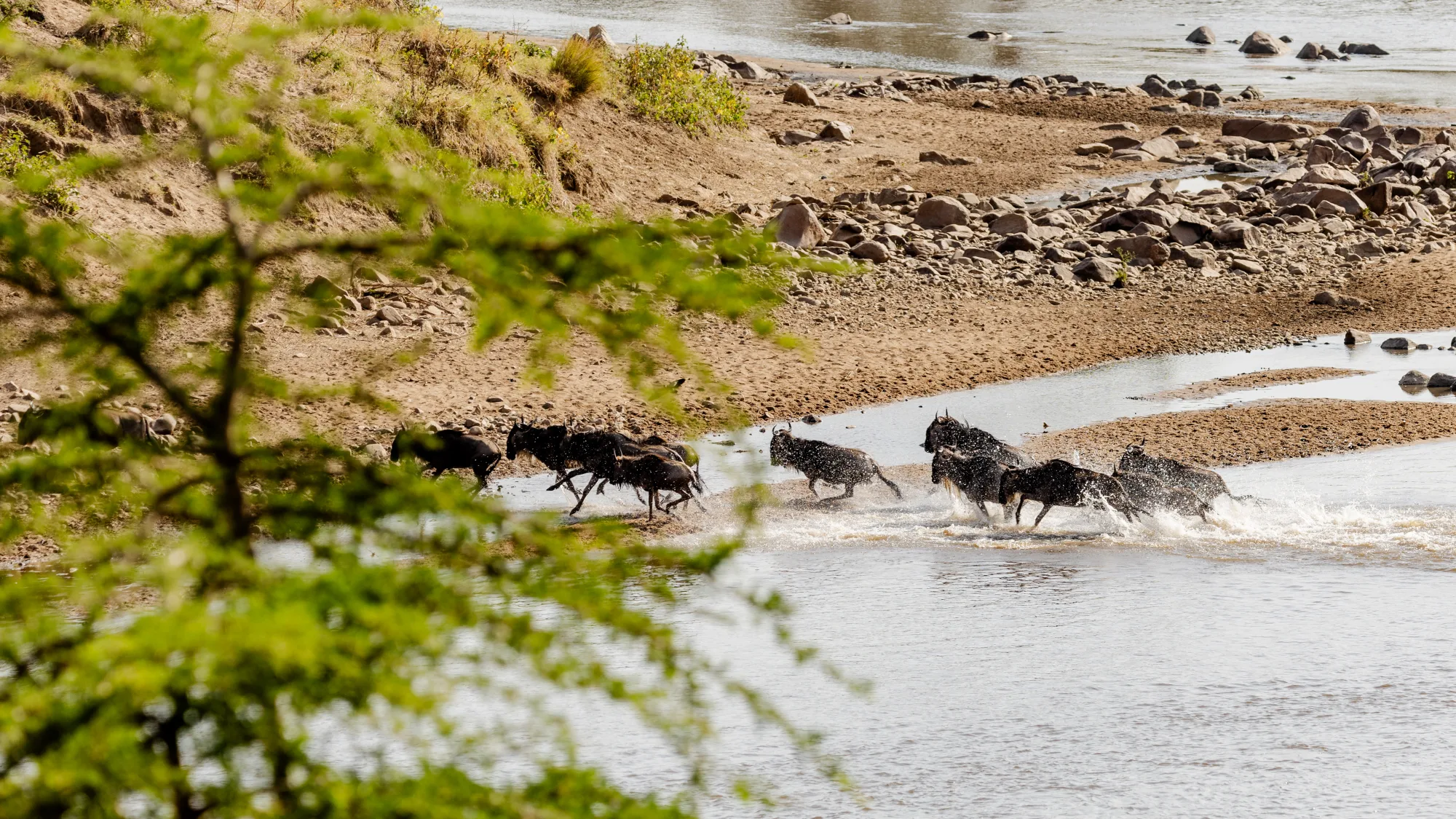
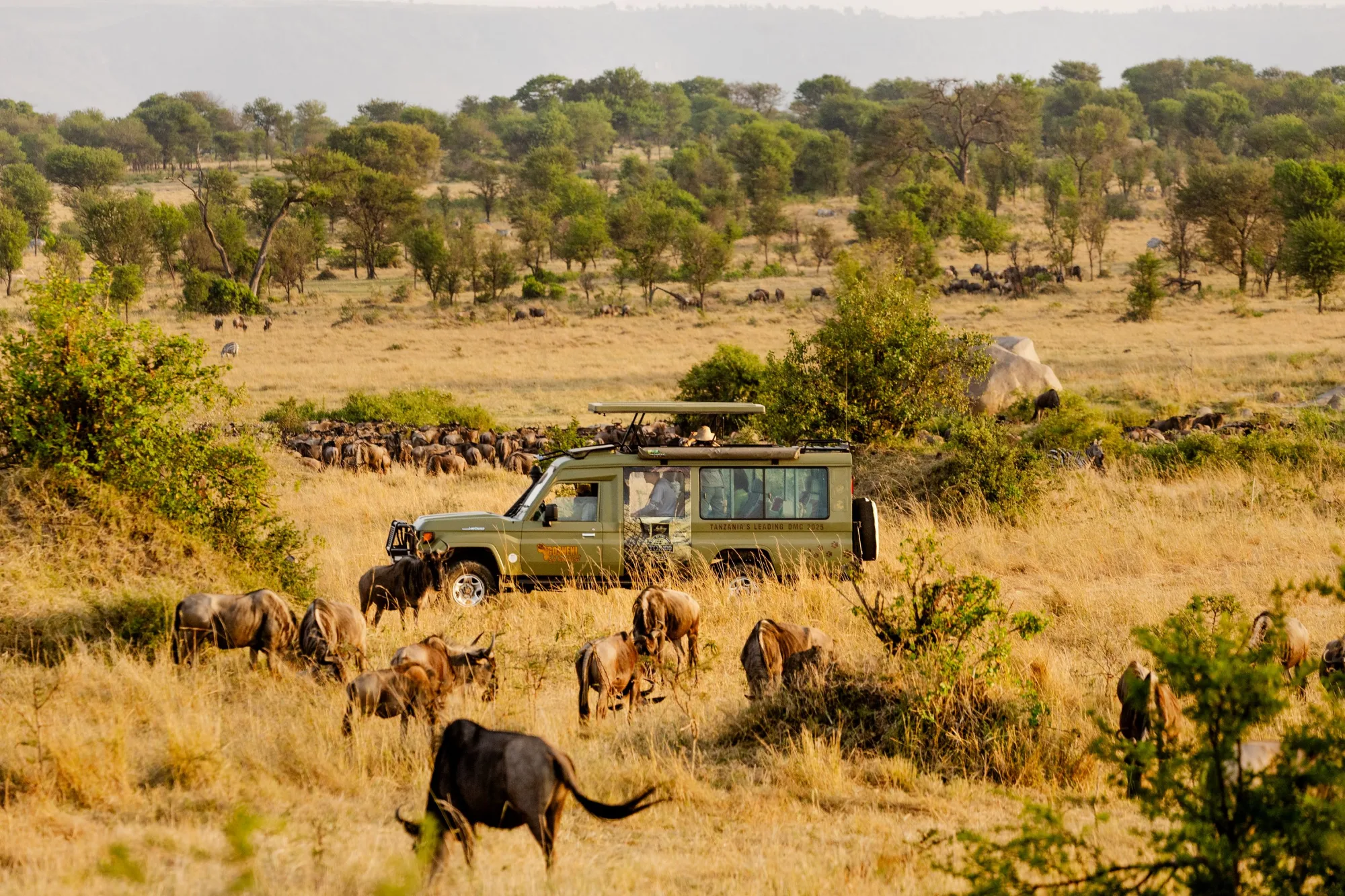
More than a million wildebeest, with hundreds of thousands of zebra and many antelope alongside them, follow a circular route through the Serengeti and into the Masai Mara in Kenya, always chasing fresh grass. They cross rivers that are often in flood, and the predators that follow them are never far behind. It is life and death in the open, and it is the reason many people book their first trip. Our Great Migration safaris are planned around where the herds are likely to be on your dates.
Go on safari all year
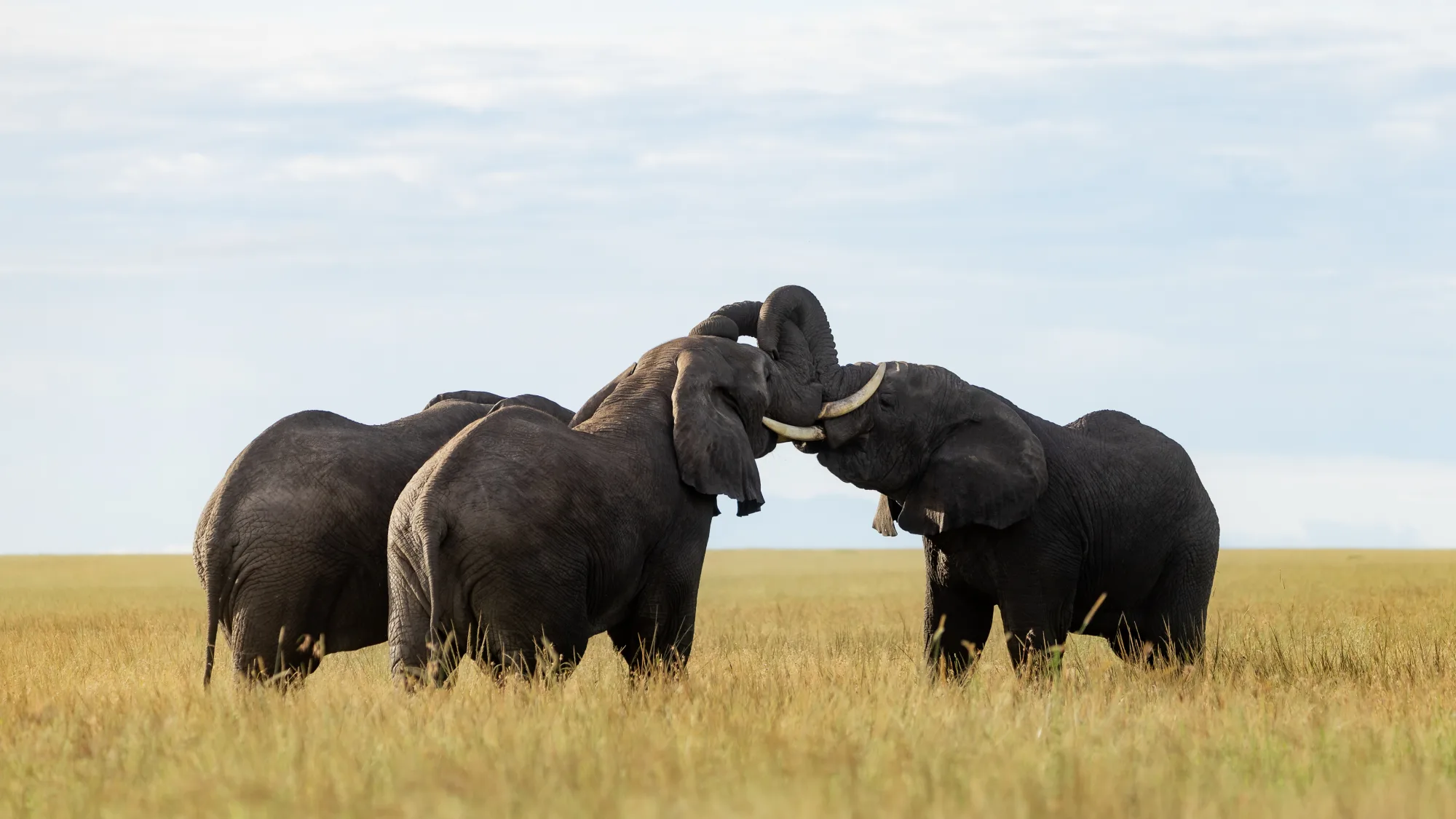
You can see the Big Five and a long list of other animals in Tanzania in any month. The season changes what you see and how many other vehicles are around, but the wildlife is always there. Elephants, giraffes and hippos are easy to find, and the lesser-known reserves add quieter game drives away from the main parks.
Spend time on Zanzibar
The Zanzibar Archipelago is a semi-autonomous part of Tanzania, roughly 25 to 50 kilometres off the coast. Unguja, usually just called Zanzibar, and Pemba are the two largest islands. Most guests come for the beaches, the water and the old town. Our Zanzibar guide covers where to stay and what to do.
Climb or day-trip Mount Kilimanjaro
Kilimanjaro stands in the north-east of the country at 5,895 metres (19,341 feet), the highest peak in Africa and the tallest free-standing mountain in the world. You can walk to the summit over several days, or spend a day on the lower slopes if the full climb is not for you. See our Kilimanjaro routes and departures.
Meet the people and eat the food
Tanzanian culture shows up in traditional dances, busy markets and customs that are still lived, not staged. On the table, look for pilau rice, nyama choma (grilled meat) and ugali, a stiff maize porridge. The flavours come from African, Arab and Indian influences along the coast. Ask your guide where to find the best of them.
Walk, hike and swim
Away from the plains there are forests, waterfalls and quiet beaches. They suit hiking, trekking and water sports, and many guests add a few of these days between game drives.
People here are famously welcoming. Greet someone with "Jambo" or "Habari" and you will usually get a warm answer and a longer conversation.
Best time to visit Tanzania
The best month depends on what you came for. Use this as a starting point, then tell us your dates and we will say honestly what to expect.
| If you want | Best months | Why |
|---|---|---|
| Wildlife and safari | June to October | The dry season. Vegetation is thin and animals gather around water, so they are easier to spot. The Great Migration is in the Serengeti, including the northern river crossings. |
| Climbing Kilimanjaro | January to mid-March, June to October | The drier periods bring steadier weather and clearer skies, which makes the climb safer and more pleasant. |
| Zanzibar beaches | June to October, December to February | Warm, sunny days and clear water for swimming, snorkelling and diving. December to February is the short dry season. |
| Lower rates and fewer people | November to May | The wet season. The long rains from March to May can be heavy, but November and May are a good balance of game viewing and quieter parks. |
| Birdwatching | November to April | Migratory birds are in the country, which adds to the resident species in the parks and reserves. |
If you are comparing months side by side, our travel by month guide goes through the year one month at a time.
More questions about Tanzania
What is the climate like in Tanzania?
It runs from warm and humid on the coast to cooler in the highlands. There are two main rainy seasons: the long rains from March to May and the short rains from November to December.
What currency is used, and where can I change money?
The Tanzanian shilling (TZS). You can change foreign currency at banks, bureaux de change and some hotels, and there are ATMs in the larger towns. Out in the parks you will not need much cash.
Are there customs I should know about?
Tanzanians value politeness and modesty. Dress conservatively in villages and religious places, and greet people with "Jambo" or "Habari" before you ask for anything. On Zanzibar, cover up outside your resort.
What should I pack?
Light, breathable clothes for the day and a warm layer for early mornings and evenings. Neutral colours suit game drives. Bring comfortable shoes and swimwear if Zanzibar is on the route. Your guide will send a full list once you book.
What health precautions should I take?
Drink bottled or treated water, use mosquito repellent, and take out travel insurance that covers medical evacuation. Check vaccination and malaria advice with your travel clinic.
Can anyone climb Kilimanjaro?
Most people in good health can, with the right preparation and a longer route that gives the body time to adjust. It is a walk, not a technical climb, but it is still a serious one. The ecology changes zone by zone as you rise, from farmland and forest to moorland and the glaciated summit area.
Is the Great Migration only in Tanzania?
No. The herds move between the Serengeti in Tanzania and the Masai Mara in Kenya. Tanzania holds them for most of the cycle, including the calving season on the southern plains. See our Masai Mara page for the Kenyan side.
Is Tanzania a good choice for children or older travellers?
Yes. Many lodges and camps are set up for families and for slower travel. Check that vaccinations are up to date and choose a pace that suits the least energetic person in the group.
How can I celebrate a special occasion?
A dawn hot air balloon flight over the Serengeti, a dinner on the beach in Zanzibar, or a Kilimanjaro summit for the adventurous. Tell us the date and who is coming and we will build the trip around it.
Is Tanzania better than Kenya for a safari?
They are different, and many travellers do both. Tanzania is known for the Serengeti, Zanzibar and Kilimanjaro, and for parks that can feel remote. Our Tanzania versus Kenya comparison sets them side by side.
Find your bearings
Tanzania on the map
Tap a marker to open the destination guide.
Where to go
Destinations in Tanzania
Ordered by how often our safaris visit, start at the top or wander off the list.
Your Tanzania story starts here
Let's shape it around you
Every journey is tailor-made: your pace, your budget, your dream sightings. Free itinerary within 24 hours, no obligation.