
Tanzania safari destination
Serengeti National Park
Legend has it that the word Serengeti emanates from the people who have occupied this pristine land for aeons, the Maasai. Roughly translated, it means the endless plains, or “the place where the land runs on forever”.
The destination
About Serengeti National Park
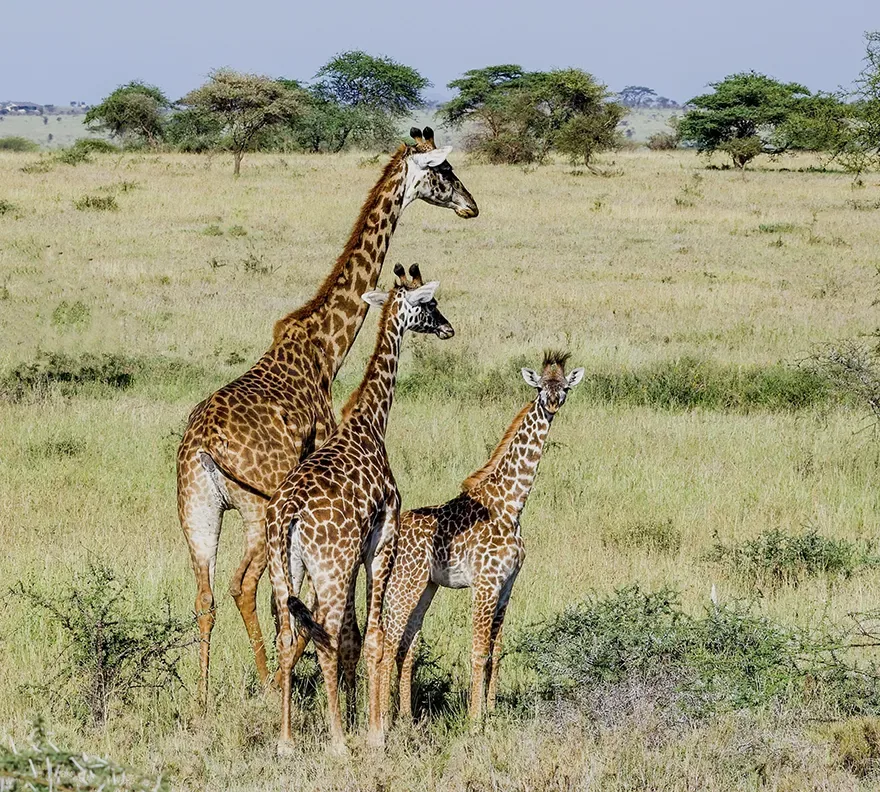
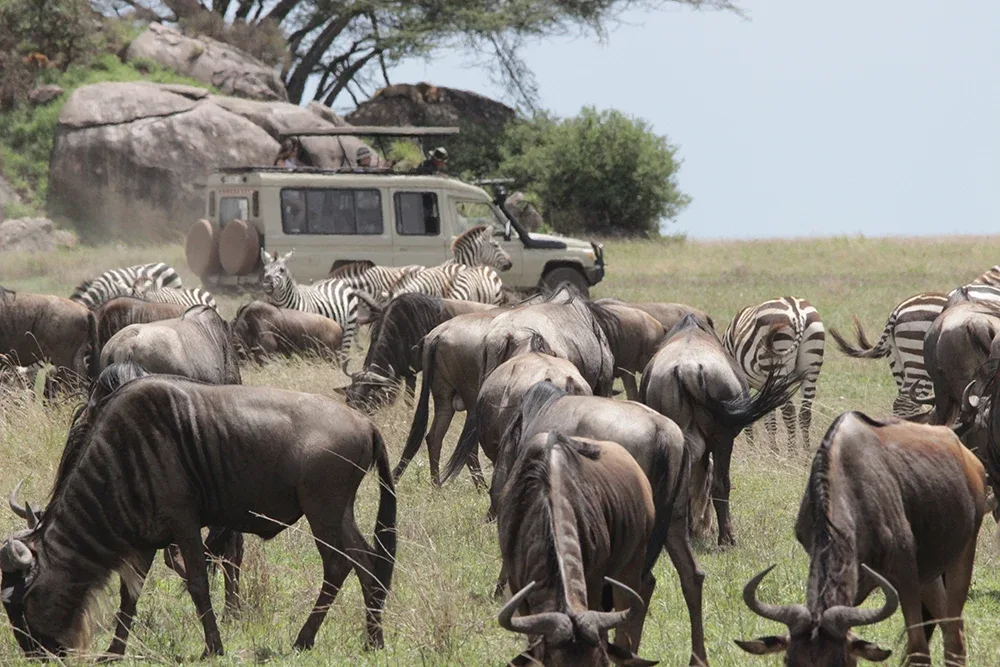
Legend has it that the word Serengeti emanates from the people who have occupied this pristine land for aeons, the Maasai. Roughly translated, it means the endless plains, or “the place where the land runs on forever”. Proclaimed in 1952, and covering 14,763 km2 (5,700 sq mi), an area larger than Connecticut or Montenegro, in the eastern Mara Region of northern Tanzania, the Serengeti National Park is revered by nature-lovers worldwide as one of the most populous wildlife destinations. Stretching north to Kenya and bordering Lake Victoria to the West, the diverse habitats within make it the perfect home for creatures great and small. It is also cherished as a World Heritage Site, both for the wildlife it is home to and the abundant relics of prehistoric mankind. As its name suggests, the overwhelming impression given by the Serengeti is of vast, open spaces dotted with granite kopjes (rock outcrops), flat-topped acacia trees, and undulating grasslands. Only two permanent rivers pass through the park, although numerous gullies rise in spate when good rains fall. Closing your eyes, the serenade of Nature soothes the atavistic brain, while her various scents arouse the senses even further. The near-pristine wilderness aside, Serengeti National Park is most famous for the prolific wildlife that roams the ancient plains. Huge herds of plains game, estimated at some 2 million ungulates, roam the various habitats; grazing, browsing and fertilizing the land they traverse. The massive herbivorous biomass in turn provides ample hunting opportunities for Africa’s legendary large predators perpetuating the unceasing circle of life and death on the African plains. Here too, visitors are blessed with myriad species of birds and plants, each adding to the awe of nature’s complexity and diversity. By road, the Serengeti National Park is 335 km (208 mi) from Tanzania’s safari hub, Arusha. By air, seven airstrips service different regions of the park. the annual migratory circuit of over a million wildebeest and other ungulates, draws predators and tourists alike. Ungulates run the gauntlet of predators waiting at the rivers they must cross during the migration. the abundance of prey means Serengeti boasts the greatest concentration of large predators, including lion, cheetah, leopard, and spotted hyena, on earth. Careful management of the environment ensures a diversity of habitats; home to innumerable species of fauna and flora.
Put it on your route
Weave Serengeti National into your journey
- Tailor-made itinerary within 24 hours
- Free & no obligation, unlimited revisions
- Planned by born-and-raised local experts
Where is the Serengeti?
Serengeti National Park is in north-western Tanzania, between the Ngorongoro highlands and Lake Victoria. The park covers 14,763 km2, and its northern edge runs into Kenya, where the same grasslands carry on as the Masai Mara. Park and reserve together form one ecosystem of roughly 30,000 km2, and the wildebeest cross the border every year without noticing it.
From Arusha it is about 330 km by road, a full day's drive that climbs over the Ngorongoro Crater rim and drops down past Olduvai Gorge. Most of our guests break that drive with a night near the Crater or fly in by light aircraft, which takes about an hour to the central airstrip at Seronera.
Serengeti plain or Serengeti National Park?
People use the names loosely. The Serengeti plain is the open short-grass country in the south and east of the ecosystem, the treeless view from every photograph, and it runs outside the park into the Ngorongoro Conservation Area around Ndutu. Serengeti National Park is the protected area with fixed boundaries and park fees. The word itself comes from the Maa language of the Maasai and is usually translated as "endless plains". On the southern grass in the green season, that is exactly how it feels.
Best time to visit the Serengeti
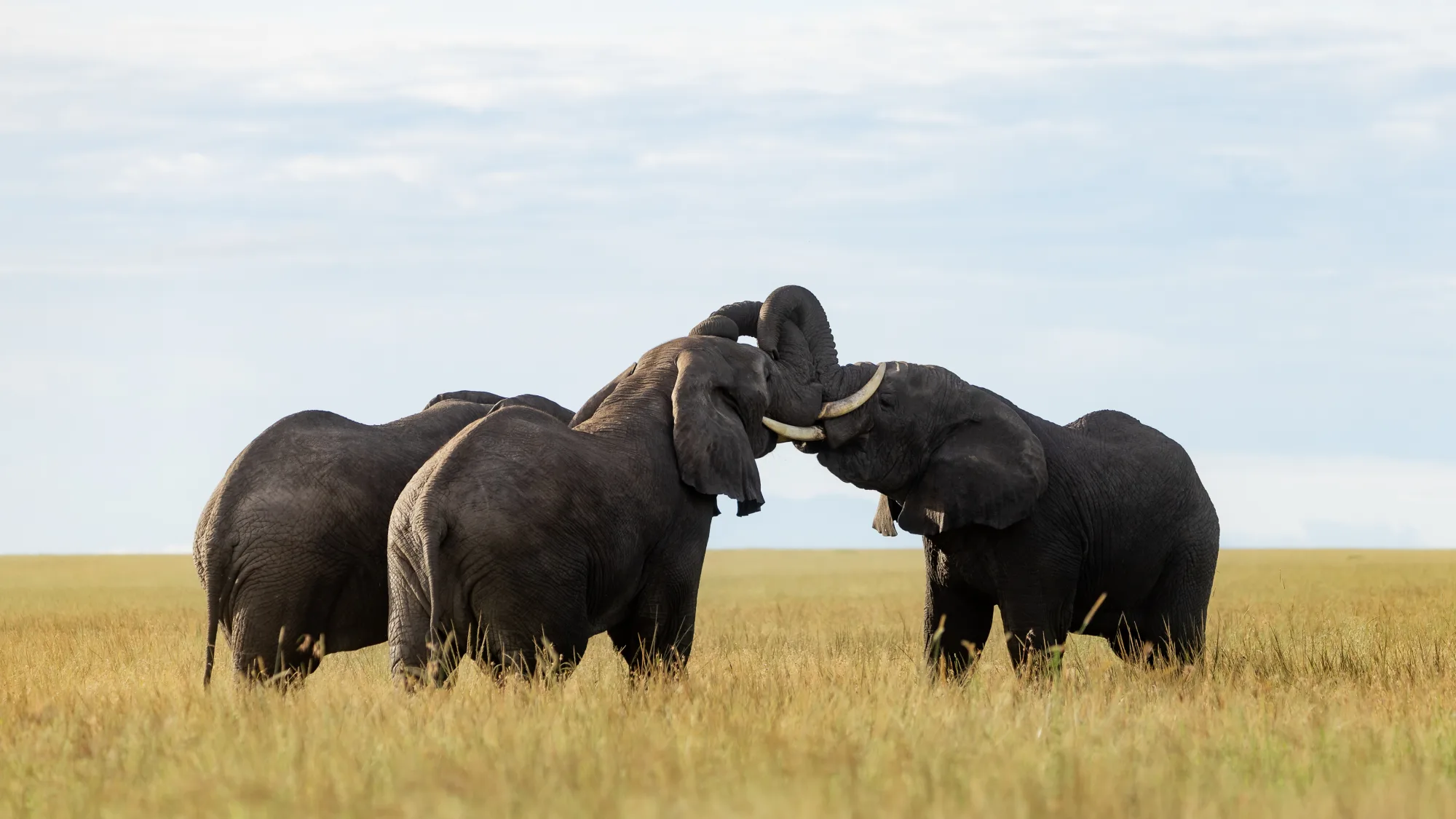
There is no bad month in the Serengeti, only different ones. The resident lions, cheetahs and elephants stay put all year. What moves is the Great Migration, and where the herds are decides which part of the park you should be in.
| Months | Where the herds usually are | What it is like |
|---|---|---|
| January to March | Southern plains and Ndutu | Calving season. Thousands of calves a day in February, and the predators follow. |
| April and May | Moving north and west | The long rains. Green, quiet and the best lodge rates of the year. |
| June | Western corridor | Dry season starts. Grumeti River crossings. |
| July to September | Northern Serengeti and the Mara River | River crossings and the busiest, most requested months. Book early. |
| October and November | Heading south through the east | Hot and dry, then the short rains bring the herds back down. |
| December | Settling on the southern plains | Clear days between showers and the start of the next calving season. |
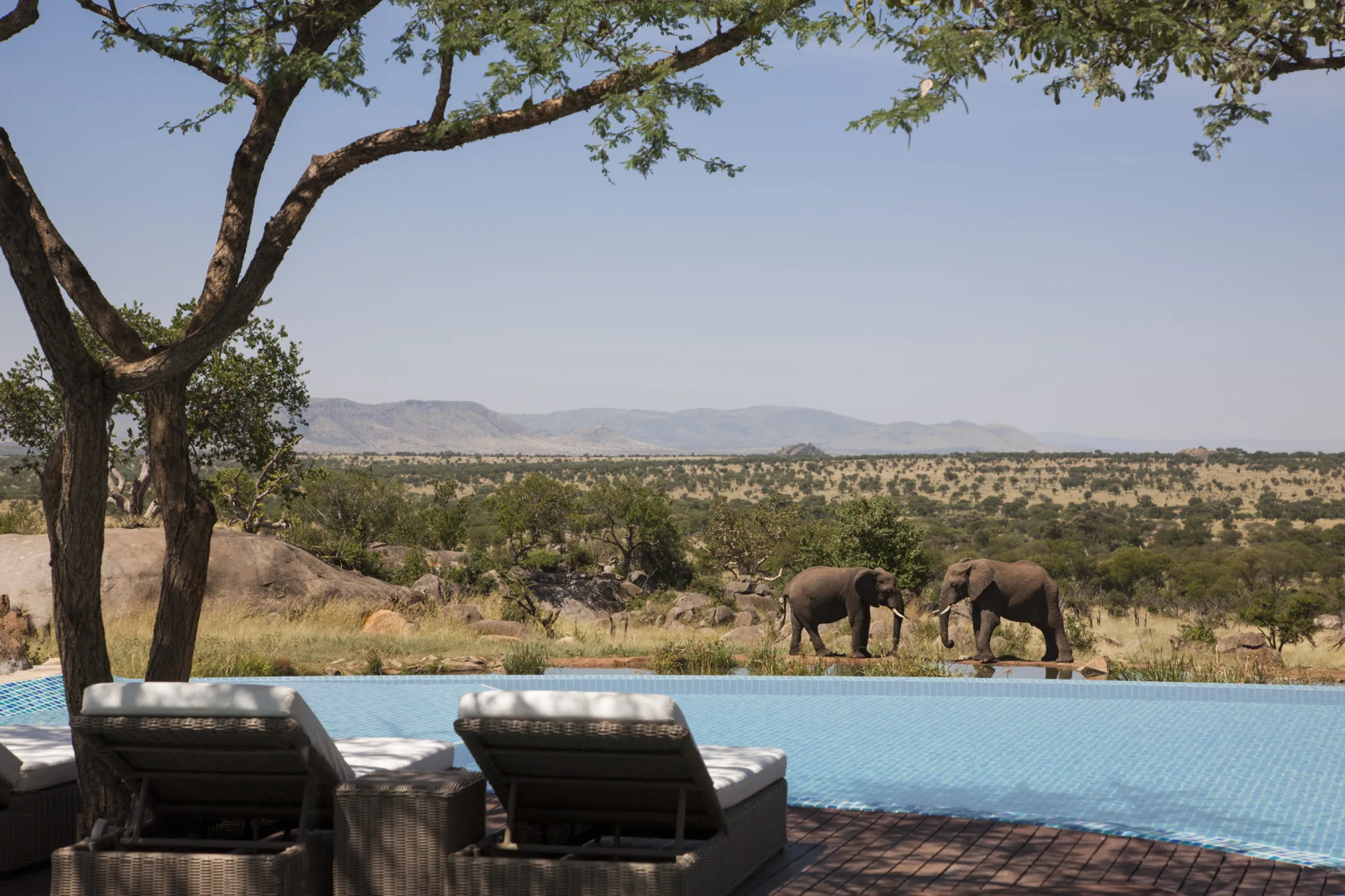
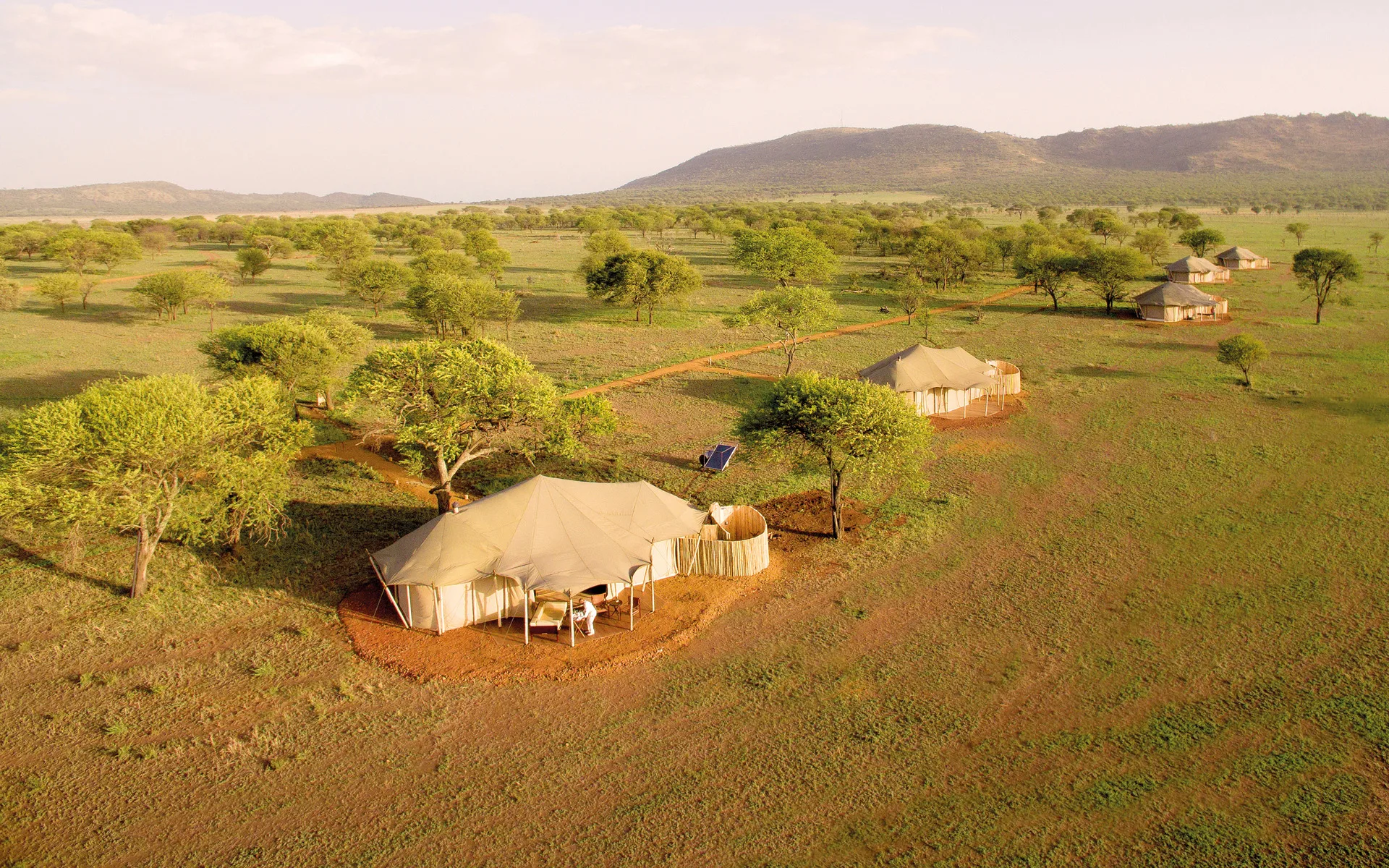
The pattern shifts by a few weeks each year with the rain, so we place you by the herds, not by the calendar. Seasonal camps follow them for the same reason: Nyikani Migration Camp sits near Ndutu from December to early April, and Olakira and Sayari stand close to the Mara River for the crossings. For the central Serengeti, which is good all year, guests often choose Dunia Camp, Serengeti Serena or Four Seasons Safari Lodge.
Serengeti safari packages
We run more than 30 ready-made safaris that spend time in the Serengeti, from three days to two weeks, and every one can be changed. The shortest is the 3 Days Serengeti Classic Safari, from US$1,370. For calving season, the 4 Days Ndutu Migration Safari starts at US$2,660. If the river crossings are the point of the trip, look at the 8 Days Wildebeest Migration River Crossing, from US$4,754. Prices are per person, from our live tour pages on 27 October 2026. International flights are not included.
Three days covers the central Serengeti and little else. Five to seven days lets you add the Ngorongoro Crater and Tarangire, or follow the herds without rushing. The full list is further down this page, and all our trips are on the safaris page.
Birds of the Serengeti
More than 500 bird species have been recorded in the park, and a few are found almost nowhere else. The grey-breasted spurfowl lives only in this corner of northern Tanzania, and it is often seen along the tracks around Seronera. Fischer's lovebird and the rufous-tailed weaver are both Tanzanian endemics that are easy to see here.
The big birds are the ones people remember: ostriches striding across the plains, secretary birds hunting snakes on foot, kori bustards, among the heaviest flying birds in the world, and several vulture species over every kill. From November to April, migrant birds from Europe and Asia arrive with the rains and the numbers climb fast.
Questions
Serengeti questions
Serengeti National Park is in Tanzania. The ecosystem continues north across the border into Kenya, where it is called the Masai Mara, so the same herds use both.
About 330 km by road, most of a day with stops, usually broken with a night near the Ngorongoro Crater. By light aircraft it is about an hour to Seronera.
Two full days is the minimum for the central Serengeti. Three or four lets you follow the migration or reach the north for the river crossings, and most of our trips pair that with the Ngorongoro Crater.
Usually July to September on the Mara River in the northern Serengeti, with Grumeti River crossings in the western corridor in June. Exact timing moves with the rains each year.
Regions of the Serengeti: where to go
The park is huge, and each region has a different character. The migration decides when each one is at its best.
Central Serengeti (Seronera)
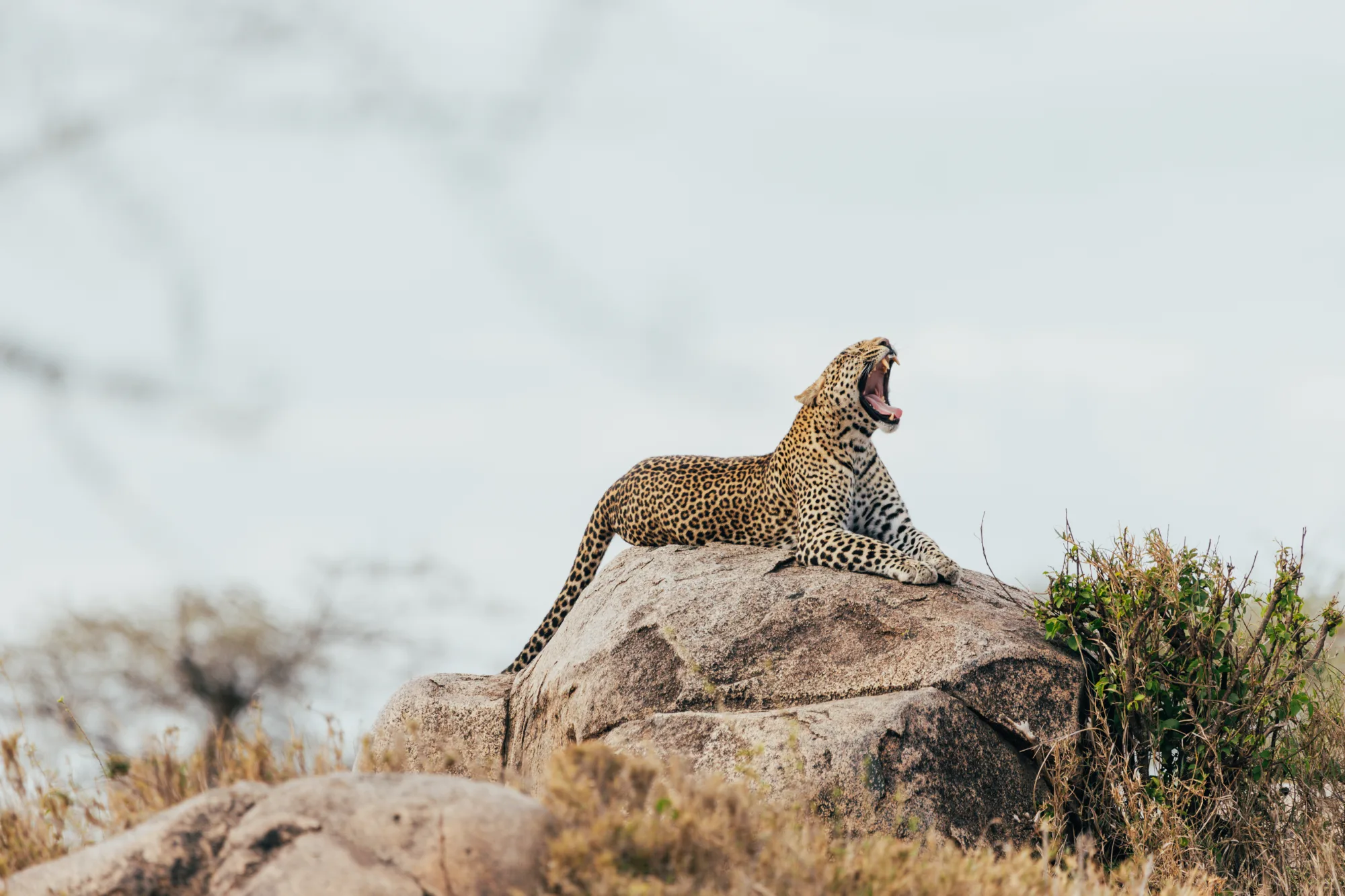
Also called the Seronera Valley, this is where many of the permanent lodges and the main airstrip are. It is often busy, particularly in the peak season, and that can be a drawback when you are watching game. The valley is usually full of animals: zebra, wildebeest, antelope and plenty of elephants. That gives you a very good chance of lions, cheetahs and spotted hyenas, and it is often called Africa's Big Cat Capital. It is also said to be the best place in the park to find a leopard. The landscape is gently rolling acacia savanna, where animals are easy to see. The migration usually moves through from April to June and again from October to December.
Western Corridor and Grumeti
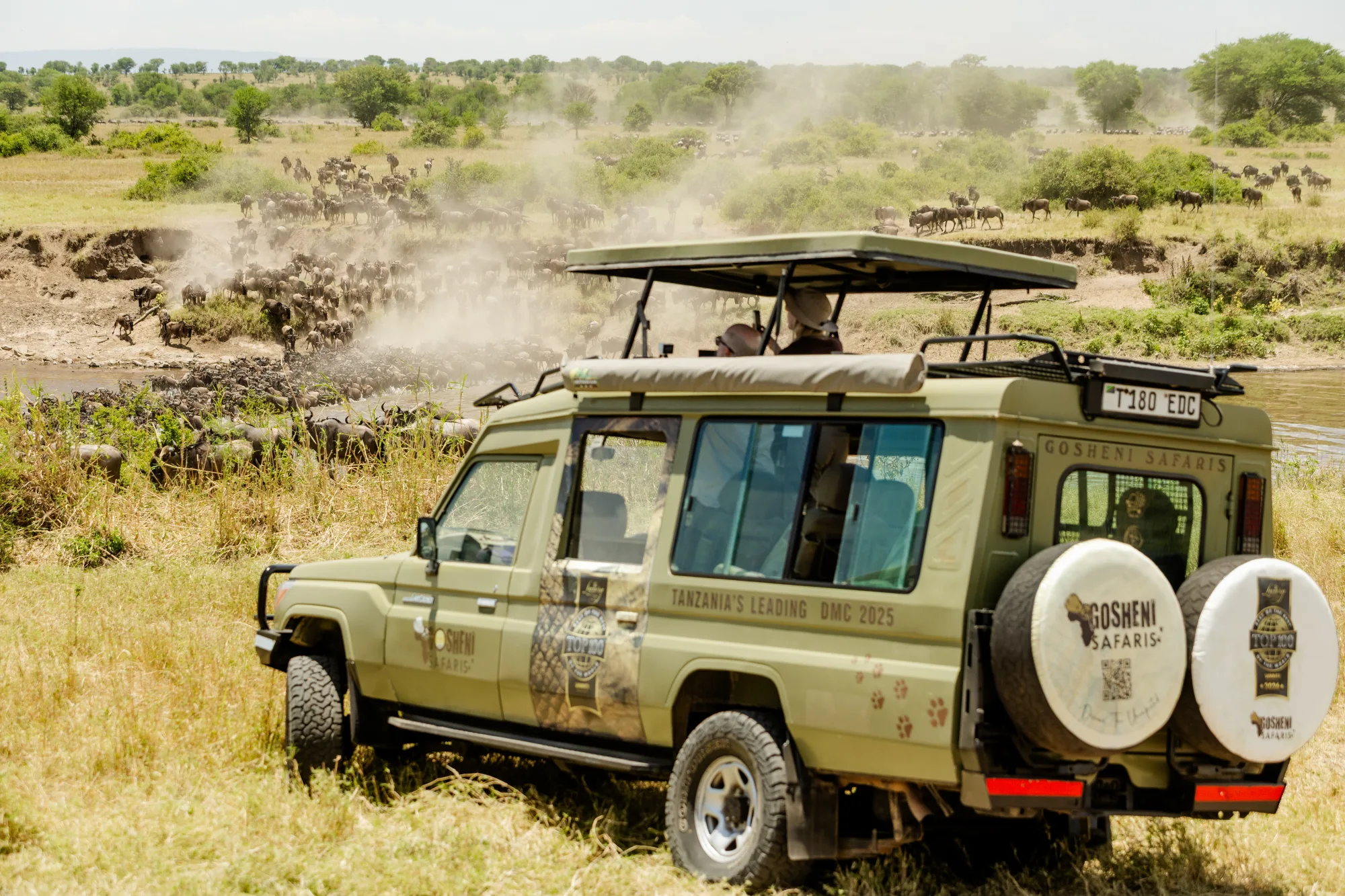
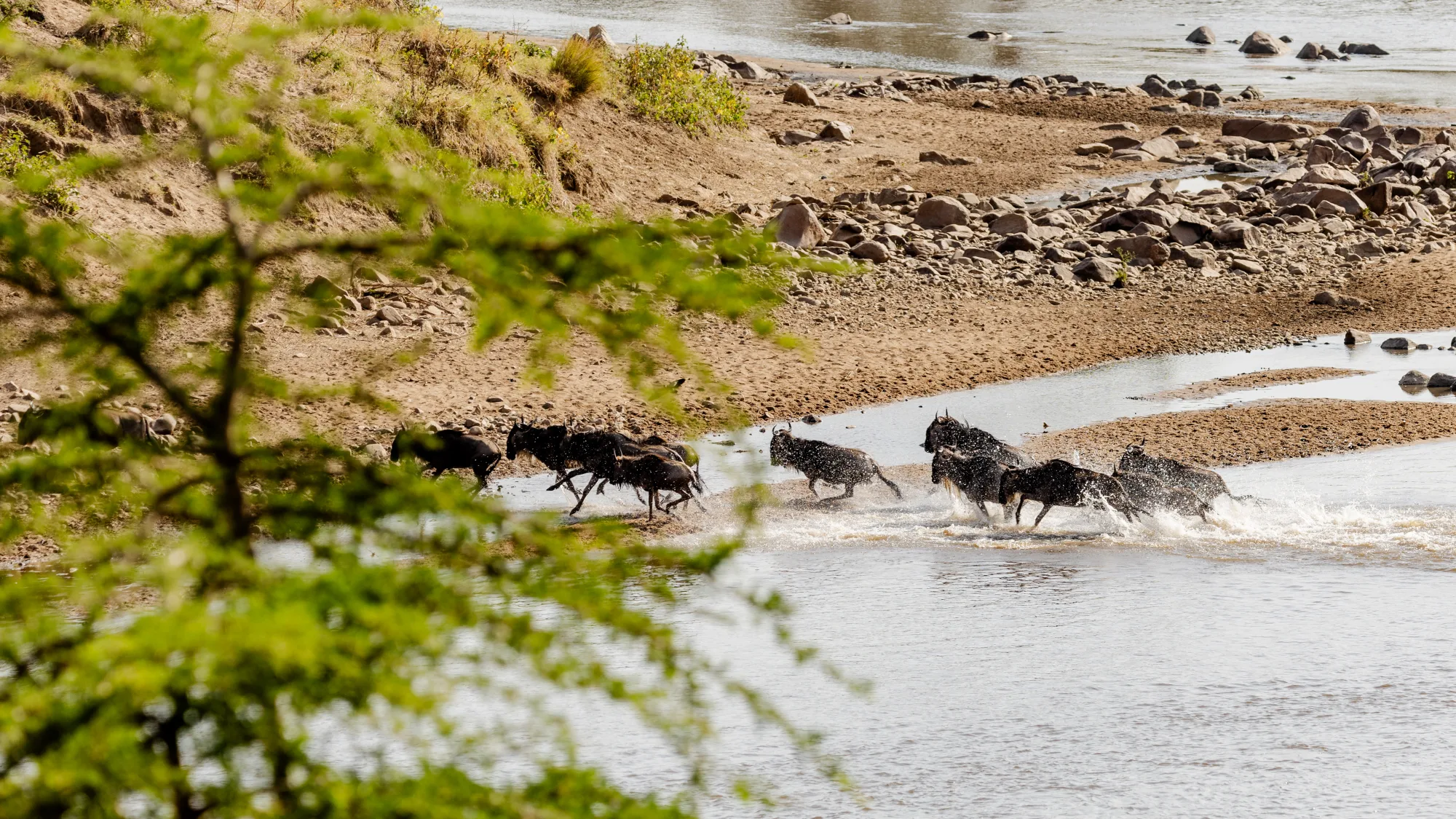
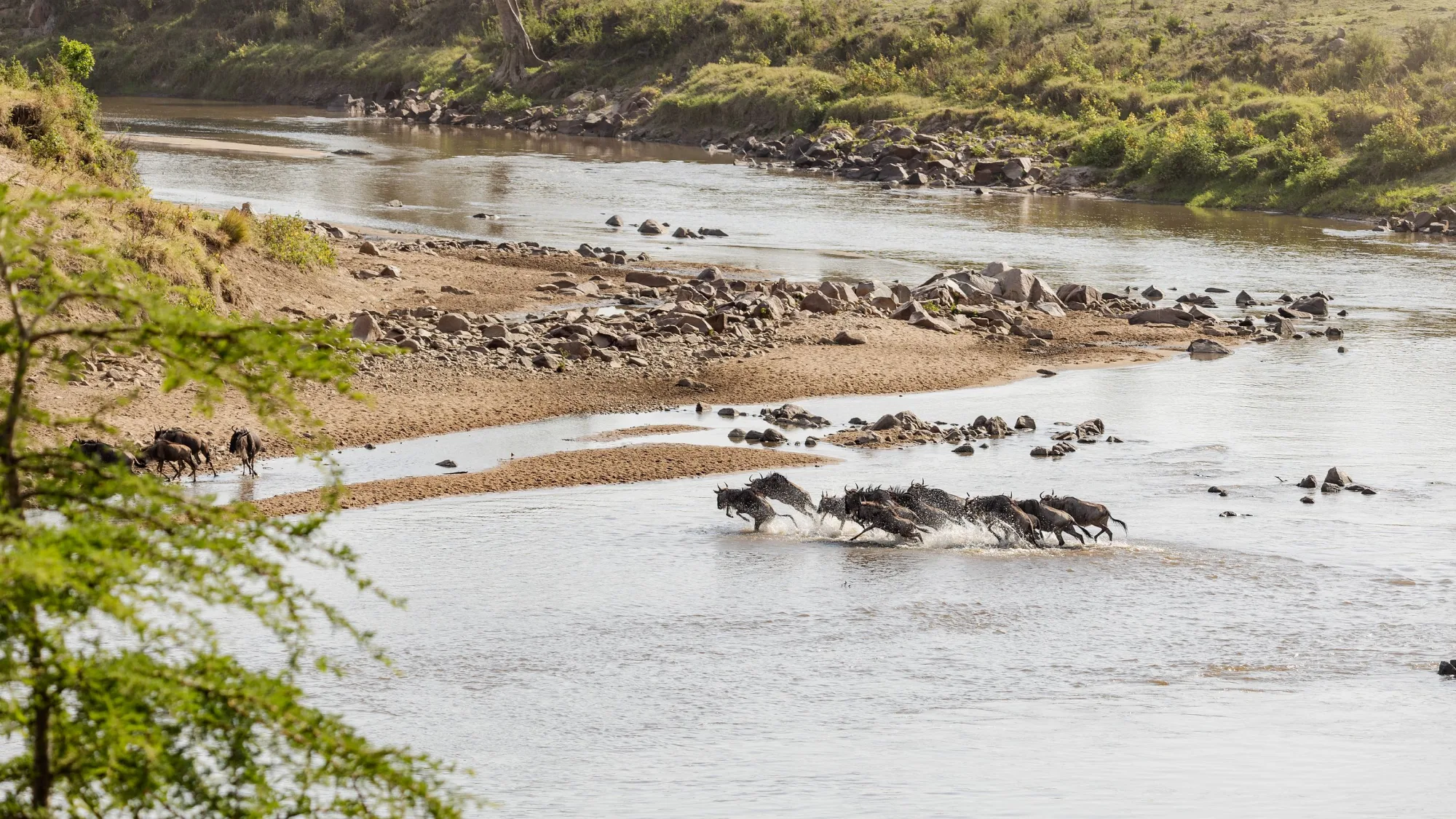
The Western Corridor lies in the Kirawira region, through which the Grumeti River runs. The herds have to cross the river between about May and July to reach better grazing. The water can run swiftly, and it holds dozens of huge crocodiles. Outside the crossing weeks this is a fairly quiet corner. The habitats range from riverine forest and floodplain to woodland and savanna, in a long valley that leads to Lake Victoria. Colobus monkeys and kongoni (Coke's hartebeest) are most likely to be seen here. Our blog covers the Grumeti in detail.
Northern Serengeti
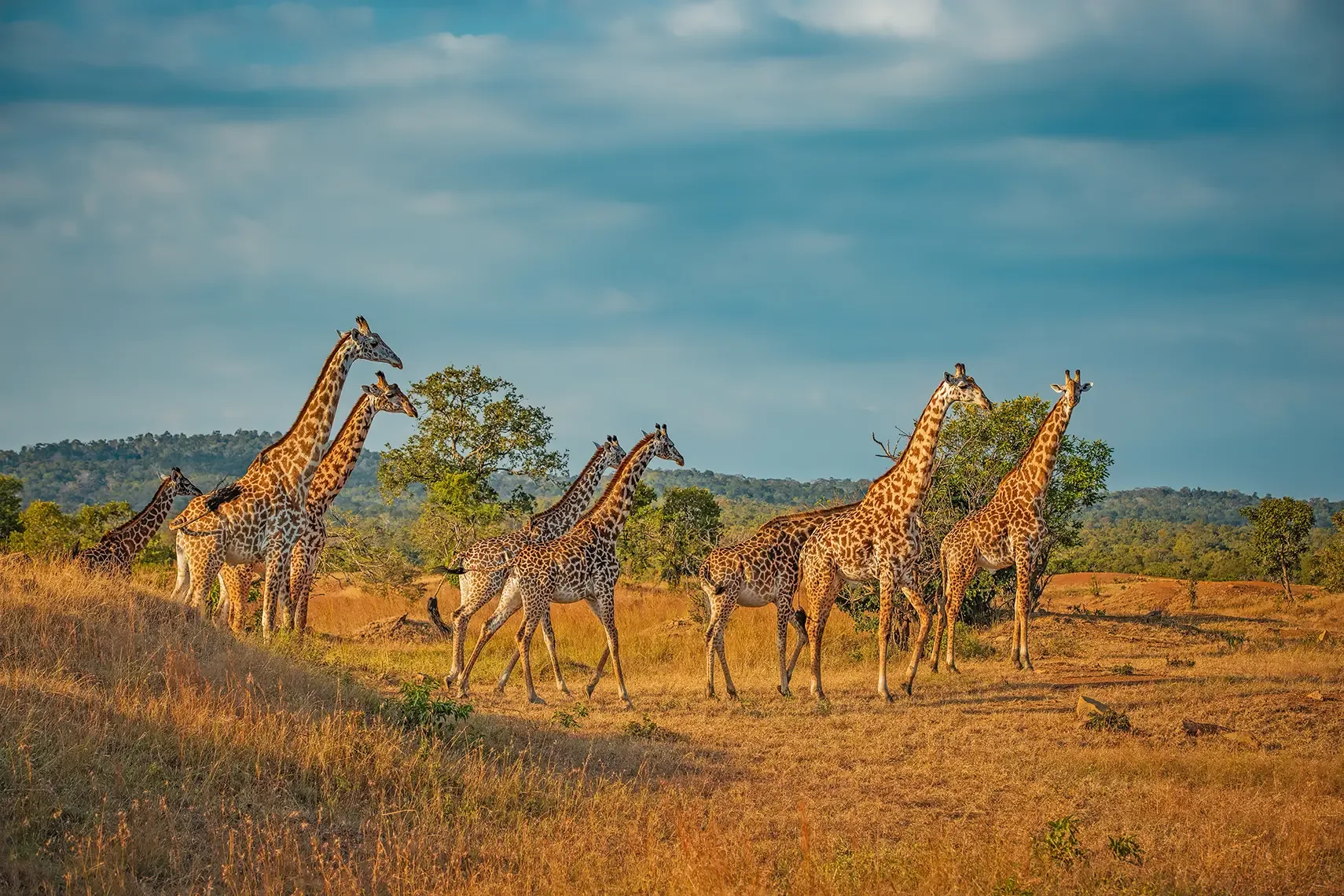
Between Seronera and Kenya's Masai Mara, this area has few visitors and little infrastructure, so it suits anyone who wants to avoid crowds. The rolling grassland is classic Serengeti, and the animals are just as abundant. The migration passes through around June and July and again from September to November, and the herds cross the Mara River in dramatic scenes. The Lobo valley has a healthy population of predators, and giraffe, elephant and topi roam the area. It is best in the dry season, because the animals disperse with the rains. Bologonja Springs and the nearby salt lick draw many species then.
Southern Serengeti
From December to May the vast mixed herd pauses on the plains south of Seronera, down to the border with the Ngorongoro Conservation Area, and the calving season begins. In February the plains are filled with the bleating of thousands of newborns, who can walk within minutes and run with the herd within hours. The predators are close by and the competition between them is fierce. Read more about the Ndutu area.
Wildlife in the Serengeti
The Great Migration
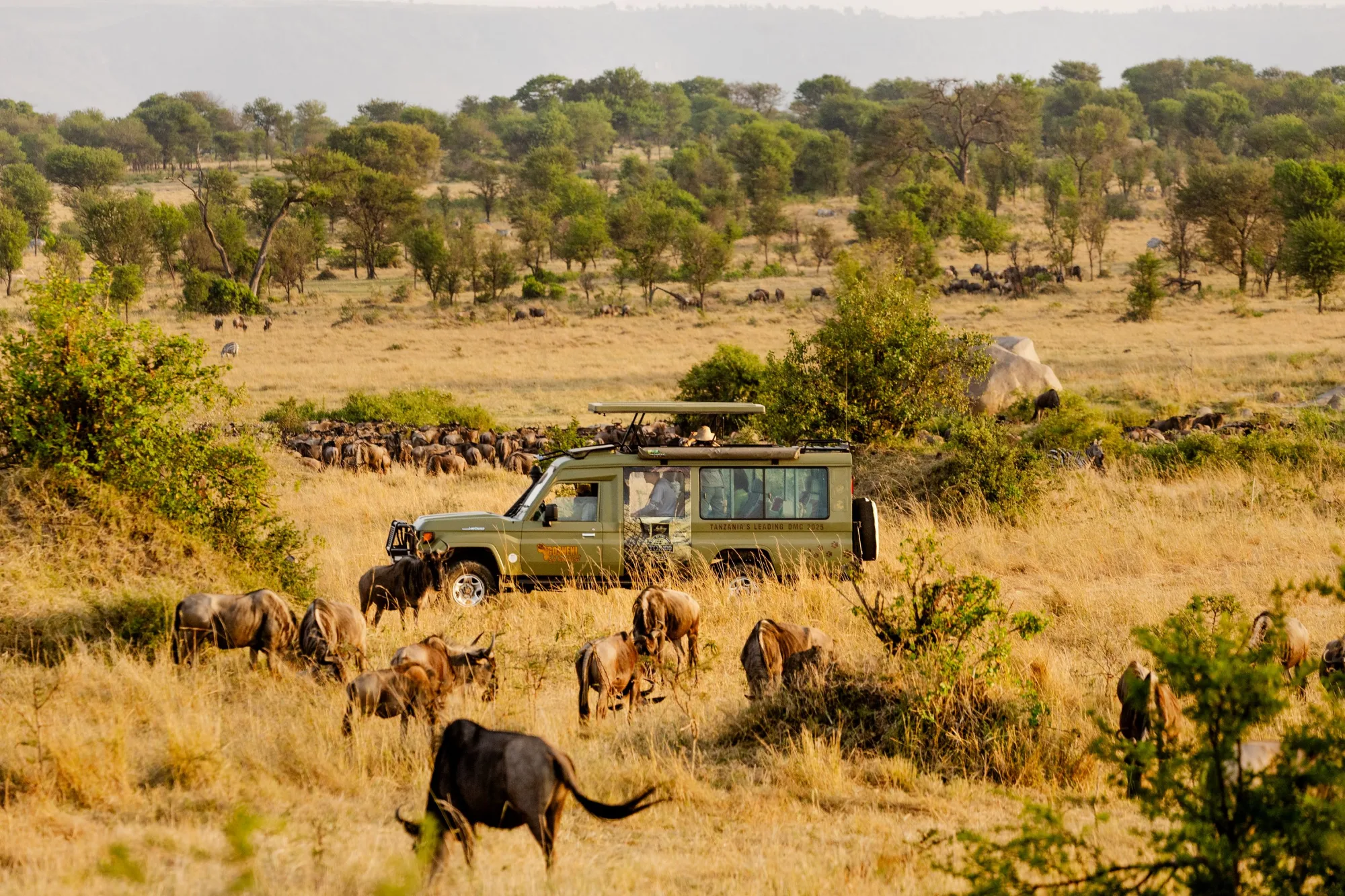
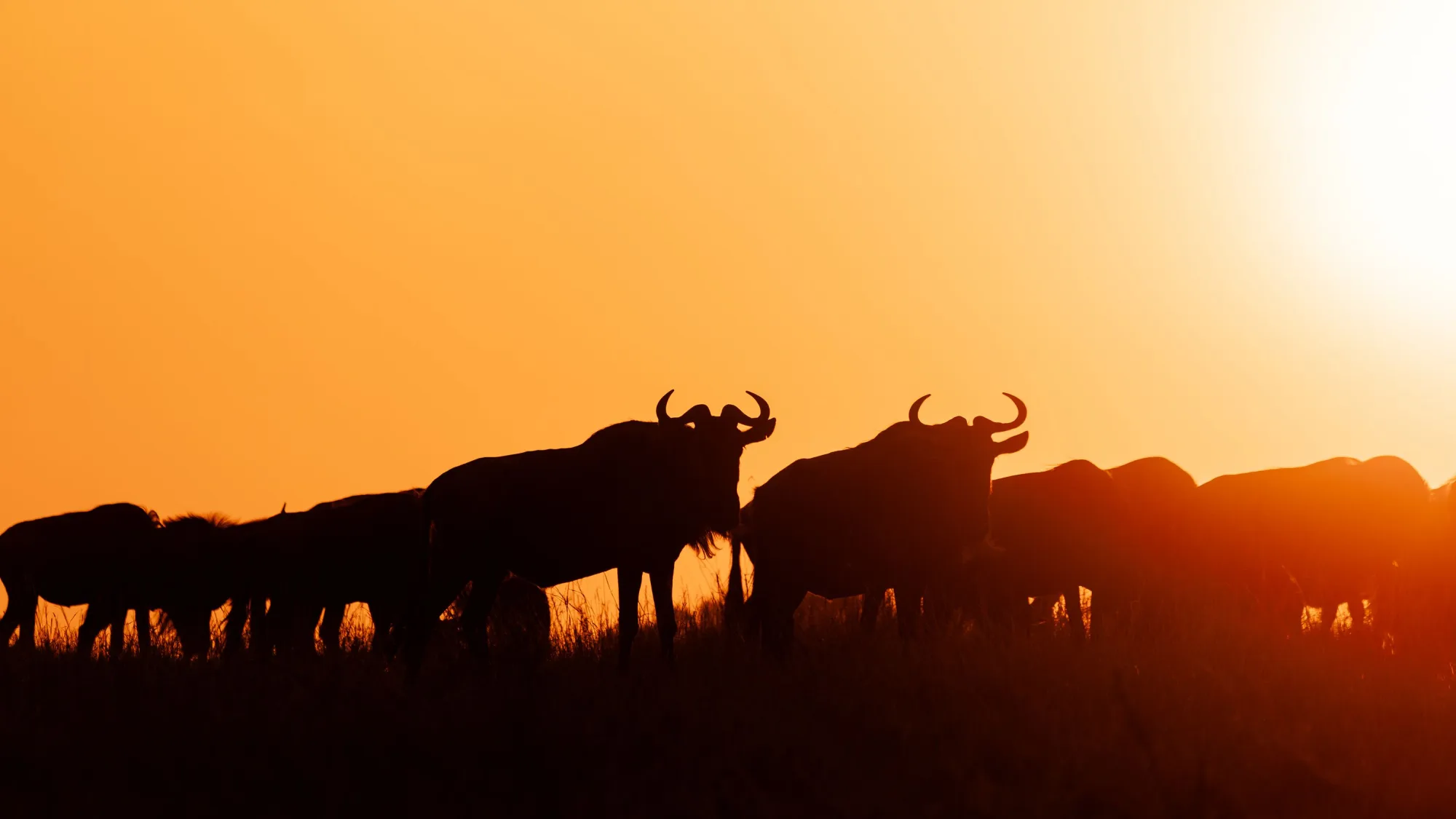
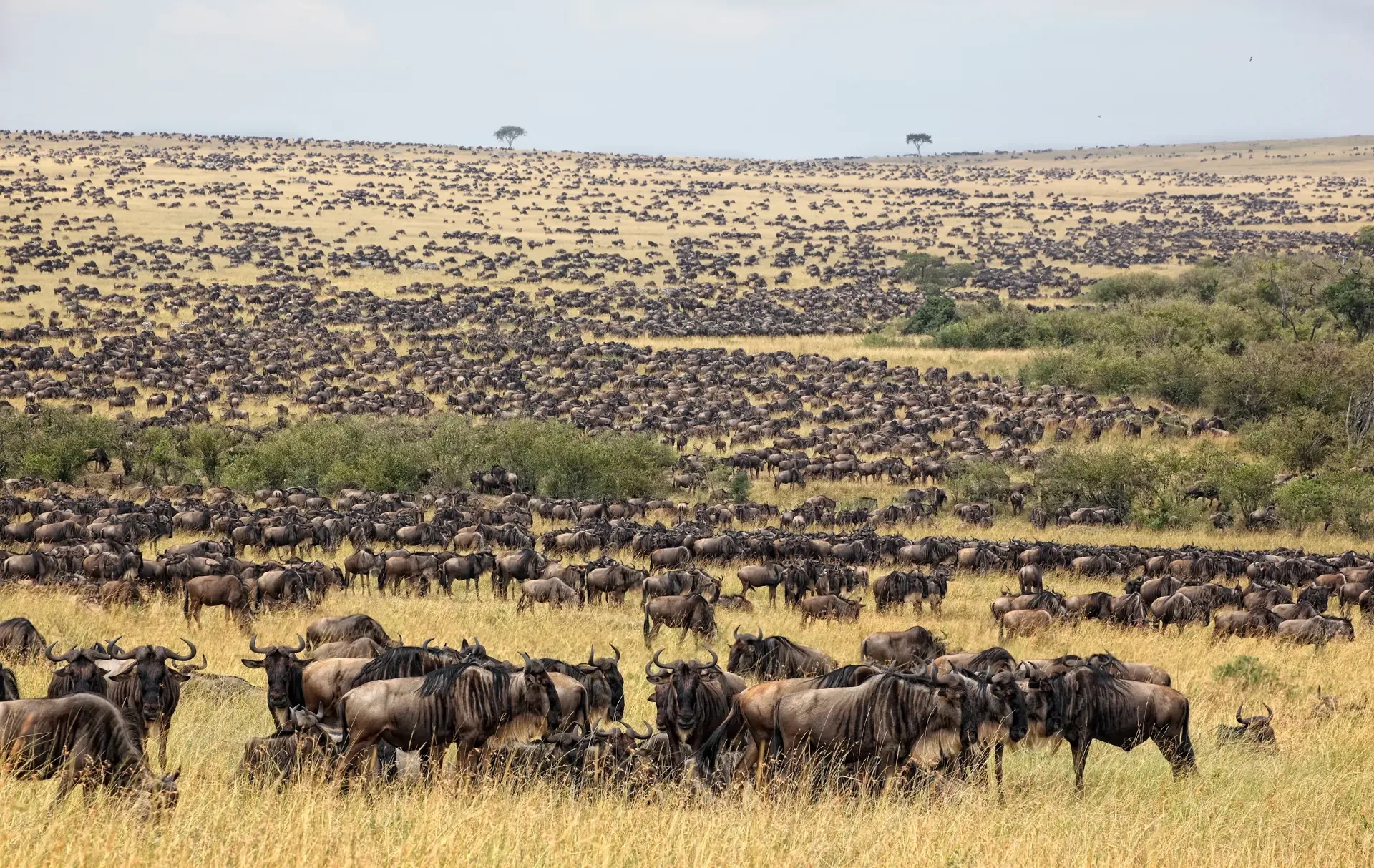
More than a million wildebeest travel the annual circuit, along with hundreds of thousands of zebra and antelope such as eland and Thomson's gazelle. Outside the migration weeks the wildlife spreads out and mixes with kudu, impala, giraffe, topi, buffalo and warthogs. Hippos and crocodiles are plentiful in the rivers and pools. For the timing, see our Great Migration safaris.
Predators
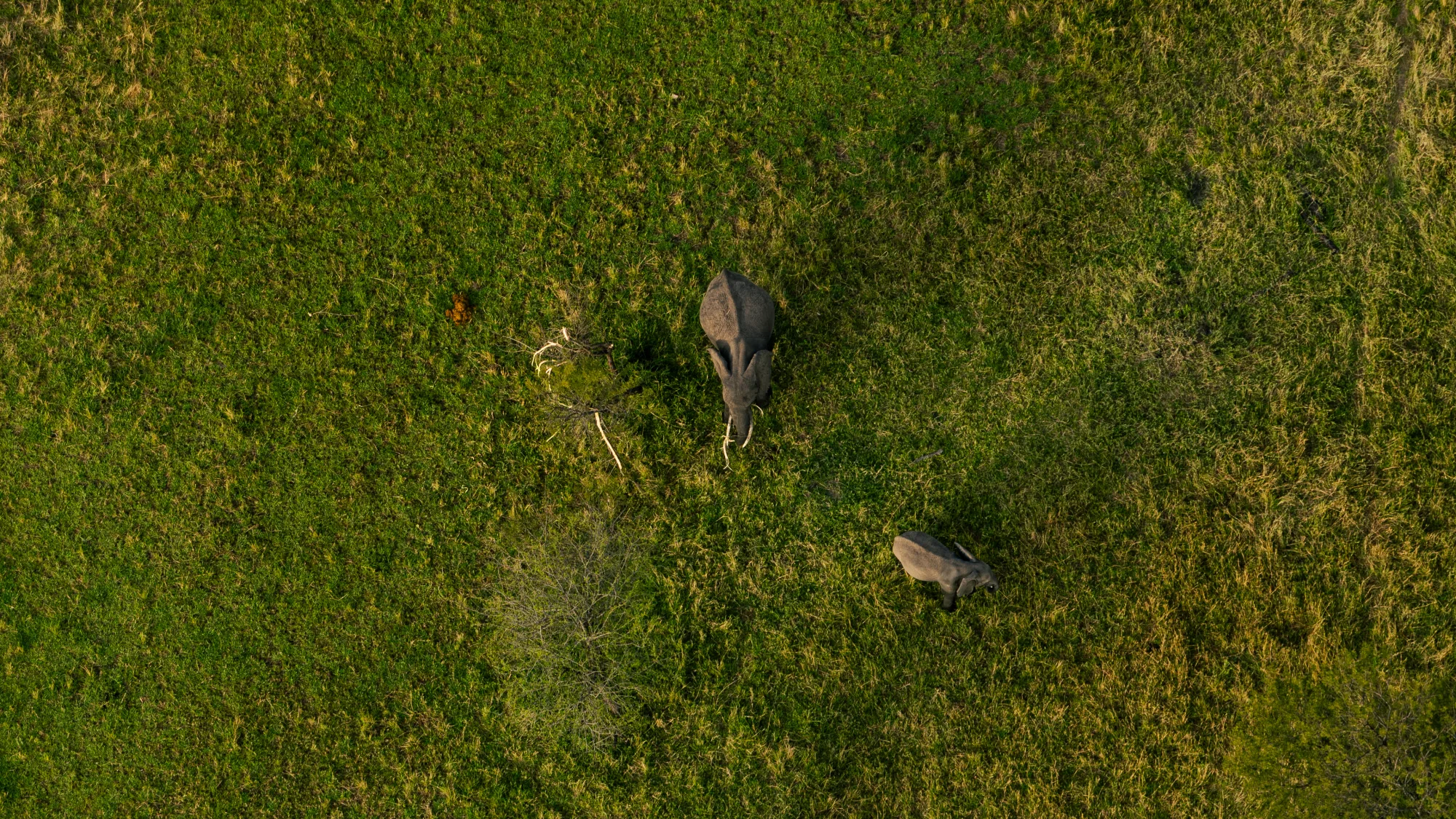
Lions and spotted hyenas are the top predators of the plains. Hunting in groups gives them an edge over solitary hunters. Cheetahs hunt in daylight to avoid competition, and leopards pull their kills up into tree branches. African wild dogs were reintroduced, but with so many lions and hyenas they are seldom seen. Smaller predators such as the African wildcat, serval, caracal, mongooses and jackals are all present.
Other animals
Olive baboons, vervet monkeys and colobus monkeys are the main primates. Aardvarks and porcupines live here too, though you will rarely see them by day.
Things to do in the Serengeti
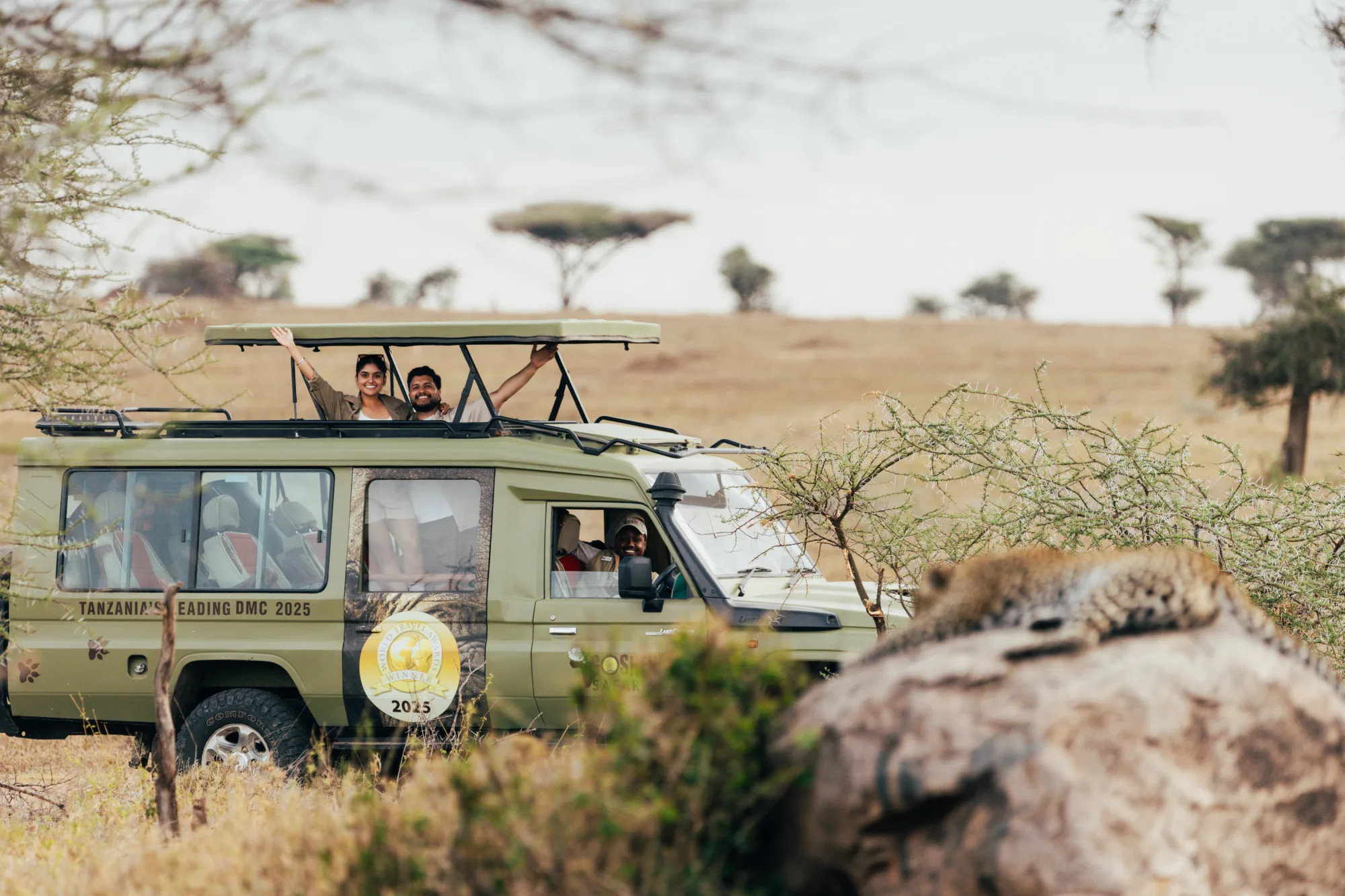
- Game drives: in the cooler hours, in a customised safari vehicle with an experienced guide. Full-day drives are possible.
- Hot air balloon: drift in near silence over the plains in the early morning. We weigh it up in our balloon safari article.
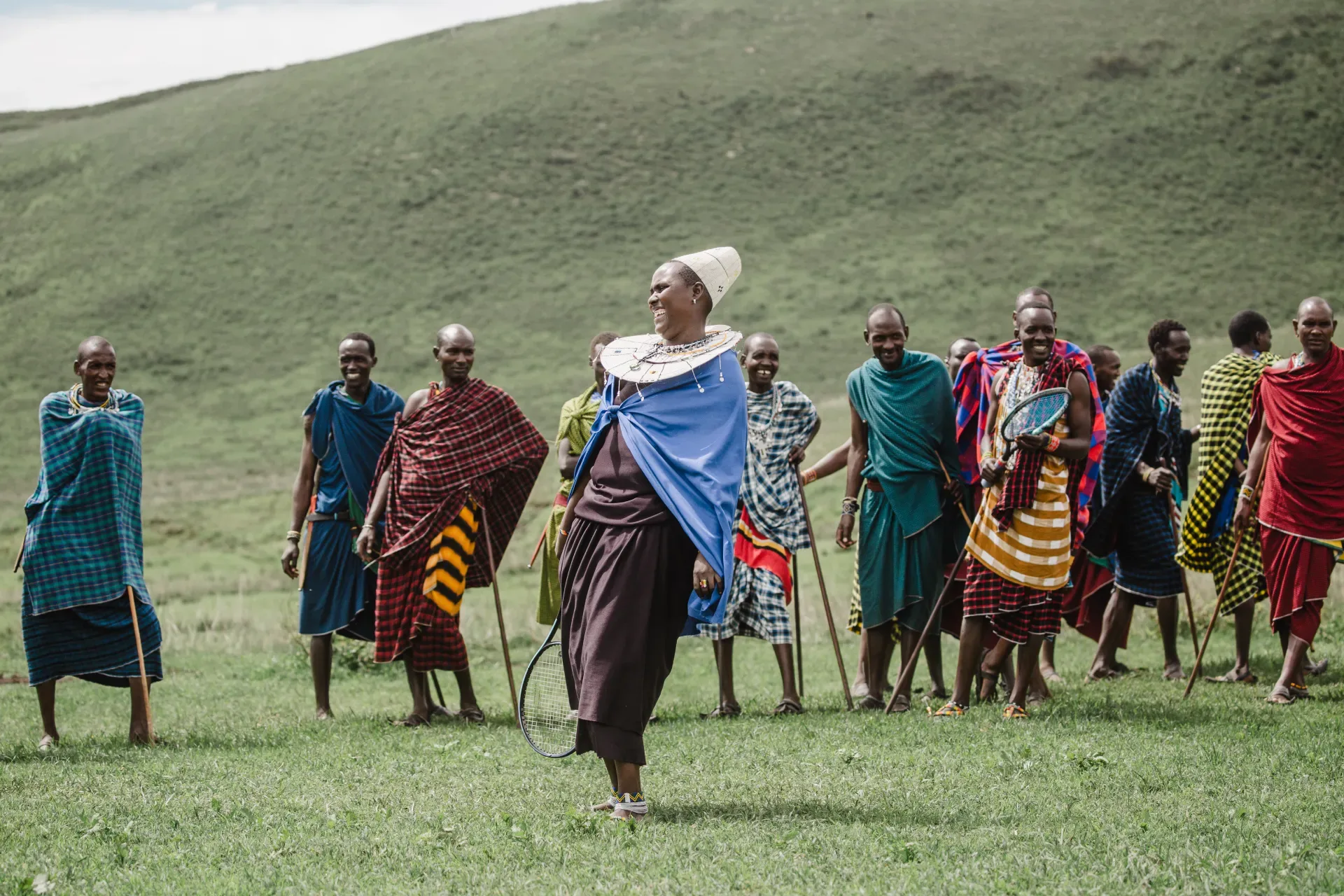
- Maasai cultural visits: to a traditional manyatta.
- Night drives: not allowed inside the park, but they can be arranged in neighbouring wildlife areas.
- Wellness: some lodges offer treatments and yoga classes.
Highlights worth a stop
- Retina Hippo Pool: a pool in the central Serengeti packed with a couple of hundred honking, jostling hippos.
- Bologonja Springs: seldom visited springs and a nearby salt lick, with a quiet atmosphere and a good variety of animals.
- Moru Kopjes: rocky outcrops in dense bush, and one of the better places to look for the heavily protected black rhinos.
Serengeti landscape and weather
The classic picture is open grassland, with scattered umbrella thorn trees that have flat tops. This is true of the Seronera area and the eastern and southern plains. In the north the land is rocky, with many granite kopjes. The Western Corridor and Grumeti area are cut by valleys with seasonal watercourses that support thickets and forest, among patches of savanna.
The climate is moderate and seldom very hot, but evenings and early mornings can be cold, so pack warm clothing. The short rains, November to December, generally do not interfere with game viewing. The long rains, March to May, are heavy and can affect it.
The dry season, June to October, is usually seen as the best time to visit. Sparse vegetation helps spotting and rain is not expected, though brief afternoon showers can happen. High season runs from July to March, when Seronera is crowded and lodges are at a premium. In April and May there are fewer visitors and some camps offer lower rates, but the long rains may make some areas hard to reach.
More questions about the Serengeti
Where is the best place to see leopards in the Serengeti?
The Seronera Valley in the central Serengeti. It is often called the Big Cat Capital and is said to be the best place in the park for leopards.
Where is the best place to see black rhino?
The Moru Kopjes, among rocky outcrops and dense bush. Rhinos are heavily protected and sightings are never certain.
Can you do a night game drive in the Serengeti?
Not inside the national park. Night drives can be arranged in neighbouring wildlife areas.
Where can I find the calving season?
On the southern plains, south of Seronera and up to the Ngorongoro Conservation Area, from December to May. It peaks from late January through February.
Find your bearings
Serengeti National Park in context
Neighbouring destinations in Tanzania, tap any marker.
Ready-made journeys
Safaris visiting Serengeti National Park
Every journey is tailor-made, use these as your starting point.
Serengeti National Park is calling
Make it part of your journey
A specialist crafts your tailor-made itinerary within 24 hours, free, no obligation, shaped entirely around you.