
Safari style
Great Migration
The Great Migration is the largest overland animal movement on earth: some 1.5 million wildebeest and hundreds of thousands of zebra and gazelle circling the Serengeti-Mara ecosystem in an endless search for rain-fresh grass. Timing is ever…
The style
Why travel this way
The Great Migration is the largest overland animal movement on earth: some 1.5 million wildebeest and hundreds of thousands of zebra and gazelle circling the Serengeti-Mara ecosystem in an endless search for rain-fresh grass. Timing is everything: dramatic river crossings at the Grumeti and Mara peak from July to October, while December to March brings calving season on the southern plains, when thousands of calves are born daily and predators follow. Our migration itineraries are built around where the herds actually are for your dates, with mobile and strategically placed camps that keep you in the action rather than commuting to it. Born in Tanzania, we've tracked these herds for over fifteen years.
Make it yours
Every great migration is tailor-made
Use the safaris below as your starting point, a specialist reshapes any of them around your dates, pace and budget within 24 hours, free.
Start planningAsk a specialistWhat the Great Migration actually is
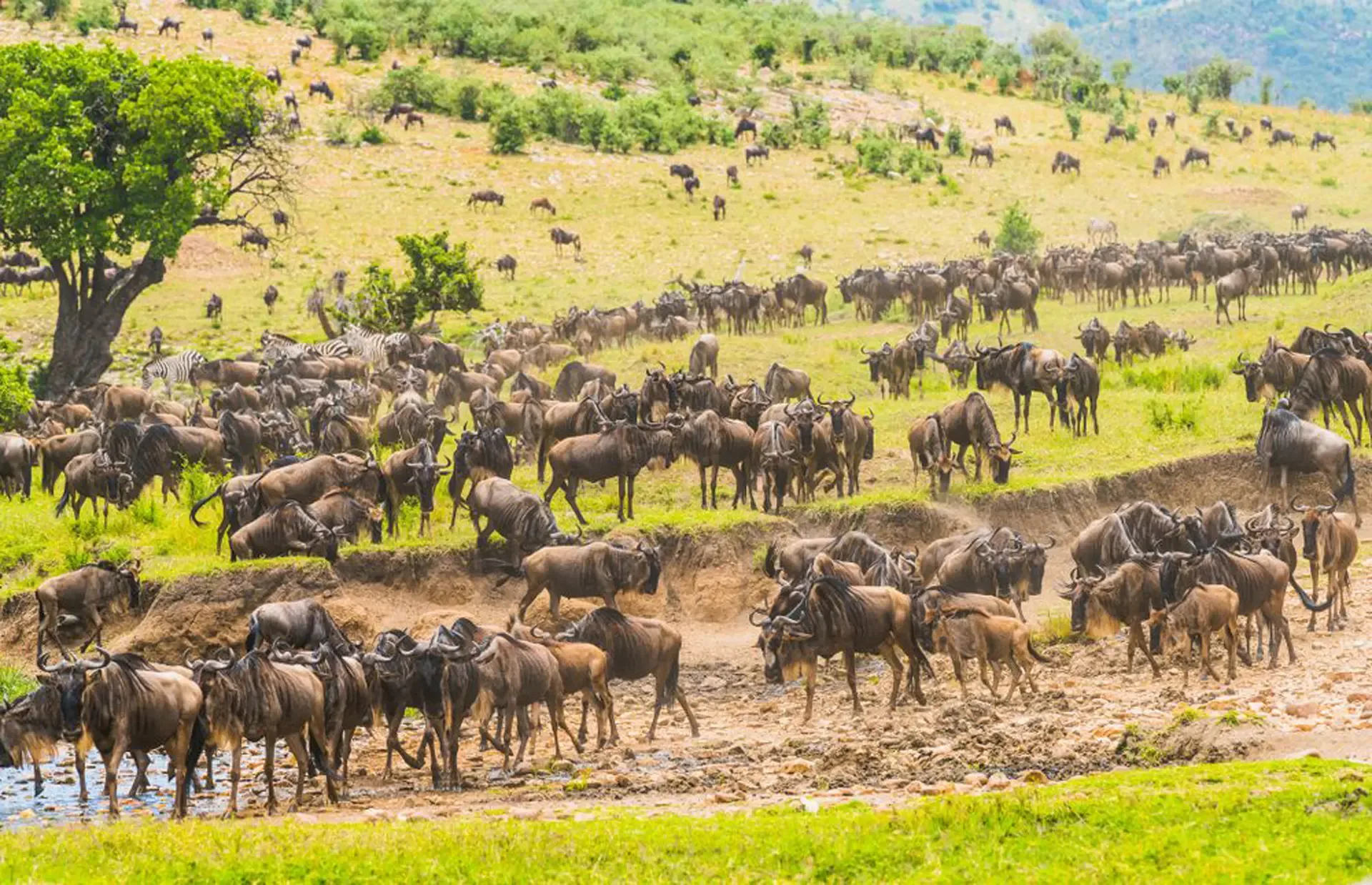
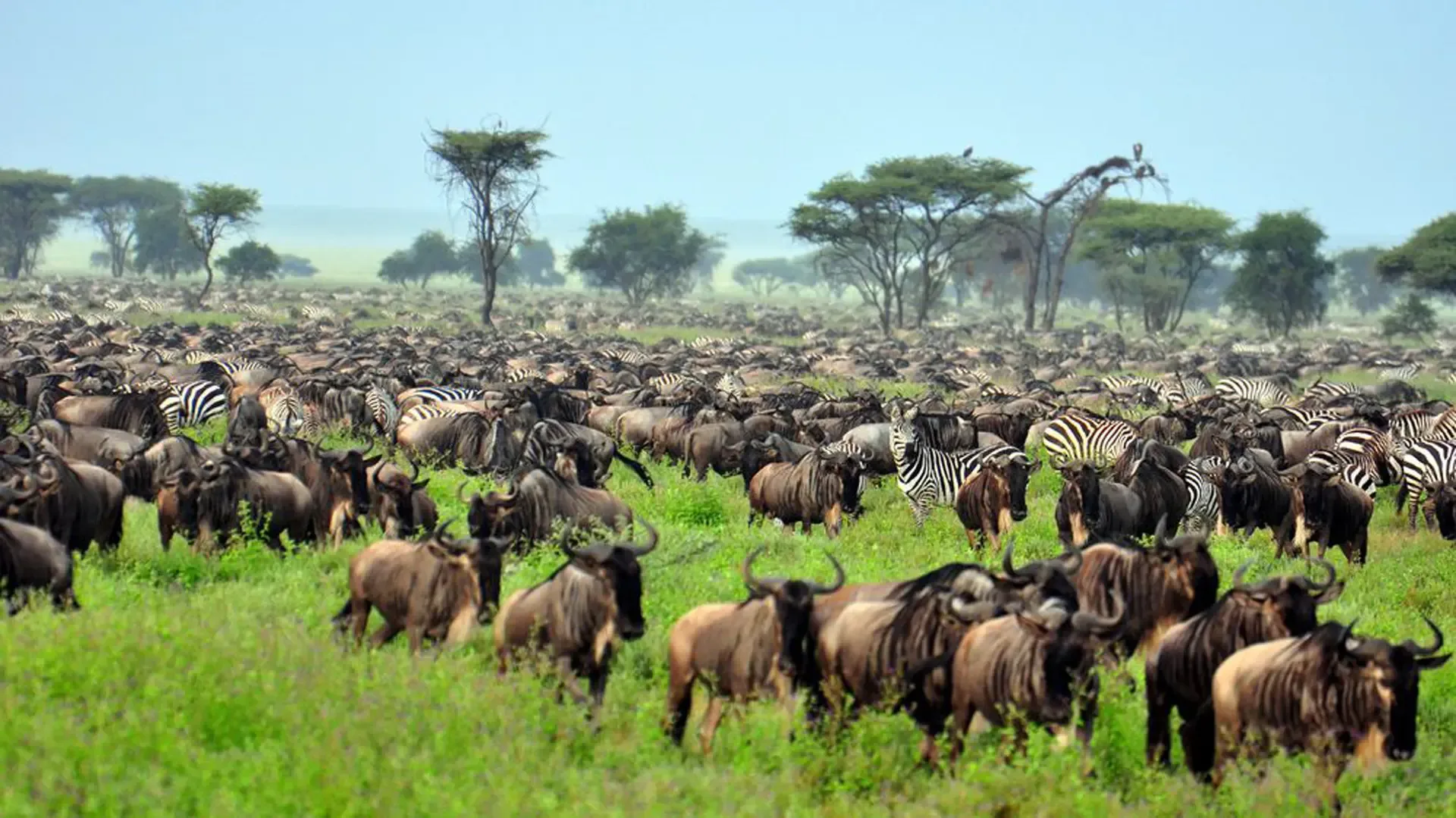
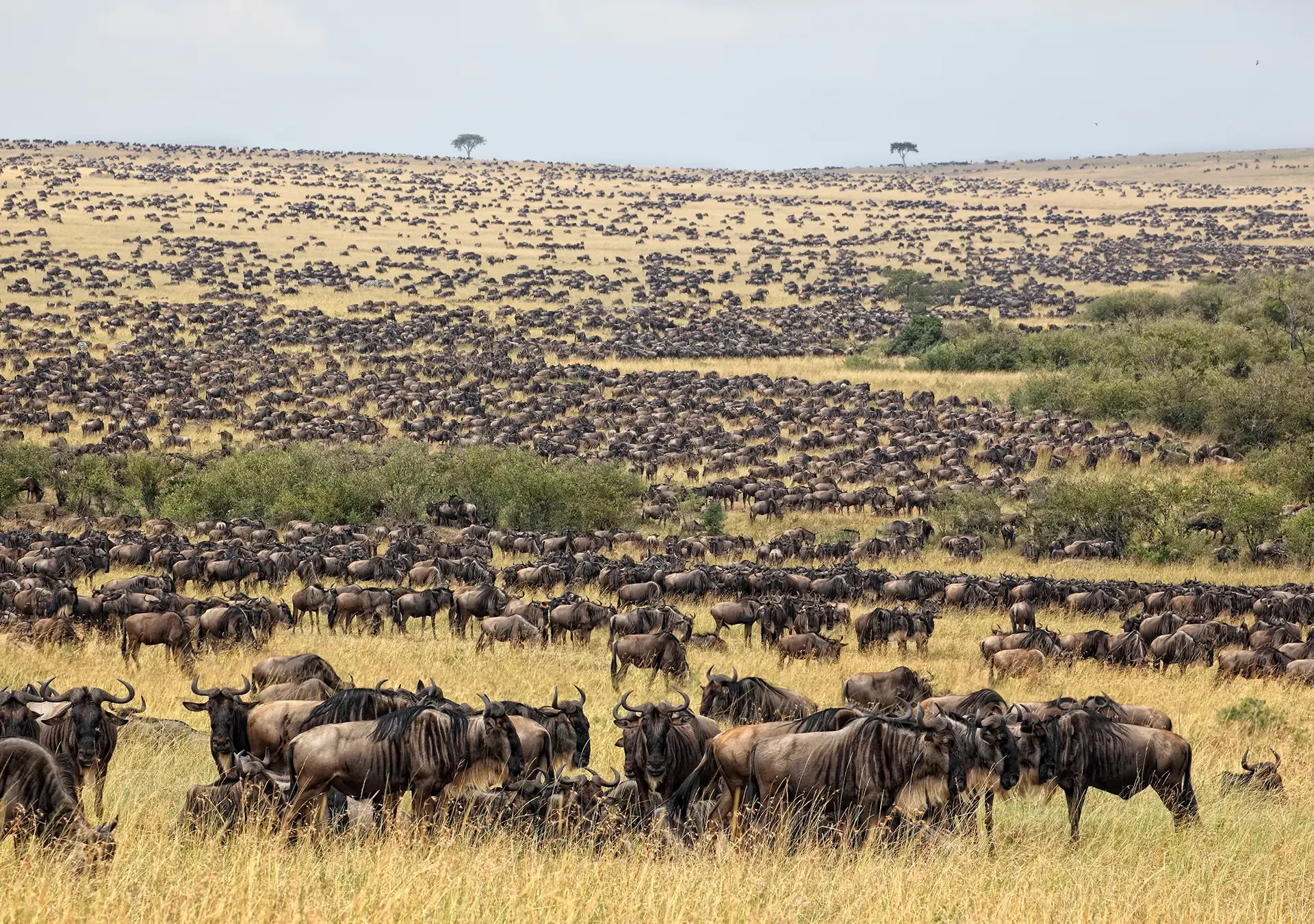
Around 1.5 million wildebeest, together with roughly 200,000 zebra and several hundred thousand gazelle, move in a continuous clockwise loop through the Serengeti-Mara ecosystem, following the rain and the grass it brings. It never stops and it never truly starts: there is no single month when "the migration happens". The herds are somewhere in the ecosystem all year, which means the real question is not whether you will see them but where they will be on your dates.
That distinction matters more than anything else on this page. A safari timed for February belongs on the short-grass plains in the south. A safari timed for August belongs in the north, near the Mara River. Book the wrong region for your month and you can spend a week in an empty Serengeti while the herds graze two hundred kilometres away.
Two chapters of the loop draw travellers above all others, and they are almost opposites.
Calving or crossings: the two great chapters
Both are extraordinary; they are not interchangeable. Pick the one that matches what you want to see, then let the dates follow.
Calving season
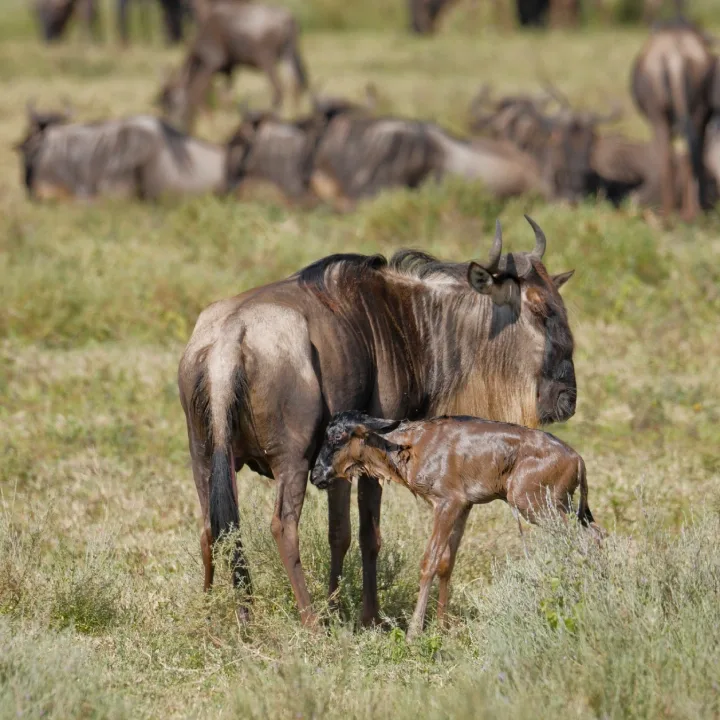
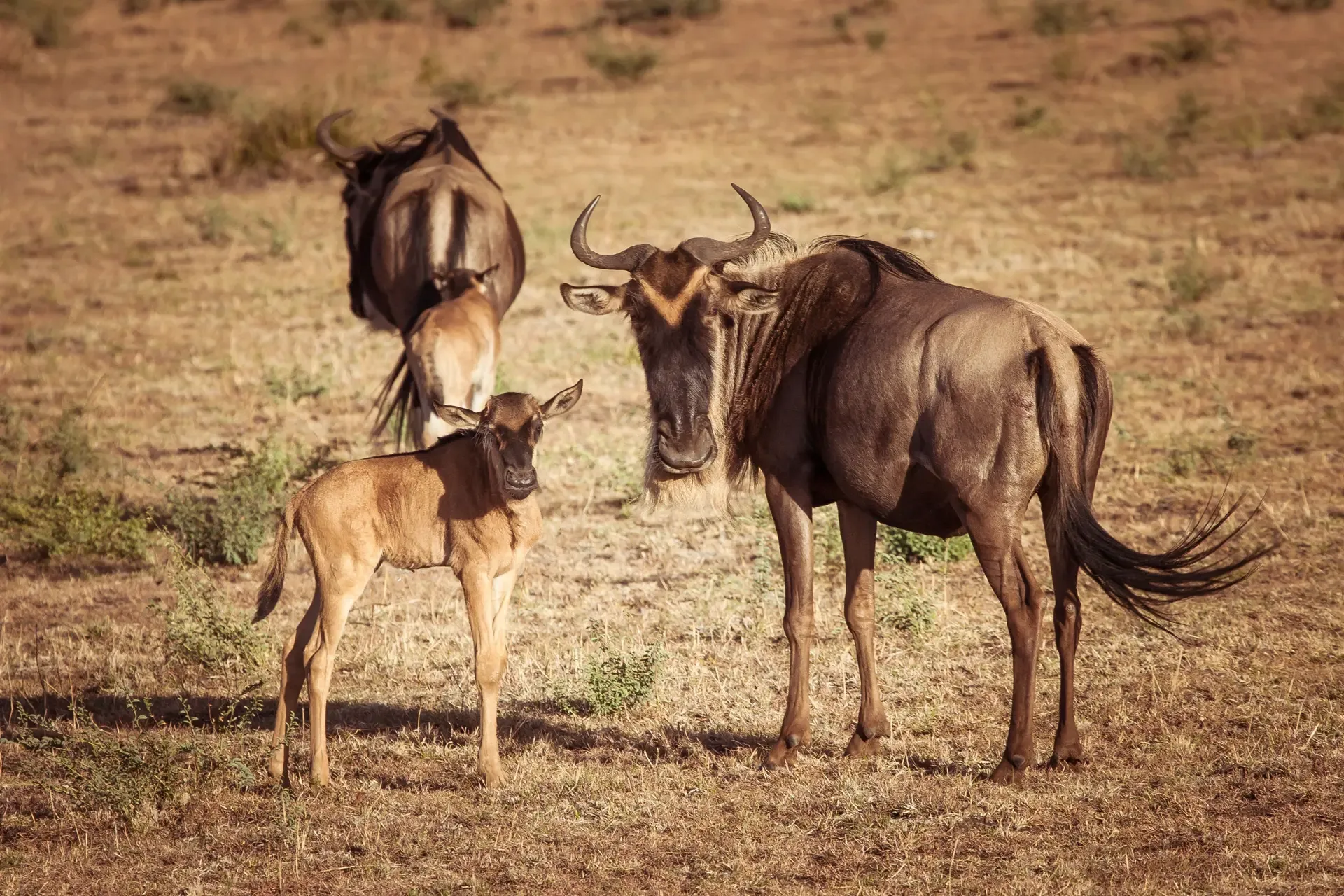
On the short-grass plains around Ndutu and the southern Serengeti, roughly half a million calves are born in a window of about three weeks. Newborns are on their feet within minutes because they have to be. This is the densest concentration of predators anywhere in Africa, and lion, cheetah and hyena activity is relentless. Herds are tightly packed and easy to find, and the plains are green and photogenic after the short rains.
- When
- Late Dec to March
- Peak
- Late Jan to mid Feb
- Where
- Ndutu, southern Serengeti
- Best for
- Predator action, photography
River crossings
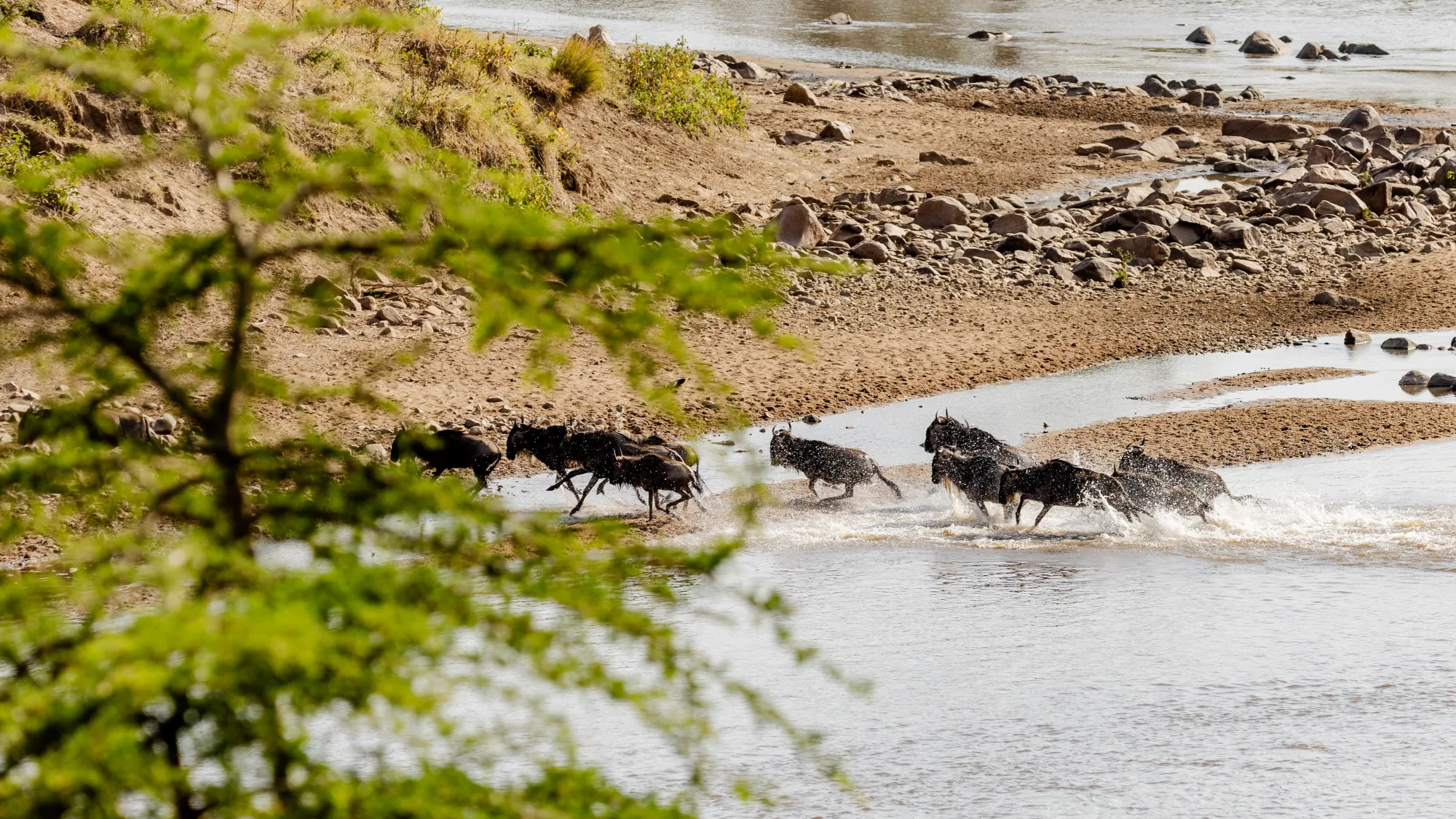
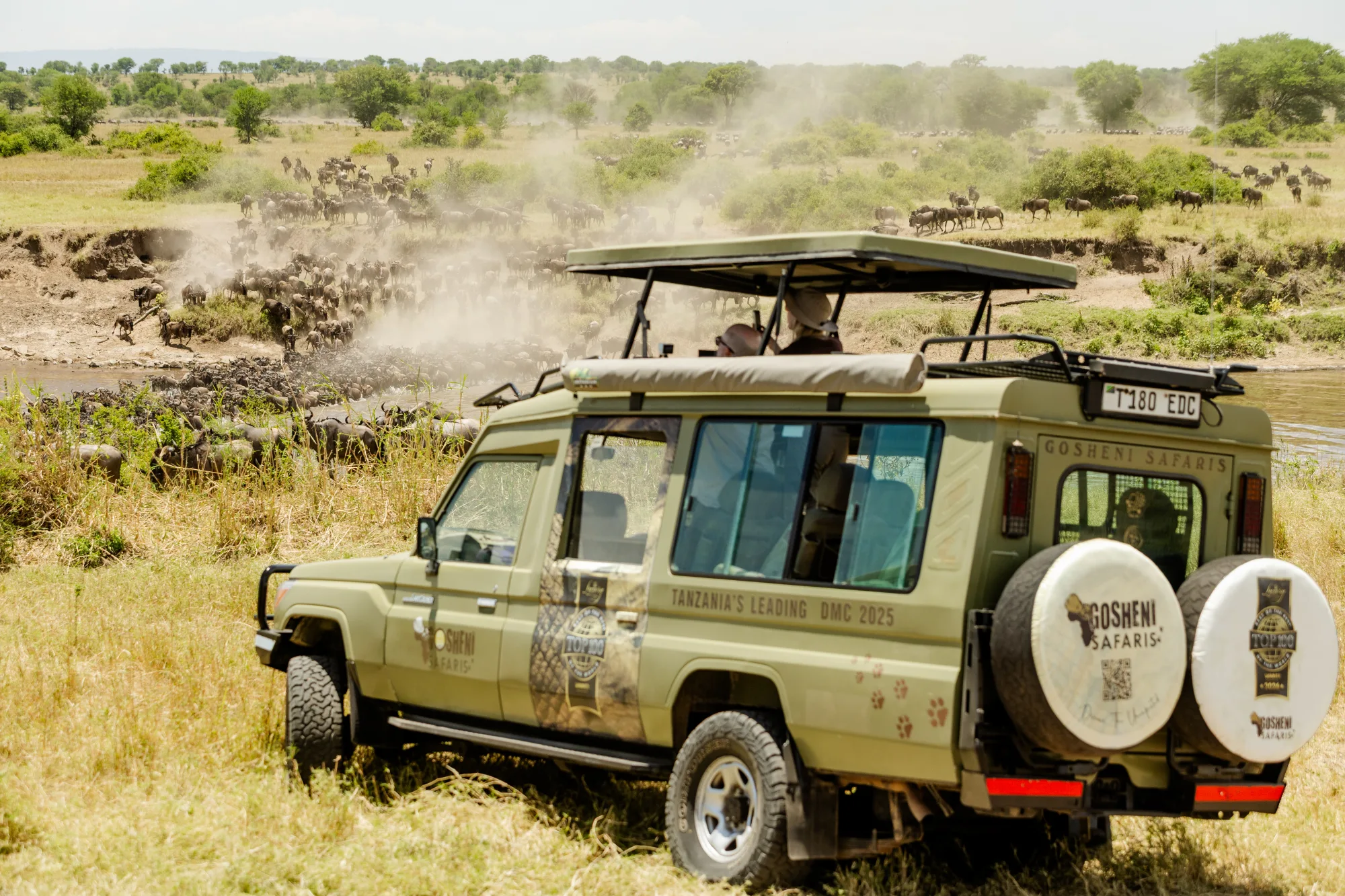
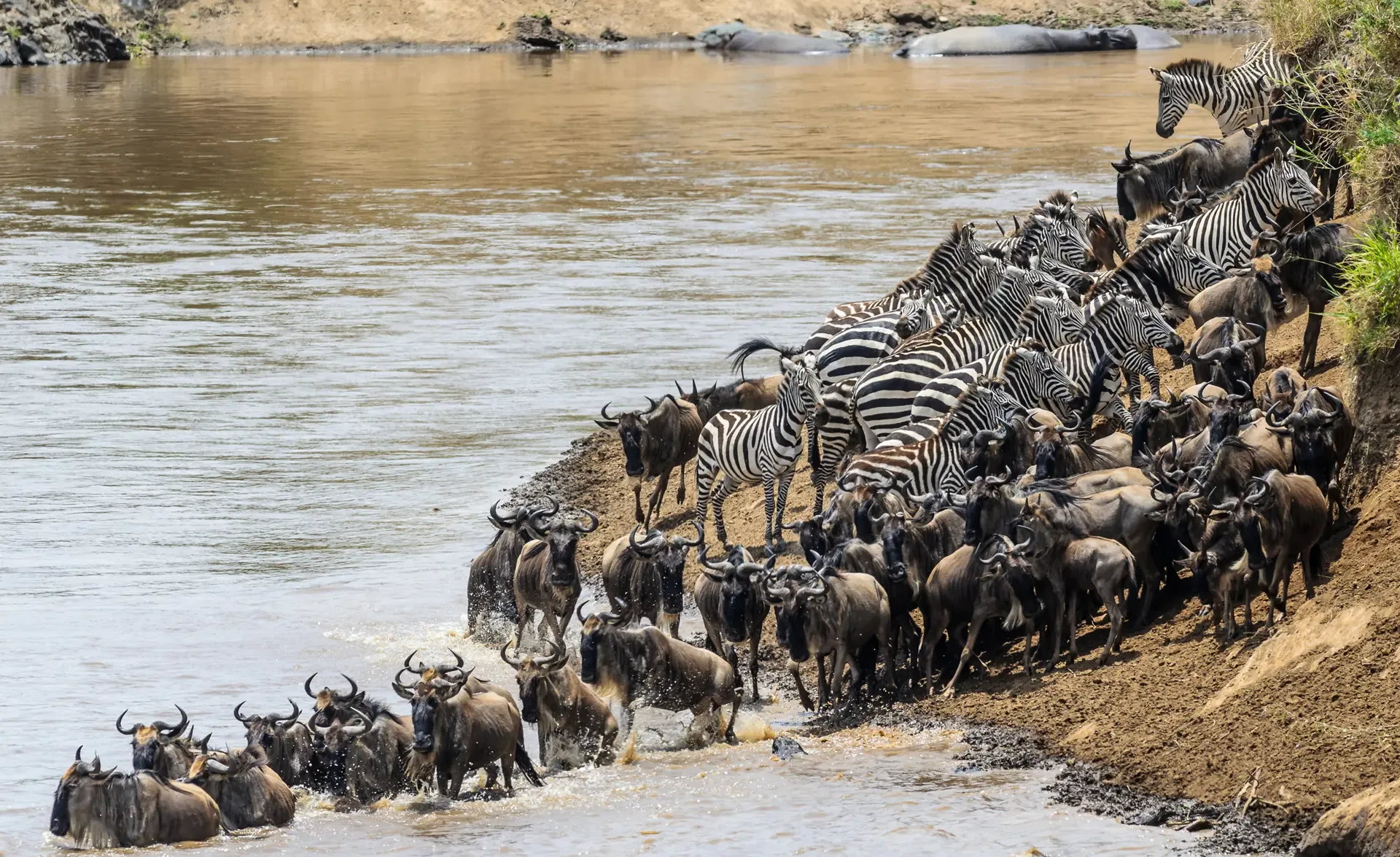
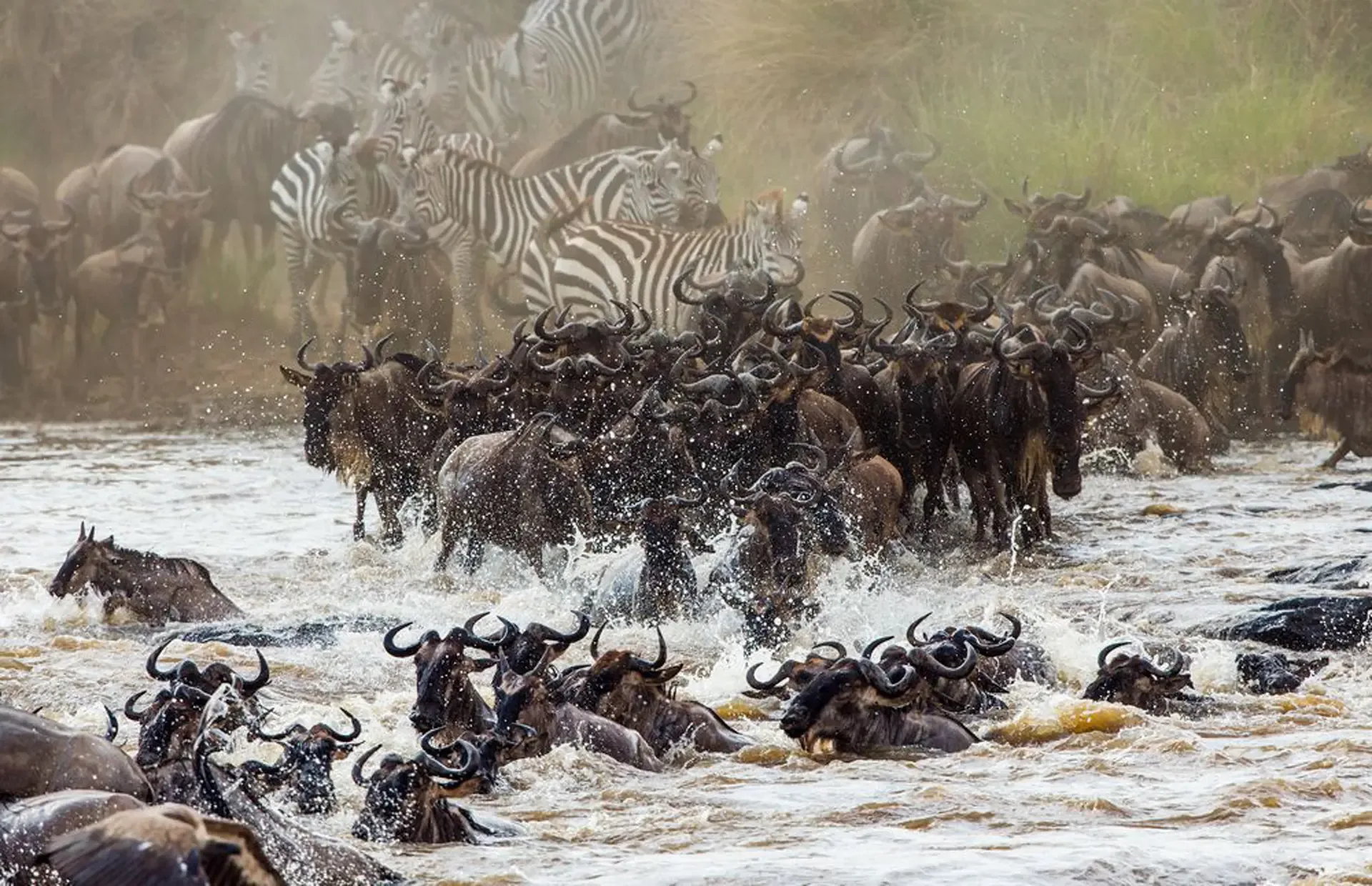
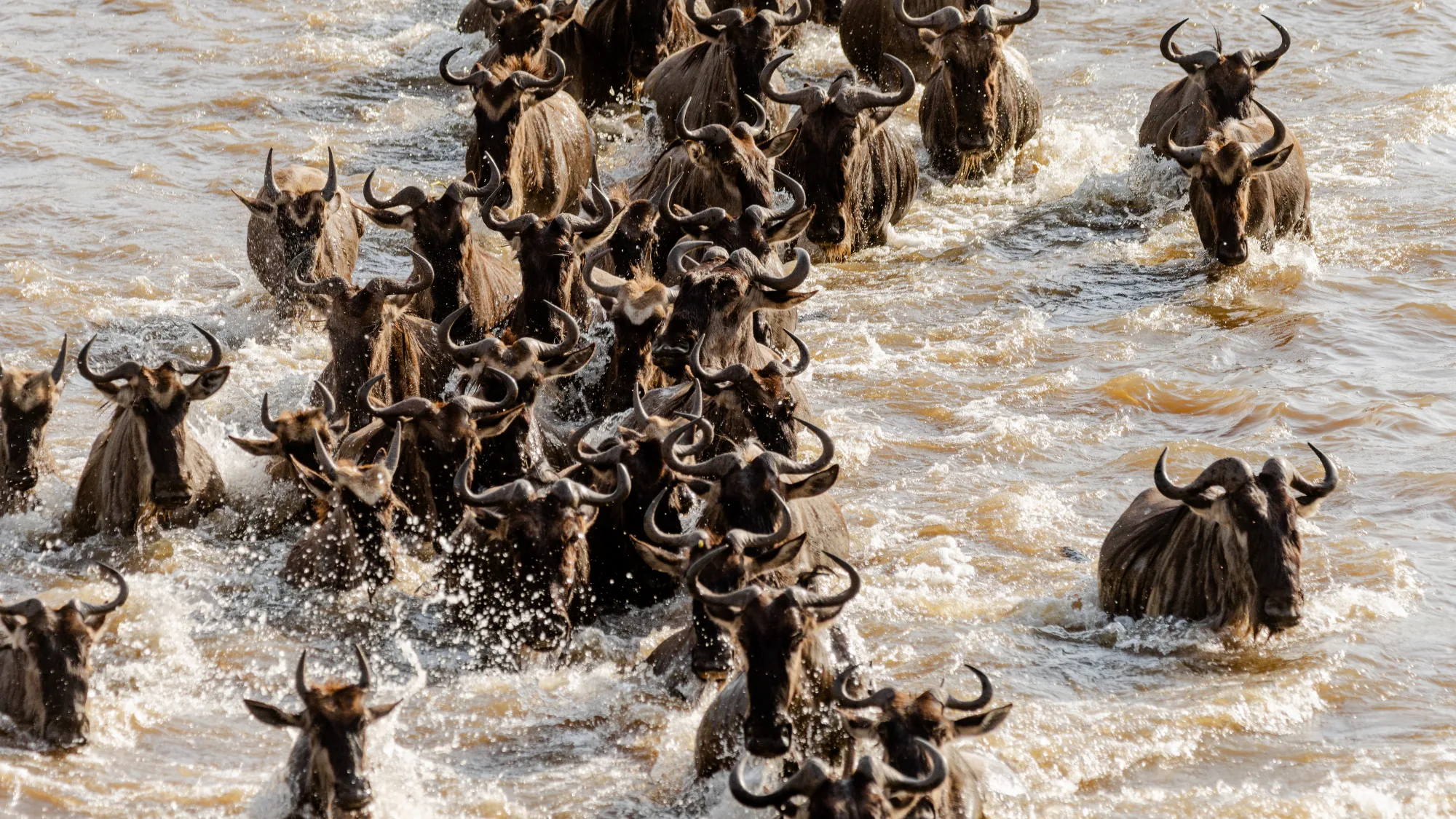
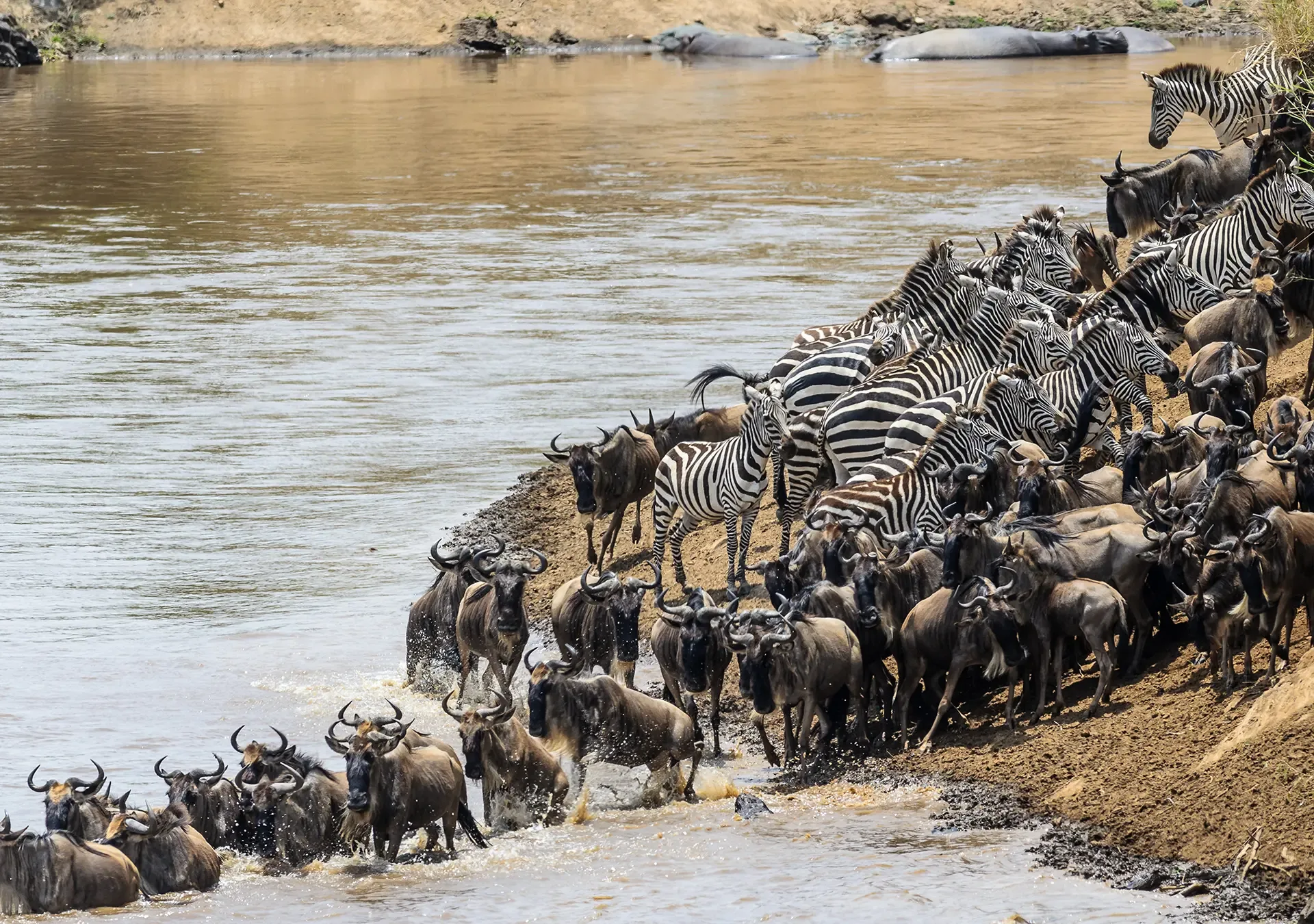
The famous scene: columns of wildebeest hesitating on a cut bank, then pouring into crocodile-filled water. Crossings happen at the Grumeti in the west from around June, and at the Mara in the north from July into October. They are genuinely unpredictable, herds can mass at a bank for hours and turn away, so this chapter rewards patience and several days in the right area rather than a single afternoon.
- When
- June to October
- Peak
- July to September
- Where
- Grumeti, then Mara River
- Best for
- Drama, the classic image
Best Time to Go
Where the herds are, month by month
A guide, not a timetable. The herds follow rainfall, and rainfall moves. Treat these as strong probabilities and let your guide adjust on the ground.
Herds spread across the short-grass plains of Ndutu and the southern Serengeti. Calving peaks in a roughly three-week window from late January, and predator activity peaks with it.
The herds begin moving north and west through the central Serengeti. Afternoon rain is common, roads are slower, and rates fall sharply, the best value of the year for travellers who do not mind wet afternoons.
Columns form through the Western Corridor and the first crossings hit the Grumeti River. Drier ground, easier driving, and the migration at its most linear and visible.
The headline months. Herds concentrate in the northern Serengeti and cross the Mara River in both directions, sometimes repeatedly. This is peak season, camps in the north book up a year ahead.
The short rains pull the herds south again through the eastern and central Serengeti towards the calving grounds. A quiet, good-value shoulder month with fresh green landscapes.
Planning around a specific month?
Questions
Great Migration questions we are asked most
No, and be sceptical of anyone who guarantees one. Crossings are unscripted: herds gather at a bank, wait, and may cross within minutes or turn back and return the next day. What we can do is put you in the right area at the right time and give you enough days there. Most guests who spend three or more nights in the northern Serengeti between late July and September see at least one crossing.
They are different safaris. Calving offers the densest predator action of the year, tightly concentrated herds, green scenery and fewer vehicles. Crossings offer the single most dramatic scene in African wildlife but demand patience and fall in the busiest, priciest months. Travellers who prioritise photography and value often prefer February; those who want the image they have seen on television want August.
For the northern Serengeti between July and September, twelve months ahead is normal and the best camps sell out earlier. Calving season is easier, six to nine months is usually comfortable. Any migration safari benefits from booking before the camps in the right region fill, because location is what makes or breaks the trip.
Mobile camps move with the herds two or three times a year, so they are almost always within reach of the action. Permanent lodges are more comfortable but fixed in place, which can mean long drives on days when the herds have shifted. For a trip built specifically around the migration we usually recommend a mobile camp for the migration nights and a lodge elsewhere.
Yes, the same herds cross into the Masai Mara from roughly July to October, and the Mara offers excellent crossings in a smaller, more concentrated area. Tanzania holds the herds for far more of the year, including all of calving season, so it depends entirely on your dates. We operate in both and will say plainly which suits yours.
Peak-season northern Serengeti camps carry a significant premium over the rest of the year, and the fly-in connections that make the north practical add to it. Calving season and the shoulder months cost meaningfully less for a comparable standard of camp. Tell us your budget and dates and we will tell you honestly what is achievable rather than quoting a headline figure.
The collection
Great Migration journeys
12 safaris · every one adjustable
Found your style?
Now let's make it your safari
Tell us your dates and dreams, a specialist crafts your tailor-made itinerary within 24 hours. Free, no obligation.