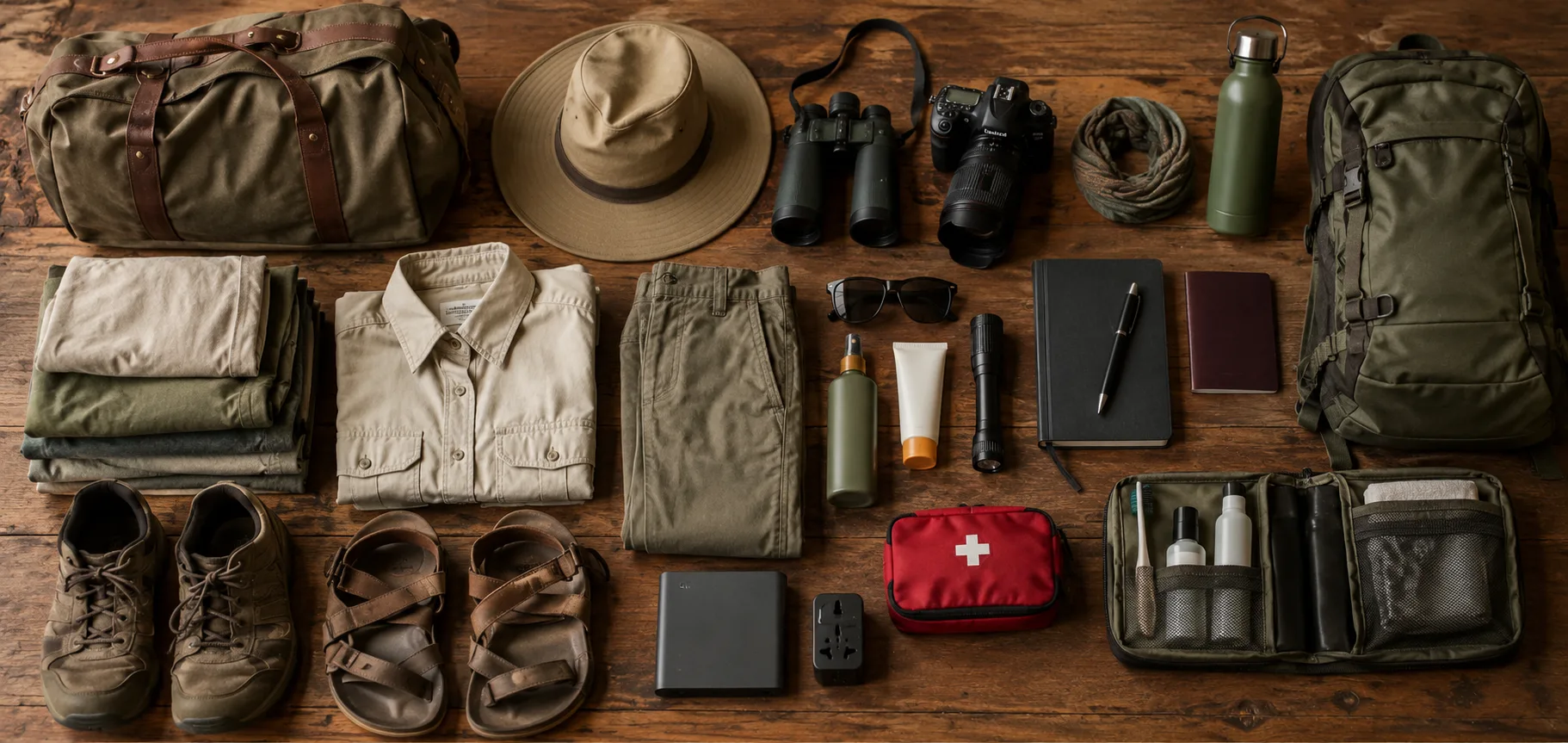
You have booked the safari. Now the bag. We pack guests for Tanzania every week from our office in Arusha, and the same questions come up every time: how much to bring, what to wear, and what you will wish you had packed by day three.
This guide answers those questions, then gives you a checklist you can tick off as you pack. It changes with the season and with your trip (children, flights, beach, cameras), it saves as you go, and you can print it or send it to your phone.
The short version
- Pack light and soft. On light aircraft the limit is usually 15 kg per person, hand luggage included, in a soft bag without wheels.
- Dress in layers of khaki, olive and sand. Skip white, dark blue and black, and leave camouflage at home: it is illegal for civilians in Tanzania.
- Mornings in open vehicles are cold, middays are hot. A fleece, a windproof jacket and a wide-brimmed hat cover most days.
- Bring repellent, sunscreen, malaria tablets if your doctor prescribes them, and clean US dollar notes printed in 2009 or later.
- No plastic carrier bags. Tanzania banned them in 2019.
Luggage: soft bags and the 15 kg rule
If any part of your safari is by light aircraft (Serengeti fly-ins, the hop to Zanzibar), the airlines are strict: usually 15 kg per person including hand luggage, packed in a soft duffel without wheels or a rigid frame. The bags go into a small hold, and a hard case simply does not fit. We confirm the exact allowance for your airline when we book the flights.
Road safaris are more forgiving, since your bag rides in the back of our Land Cruiser, but a soft bag still makes life easier. Keep one small daypack with you on game drives for documents, camera, sunscreen and a layer.
Flying on to the coast or home with things you will not need in the bush? We can keep a bag at our Arusha office until you come back through.
Leave plastic carrier bags at home. Tanzania banned them in 2019 and bags can be checked on arrival. Clear zip bags for your toiletries are fine as long as they go home with you.
Clothes: layers and the right colours
A safari is informal. Nobody dresses for dinner, and you can wear the same trousers on several days. What matters is layers. A 6 am game drive in an open vehicle can feel close to cold, especially on the Ngorongoro crater rim at around 2,300 m, and by noon it is hot.
Earth tones work best: khaki, olive, sand, soft brown. White shows the dust in an hour. Dark blue and black attract tsetse flies, which bite and are common in Tarangire and parts of the Serengeti. Bright colours are fine in camp but stand out on a walking safari.
Camouflage is a firm rule rather than a style tip: it is reserved for the military in Tanzania and you can be asked to change. Long sleeves and trousers in the evening help with mosquitoes. Comfortable closed shoes and a pair of sandals for camp are all most people need. Climbing Kilimanjaro is a different packing job; our Kilimanjaro pages cover that kit.
Most lodges and camps run a laundry, often included, so three or four days of clothes is enough for a week. Staff in many camps do not wash underwear, for cultural reasons, so pack a little travel wash.
Sun, insects and health
Tanzania sits just south of the equator and the sun is strong even when it is cool. Use high-SPF sunscreen and lip balm, wear a wide-brimmed hat, and bring sunglasses (polarised ones cut the glare off the plains).
Mosquitoes are most active at dusk and after dark. Use a repellent with DEET or picaridin, cover up in the evening, and ask your doctor or travel clinic about malaria tablets well before you fly. A yellow fever certificate is asked for if you arrive from, or transit through, a country with yellow fever risk, Kenya included.
Bring enough of any prescription medicine for the whole trip plus a few days, in its original packaging, and keep it in your daypack rather than your checked bag. Tell us about allergies and dietary needs when you book; the camps can handle most of them with notice.
Cameras, binoculars and power
A phone takes lovely scenery shots, but animals are often too far away for it. If you are not a keen photographer, a bridge camera with a long zoom is the easy answer. Bring spare batteries and memory cards: there are days when you will fill a card before lunch. A small bean bag rests a long lens on the vehicle window frame better than a tripod.
Binoculars change a safari. One pair per person (8x42 or 10x42) avoids passing them around while the leopard walks off.
Tanzania runs on 230 V. Sockets are mostly type G (three flat pins, as in the UK), with some type D (three round pins). Many tented camps charge from solar power in the main area, so a power bank keeps your phone and camera going between charges. Drones are not allowed in the national parks without a permit.
Money and documents
US dollars are the easiest cash for tips and small purchases. Bring clean notes printed in 2009 or later, in a mix of sizes; older or torn notes are often refused. Card machines are common in lodges in Arusha and on the coast, less so in remote camps.
Keep your passport, e-visa, insurance details and vouchers in your daypack, with photos of them on your phone and a copy with someone at home. Make sure your travel insurance covers medical evacuation.
Travelling with children or older travellers
Game drives last a few hours, so pack for the car: snacks your children already like, a downloaded film or two, a small pair of binoculars each and a light blanket for cold mornings. Internet in the parks is patchy, so download everything before you leave. Baby supplies such as nappies and formula are hard to find outside Arusha, so bring enough for the trip. Tick "Children" in the checklist below and it adds a full list for them.
Safaris suit older travellers well, since most of the day is spent seated in the vehicle. Tell us about any mobility needs and we will choose lodges with fewer steps and rooms close to the main area. A small cushion helps on long drives.
Interactive checklist
Your safari packing list
Choose your season and what your trip includes, then tick things off as they go in the bag. With flights selected, the meter adds up an estimated weight against the 15 kg allowance.
0 of 42 packed
Luggage
Clothing
Health and sun
Gadgets
Documents and money
Your ticks stay saved in this browser, so you can come back while you pack. Weights are rough estimates. Not sure about something? Ask our Arusha team on WhatsApp.
That is everything we would tell you over a cup of coffee in Arusha. If you are still unsure about a single item, send us a message. We would rather answer a question about socks than have you carry five kilos you never use.
Questions
Packing questions we hear every week
If your safari includes light-aircraft flights, plan on 15 kg per person including hand luggage, in a soft bag without wheels. On a road safari the limit is looser, but one soft bag and a daypack per person is still the easiest way to travel. We confirm the exact allowance for each flight when we book it.
Avoid white, which shows dust quickly, and dark blue and black, which attract tsetse flies. Camouflage clothing is reserved for the military in Tanzania, so leave it at home. Khaki, olive, sand and soft browns are ideal.
Yes. Early game drives in open vehicles are cold, and the Ngorongoro crater rim at around 2,300 m can be chilly at night, especially from June to August. A fleece or light down jacket, a windproof layer and a warm hat are enough.
No plastic carrier bags. Tanzania banned them in 2019, and bags can be checked on arrival. Clear zip bags for toiletries are fine as long as you take them home with you.
Tanzania uses 230 V with mostly type G sockets (three flat pins, as in the UK) and some type D (three round pins). Bring a type G adapter, and a power bank for days in tented camps that charge from solar.
Most lodges and camps offer laundry, often included in the price, so three or four days of clothes is enough for a week. Many camps do not wash underwear for cultural reasons, so bring a little travel wash.
Curated Journeys
Safaris to Inspire This Journey
Handcrafted itineraries that bring this story to life.
Where You'll Stay