

Skip to content
Gosheni Safaris
WhatsApp

Plan around nature, not a calendar

Africa changes every month

Follow the migration, trade crowds for green-season calm, or find a better-value window. Compare weather, wildlife and visitor levels before choosing when to travel.

12 monthly field guidesSignature window · July-SeptemberClimate, crowds & value compared

Safari window finder

What matters most?

Choose a priority, then narrow the calendar by destination if you already know where you want to go.

Choose your safari priority

The twelve-month field guide

Climate figures show Serengeti monthly averages; conditions vary by destination.

Showing 12 of 12 months

01

January

Green SeasonTanzania, Kenya, Uganda +1

January: Calving Season Begins

January is a superb time for an East African safari. The short dry season brings clear skies, and in the southern Serengeti and Ndutu area the wildebeest herds gather for calving season. Warm days, lush green scenery and fewer visitors than the peak months.

Temp
21°C
Rain
82 mm
Crowds
Medium
Read guideFrequent rain
02

February

Green SeasonTanzania, Kenya, Rwanda

February: Peak Calving in Ndutu

February is the height of calving season: over 8,000 wildebeest calves are born daily on the southern Serengeti plains, drawing dramatic predator action. Excellent weather across Tanzania and Kenya makes this a prime month.

Temp
22°C
Rain
75 mm
Crowds
Medium
Read guideModerate rain
03

March

Long Rains BeginTanzania, Kenya

March: Green Season Value

The long rains typically begin in late March, transforming the plains into vivid green. Early March still offers good game viewing with low-season rates, dramatic skies and few vehicles.

Temp
22°C
Rain
82 mm
Crowds
Low
Read guideFrequent rain
04

April

Long RainsTanzania, Kenya, Uganda

April: The Long Rains

April is the heart of the long rains in East Africa. Many lodges offer their best rates, landscapes are at their most lush, and resident wildlife remains. A favourite month for experienced safari-goers seeking solitude.

Temp
22°C
Rain
129 mm
Crowds
Very Low
Read guideFrequent rain
05

May

TransitionTanzania, South Africa, Botswana

May: Southern Africa Season Opens

May marks the start of the dry season in Southern Africa: prime time for Botswana, Kruger and the Okavango. In East Africa the rains taper off and the migration begins moving toward the western Serengeti.

Temp
21°C
Rain
42 mm
Crowds
Low
Read guideModerate rain
06

June

Dry SeasonTanzania, Kenya, South Africa +3

June: Dry Season Begins

June opens the classic safari season. Grasses shorten, wildlife concentrates around water, and the migration pushes through the western corridor with dramatic Grumeti River crossings.

Temp
22°C
Rain
15 mm
Crowds
High
Read guideLow rain
07

July

Dry SeasonTanzania, Kenya, South Africa +3

July: Peak Season Everywhere

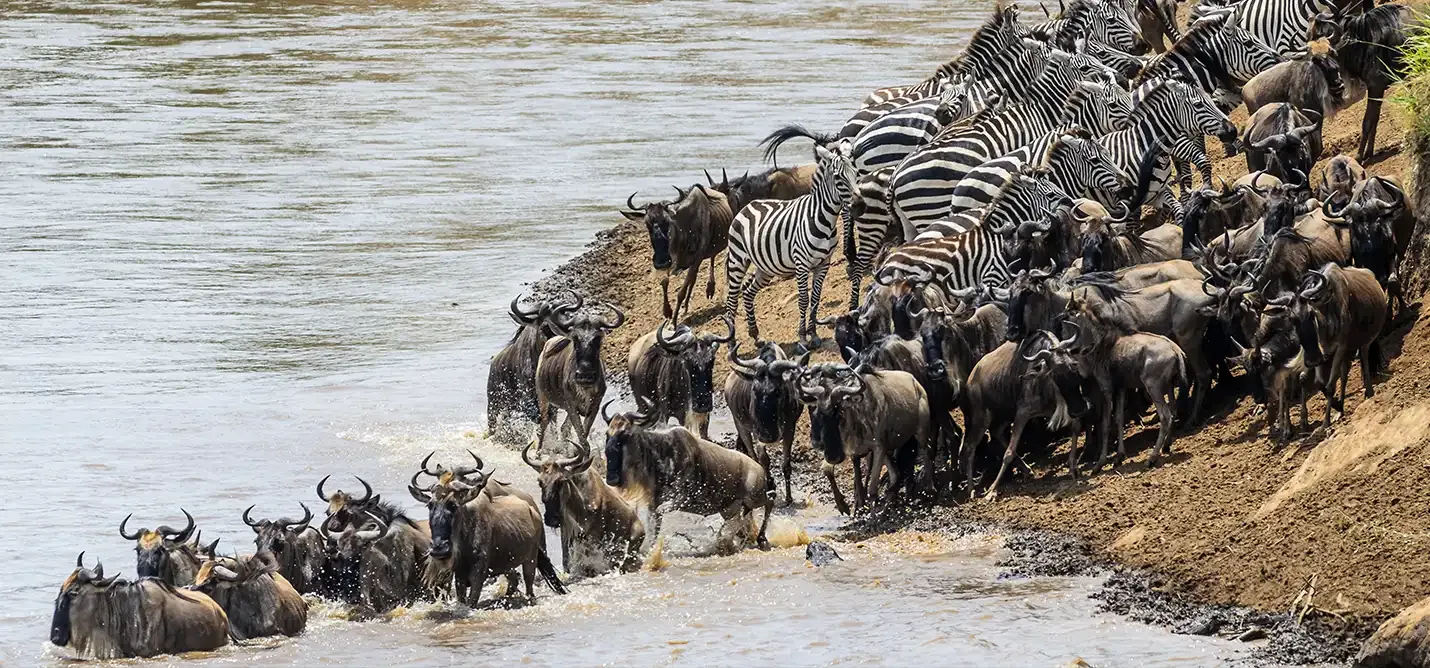
July is peak safari season across Africa. The Great Migration reaches the northern Serengeti and begins the famous Mara River crossings. Cool, dry weather and superb game viewing continent-wide.

Temp
21°C
Rain
4 mm
Crowds
Very High
Read guideVery low rain
08

August

Dry SeasonTanzania, Kenya, South Africa +1

August: River Crossing Drama

August delivers the most dramatic river crossings as mega-herds plunge across the Mara River between Tanzania and Kenya. Book well ahead. This is the most requested month of the year.

Temp
22°C
Rain
10 mm
Crowds
Very High
Read guideVery low rain
09

September

Dry SeasonTanzania, Kenya, South Africa +1

September: Herds in the Mara

September finds the migration spread across the Masai Mara and northern Serengeti, with continued river crossings. Water sources shrink further, concentrating wildlife and making game viewing exceptional.

Temp
23°C
Rain
25 mm
Crowds
High
Read guideLow rain
10

October

Short Rains BeginTanzania, Kenya, South Africa +1

October: Last of the Dry Season

October is the final full month of the dry season: hot, dusty and superb for game viewing as animals crowd the remaining water. The migration begins its return journey south toward the Serengeti.

Temp
24°C
Rain
42 mm
Crowds
Medium
Read guideModerate rain
11

November

Short RainsTanzania, Kenya, Rwanda

November: The Short Rains

The short rains refresh the landscape in November. The migration moves through the eastern Serengeti, birdlife explodes with migratory arrivals, and lodges offer attractive green-season rates.

Temp
22°C
Rain
146 mm
Crowds
Low
Read guidePeak rainfall
12

December

Green SeasonTanzania, Kenya, Uganda +1

December: Festive Safari Season

December combines the festive season with excellent wildlife viewing. The herds settle on the short-grass plains of the southern Serengeti, and clear days between short rains offer wonderful photography.

Temp
21°C
Rain
122 mm
Crowds
High
Read guideFrequent rain

Weather data by Open-Meteo.com. Climate averages use 2019-2023 observations from the Serengeti region and are planning guidance, not a forecast.

When to visit Tanzania

Tanzania weather by month

The best time to visit Tanzania for a safari is the long dry season, June to October, when animals gather at water and the river crossings run in the northern Serengeti. January and February are the calving months in the south. Rain comes in two seasons: the long rains from March to May and the short rains in November and December.

Swipe the table sideways to see every column.

Tanzania weather by month: season, Serengeti temperature and rainfall, and where to go
MonthSeasonTemperatureRainWhere to be
JanuaryGreen Season16 to 28°C82 mm, 11 daysCalving begins on the southern Serengeti plains and around Ndutu. Zanzibar is hot and dry.
FebruaryGreen Season17 to 29°C75 mm, 12 daysPeak calving at Ndutu, with lions and cheetahs close by. A good dry window for Kilimanjaro.
MarchLong Rains Begin17 to 29°C82 mm, 14 daysHerds still graze the south. The long rains arrive late in the month and visitor numbers fall.
AprilLong Rains17 to 28°C129 mm, 14 daysLong rains. The quietest month: some camps close for the season and others drop their rates.
MayTransition16 to 28°C42 mm, 6 daysRains ease and the herds start moving north-west towards the Western Corridor.
JuneDry Season16 to 28°C15 mm, 4 daysDry season starts. The herds gather in the Western Corridor around the Grumeti River.
JulyDry Season15 to 29°C4 mm, 2 daysHerds reach the northern Serengeti and the first Mara River crossings begin. Fine weather on Kilimanjaro and Zanzibar.
AugustDry Season16 to 29°C10 mm, 2 daysPeak Mara River crossings in the northern Serengeti. The busiest month in the northern parks.
SeptemberDry Season17 to 30°C25 mm, 5 daysCrossings continue in the north. Elephants crowd the Tarangire River.
OctoberShort Rains Begin17 to 31°C42 mm, 6 daysHerds turn south again. Dry-season game viewing is excellent in Tarangire, Ruaha and Nyerere.
NovemberShort Rains17 to 29°C146 mm, 16 daysShort rains green the plains as the herds return to the southern Serengeti. Fewer visitors.
DecemberGreen Season16 to 28°C122 mm, 16 daysHerds settle on the southern plains before calving. The coast is busy over the festive season.

Temperatures are the average daily low and high in the Serengeti; rain is the monthly total and the number of rainy days. Arusha and the crater highlands are cooler, the coast and Zanzibar hotter and more humid.

A month is only the beginning

Match the season to the right place.

Conditions can differ greatly between the Serengeti, Okavango, Kruger and Rwanda. Tell us what you hope to see and we will pair your dates with the strongest route.

Build my safari