
Short answer: The Maasai live across southern Kenya and northern Tanzania, concentrated around the Masai Mara, Amboseli and the Ngorongoro Conservation Area, and spread through the wider Rift Valley plains between the two countries. They are a semi-nomadic pastoralist people whose cattle, and the search for grazing, still shape where their communities settle today.
- Masai Mara National Reserve, Kenya
- Amboseli National Park, Kenya
- Ngorongoro Conservation Area, Tanzania
- Rift Valley plains straddling both countries
A Kenya safari built around the Masai Mara, or a Kenya cultural tour, is the easiest way to combine wildlife viewing with a genuine Maasai village visit.
You’ve probably come across those amazing photos of the Maasai tribe in Kenya decked out in their brilliant red, purple, and blue patterns of their shukas, standing tall and proud with their spears. Perhaps you’ve also seen the pictures of their fierce women bejeweled with bright beaded earrings and scarves against a backdrop of the arid African savannah. As their name suggests, this fascinating tribe resides in the areas surrounding the Masai Mara National Park in Kenya and parts of northern Tanzania.
Who Are the Maasai?
The Maasai are a Nilotic people of southern Kenya and northern Tanzania. They speak Maa and have lived by herding cattle, goats and sheep for centuries. Kenya's 2019 census counted 1,189,522 Maasai. Tanzania does not record ethnicity in its census, but estimates run to several hundred thousand.
For the Tanzanian side, including where to visit a village there, read our guide to the Maasai tribe in Tanzania.
About The Masai Tribe
The Masai tribe is one of the oldest inhabitants of East Africa with a history dating as far back as the 15th century. They live relatively uninfluenced by modern-day civilization and still retain many of their traditions. For instance, the Masai tribe diet typically consists of milk, meat, and blood, since they have pretty much been a pastoralist tribe. A visit to the Masai village to get a glimpse into their unique way of life is one of the highlights of any safari vacation in Kenya, especially if you are exploring the Masai Mara park. It promises to be an educational experience, in one way or another, so if you’ve included this visit in your itinerary, here’s what you need to know:
What Do the Maasai Eat?
Traditionally, food came from the herd: milk every day, meat at ceremonies and feasts, and blood, often mixed with milk, in the dry season or for someone recovering from illness or childbirth. Game meat was not part of the diet.
Most Maasai families eat differently today. With less land and fewer cattle per person, maize has become the staple. Ugali, a stiff maize porridge, is eaten with milk or a little stew, and the day usually starts with strong, sweet milk tea. Meat is still the food of celebrations. If you visit a village and are offered tea, take the cup with your right hand.
The Welcome Show
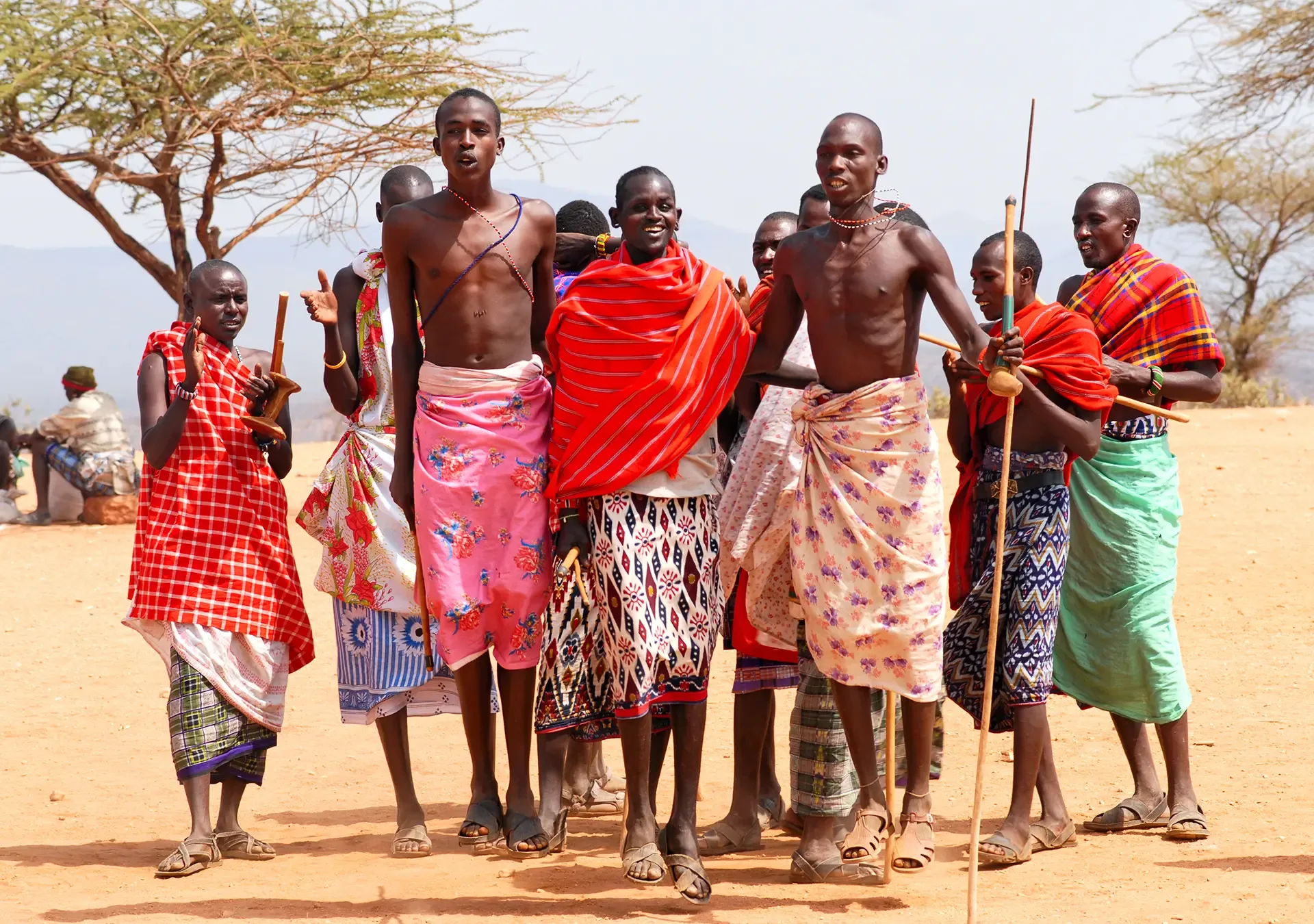
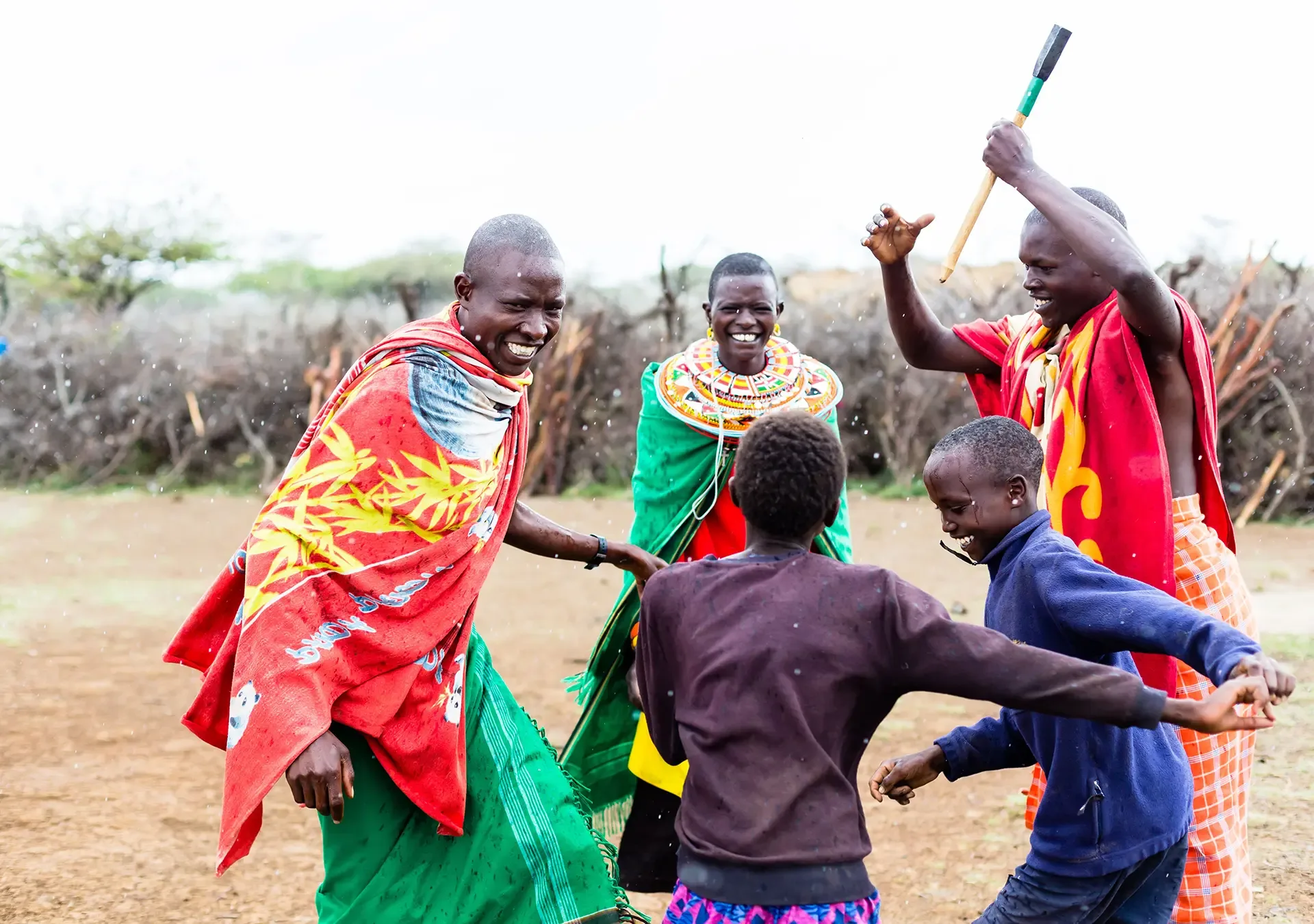
The majority of Masai tribes still practice their customary way of life as pastoralists with their livestock at the center of their culture and social life. They proudly welcome visitors to their villages, often with song and dance, which you might even be able to join in! You will be greeted with smiling faces and lively music as the Masai men dress the males in your group in traditional sarongs and the women put necklaces and wraps around the ladies.
As part of the show, they’ll usually perform the adumu, a “jumping dance” that sees several dancers jumping several feet high in the air. They’ll then form a circle with the jumper-dancer in the center levitating higher and higher to the rhythms of the singers. The higher the jump, the higher the singers will raise the pitch of their voices. You will usually be invited into the circle to try jumping with them too, which adds to the fun of your visit.
Bizarre Village Huts
The traditional Masai village is called a Manyatta, consists of several small huts (boma) made of mud, ash, and cow dung. These huts are then covered with thatched roofs and constructed in a wide circle so that their livestock can stay in the middle protected from predators like lions and cheetahs. The villagers also erect thick thorny fences around the huts as an added protection.
Interestingly, it is the Masai women who build these sturdy dwellings, whereas the men supply them with the necessary materials. Dimensions of the huts vary, but the average size of each boma is around 3 x 5 meters and only around 1.5 meters tall. It is certainly a very different lifestyle as an entire family will cook, eat, sleep and socialize within this modest structure.
Come With Some Cash In Hand
One of the first things you’ll notice as you enter the village is the many vivid colors of the Masai garments. Towards the end of your visit, you will be ushered to their local marketplace where you can buy these garments as well as brightly beaded necklaces, bracelets, and amulets worn mostly by the women who use such beaded jewelry to express their identity and social status. This explosion of colors makes for a photogenic scene as these bright shukas and trinkets contrast strongly with the browns and greens of the landscape. You can purchase some to help support the local economy of the village as well as bring home an authentic, handcrafted souvenir from your travels.
Visiting the Masai tribe in Kenya is a unique part of the safari experience, especially when you consider that an entire region was named after them. That’s why even on many Masai Mara safari tours, it is common to come across a Masai warrior tending his livestock on the savannah alongside elephants, giraffes, zebra. These rolling plains are also home to some of Africa’s most dangerous predators. Notwithstanding, the Masai tribe has lived peacefully alongside these wild animals for hundreds of years and even have a strong aversion to eating game.
It’s Easy To Include A Masai Village Visit In Your Travel Itinerary
Masai land boasts the finest nature and wildlife areas in East Africa, so it does seem somewhat weird to go bouncing around on someone’s ancestral land without at least sparing an hour or two to meet the people and learn about their ancient traditions. Simply talk to your tour provider to include this visit in your safari adventure itinerary for a truly educational experience.
Questions
Maasai Tribe Location: Frequently Asked Questions
Maasai communities are spread across a long stretch of East Africa, from the Kenyan highlands around Nairobi and the Masai Mara down into northern Tanzania near Arusha and Ngorongoro. There's no single Maasai territory. Instead it's a network of group ranches and villages that follows the open rangeland both countries share along the Rift Valley.
No. The Maasai are one of the few East African peoples whose land was split by a colonial-era border. Roughly as many Maasai live in northern Tanzania, near Ngorongoro and Lake Natron, as live in Kenya, and the two groups share the same language and customs.
Yes. Most Masai Mara safaris include an optional village visit, where you pay a small entry fee that goes to the community and get a welcome with song, dance and a look inside a traditional manyatta homestead. Ask your tour operator to add it to the itinerary rather than booking it separately.
Beyond their striking red shukas and beaded jewelry, the Maasai are known for cattle herding as a way of life, the adumu jumping dance performed at ceremonies, and a long history of living alongside lions, elephants and other wildlife without clearing the land for farming.
Curated Journeys
Safaris to Inspire This Journey
Handcrafted itineraries that bring this story to life.
Where You'll Stay