Short answer: A game drive is a guided wildlife-viewing outing in a 4x4, usually a Land Cruiser with a pop-up roof, led by a trained guide who tracks animals and reads the bush. Most safaris run two drives a day, a dawn drive when predators are still active and the light is best, and a late-afternoon drive through sunset. Night drives happen too, where park rules allow it.
See the custom 4x4 Land Cruisers we use, or browse the Big 5 safaris built around game drives like these.
How Gosheni Safaris Builds a Game Drive Worth Talking About
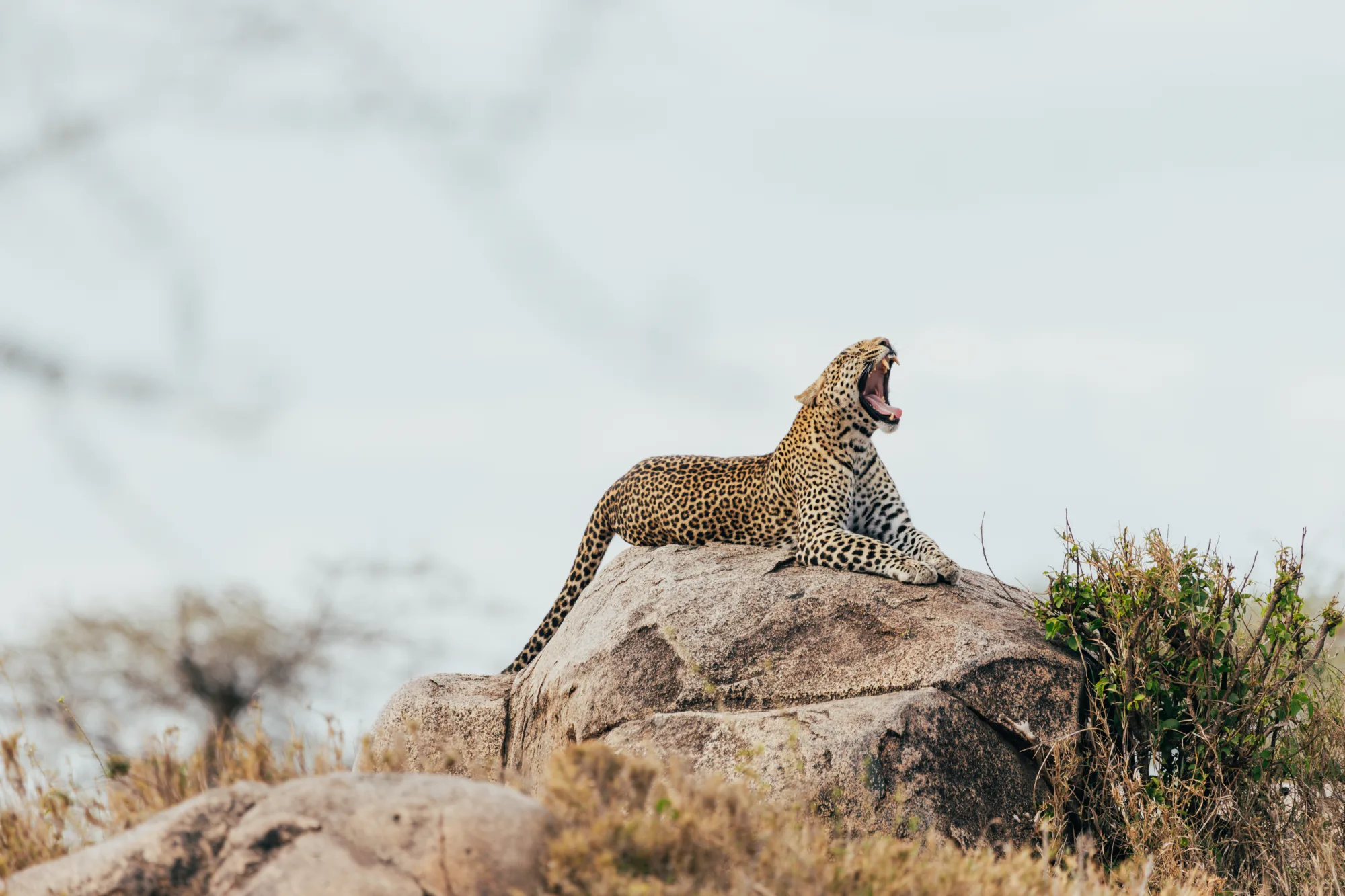
Picture the African bush at first light: the sun just over the horizon, the air still cool from the night. Your vehicle moves through the tall grass of the Serengeti, engine speed kept low, and then your guide cuts it entirely. Ahead, a leopard is stretched along the branch of a low acacia, maybe twenty meters away, eyes fixed on the plains below, barely seeming to breathe. You raise your camera. No one says a word. That's the kind of moment a good game drive Africa experience is built around, whether it's lions coordinating a hunt at sunrise or elephants crossing the track meters from your vehicle.
That's what a great game drive should feel like, and it's what we've been delivering for 15 years. We're an award-winning operator: three World Travel Awards in 2025 alone (Zanzibar's Leading Tour Operator, Zanzibar's Leading Destination Management Company, and Tanzania's Leading Destination Management Company), plus a TripAdvisor Certificate of Excellence we've held since 2015. You can see our full award history here. We've turned the ordinary game drive into something closer to a craft: not just a vehicle moving through a national park, but a structured, expertly guided safari that puts you in the heart of the action. And the preparation for it starts hours before the drive even begins.
So what actually makes a game drive work? What puts our guests in the right place at the right moment to see the wildlife that draws people from across the globe? Part of it is the vehicle, part of it is the guide, and part of it is timing built around the animals' own schedule, not the tourists'.
The Vehicle: Your Base Out in the Bush
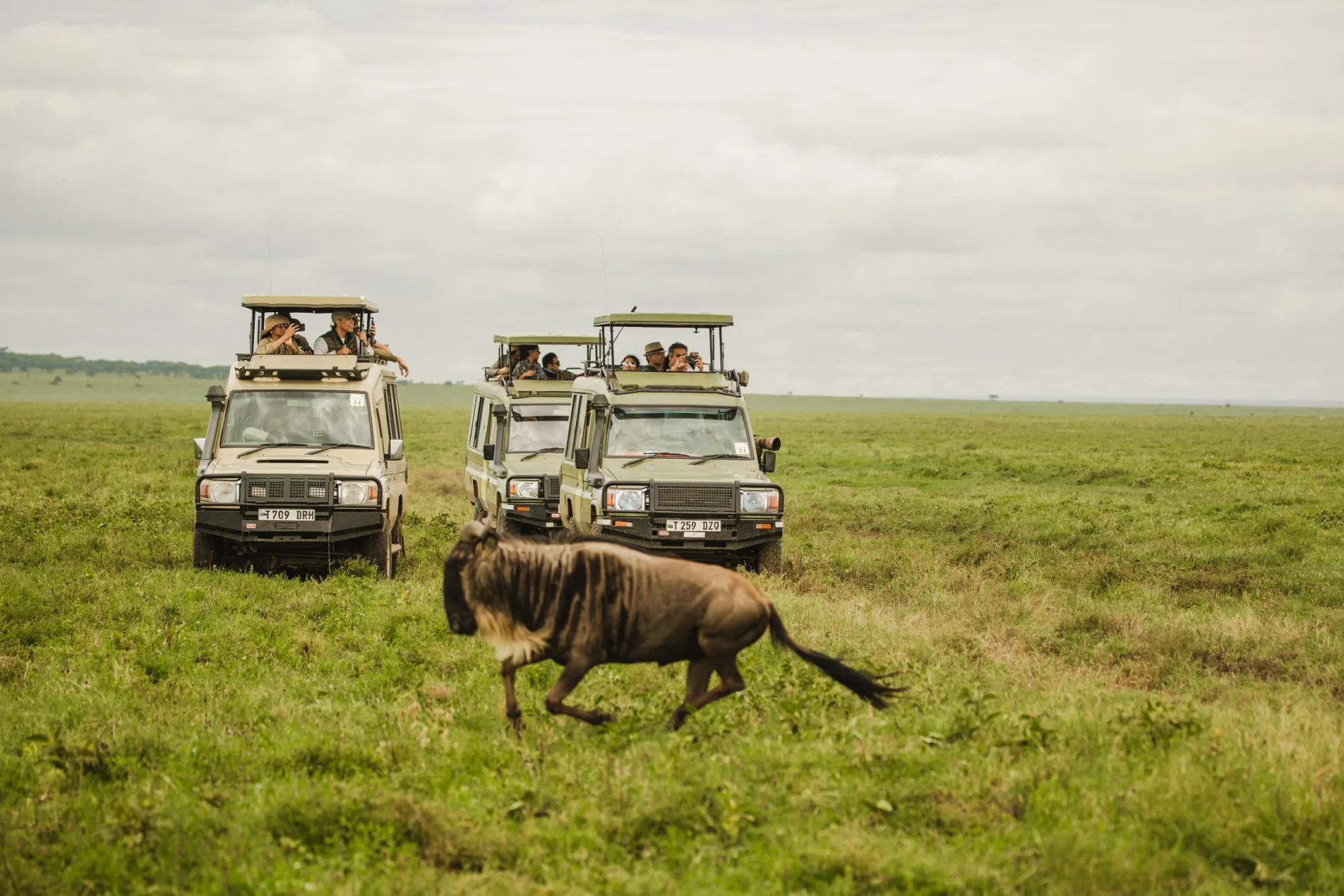
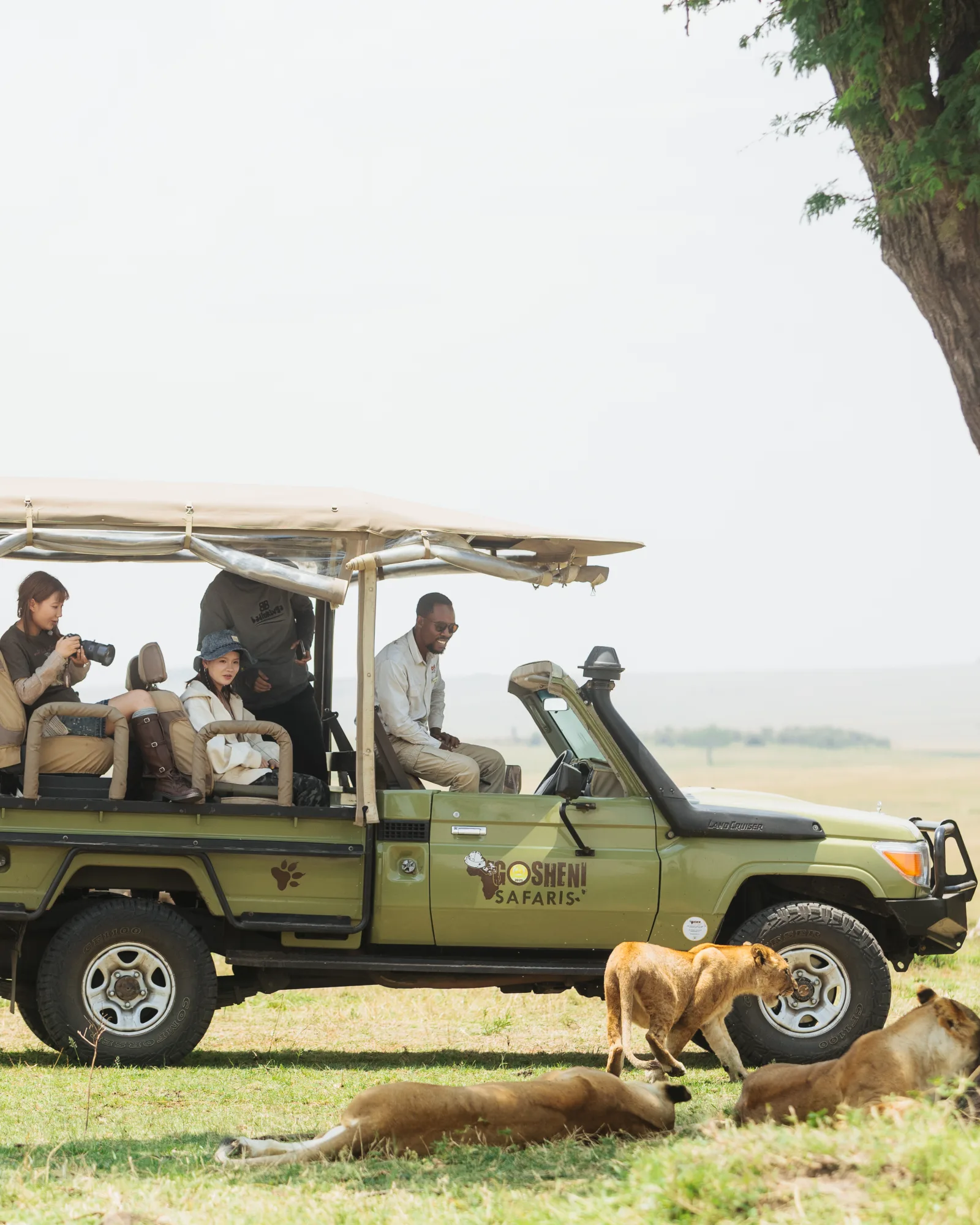
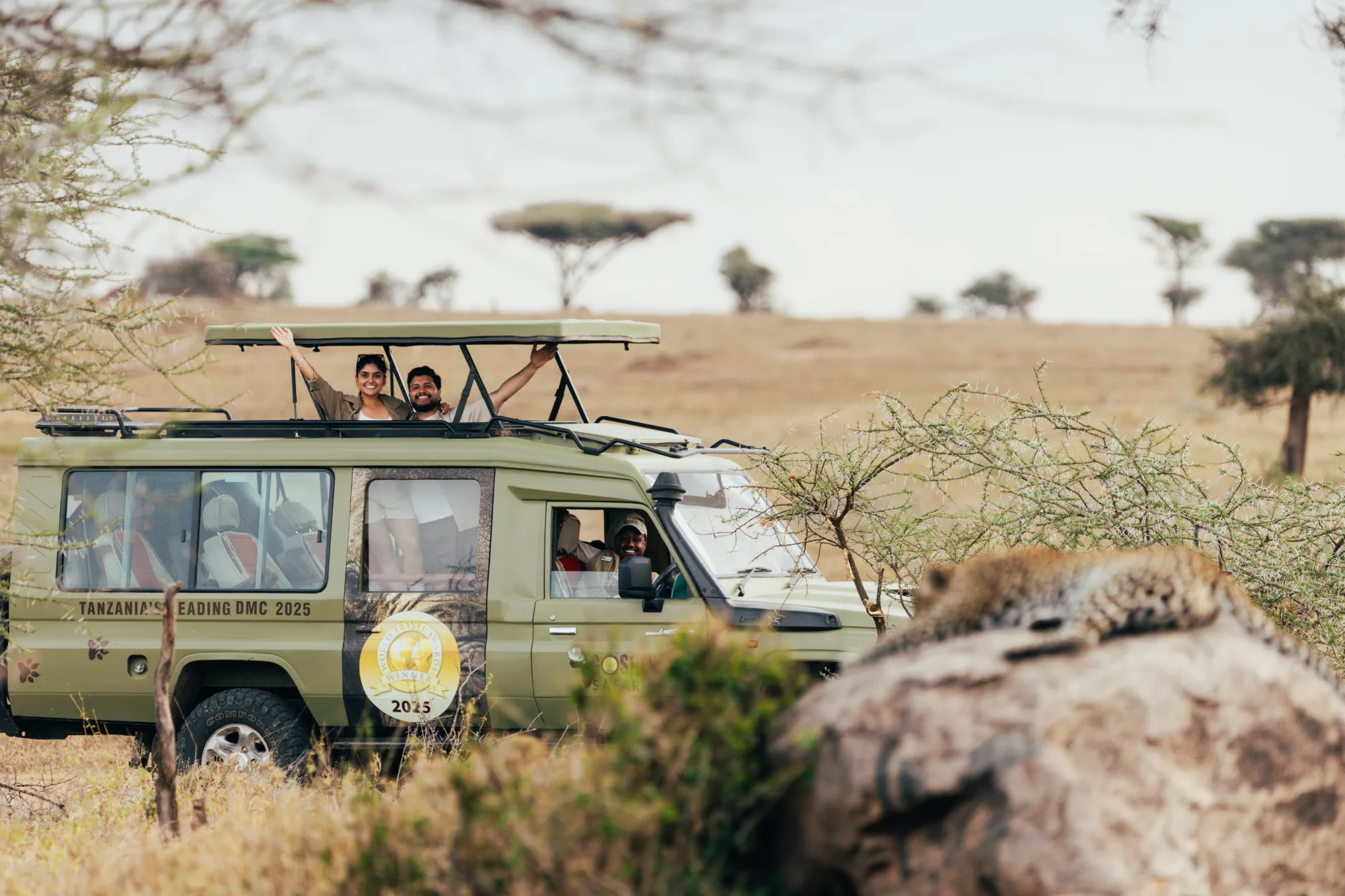
A game drive only reaches its potential with the right vehicle under you. At Gosheni, that means a fleet of more than 50 custom-built 4x4 Land Cruisers, each extended and widened for extra room inside so a long day on the road doesn't leave you cramped. Window seats are sized for a clear view, whether you're scanning the horizon with binoculars or lining up a shot with a telephoto lens. Each vehicle carries a maximum of six guests, so everyone gets a window seat and some actual space.
The pop-up roof is probably the single most useful feature. When your guide spots something worth stopping for, a resting lion pride, a wild dog pack on the move, the roof opens and you get a 360-degree view from above, unobstructed by glass. For photographers chasing the right angle, that matters more than almost anything else in the vehicle.
The practical details add up too. Power inverters give you 110v and 220v, so camera batteries charge on the go. There's a coffee box with hot drinks and snacks, wildlife reference books and local maps on hand, and every vehicle carries two spare tires and a heavy-duty jack, because the bush doesn't forgive being underprepared. The vehicles are built to handle whatever weather a game drive throws at them, rain, sun, or mud, and each one carries a first aid kit and an HF long-range radio.
Timing the Drive: Early Morning, Afternoon & After Dark
Wildlife doesn't run on a human schedule. Animals are most active when it's cool, at dawn and dusk, and a good guide structures the drive around that.
Early morning drives are consistently the highlight of a safari day. Getting to the park at or before dawn means catching big cats still out from a night of hunting, or playing with cubs in the morning light. The light itself is at its best for photography: warm, low, and soft. Zebras, wildebeest, and antelope are already out, and the birds are in full voice. It's a good time to watch animals start their day and settle into their natural rhythm.
After a midday break, often a full hot meal courtesy of our camp or lodge chefs, afternoon drives pick up once the heat eases. Elephants come out, lions get active again, and as the sun drops toward the horizon the light turns the plains gold. In certain reserves where park regulations and conservation rules allow, night drives open up a different world entirely: leopards on the hunt, civets in the undergrowth, hyenas working the edges of the grass. Guides run these with spotlights, scanning the dark until two eyes catch the beam. We run night drives wherever local regulations permit, which adds a dimension most standard safaris don't get near.
The Locations: Where Gosheni Takes You
A great game drive depends on where it happens. We operate across East Africa's main wildlife destinations, and our guides carry detailed, specific knowledge of each one: which zones hold lions at what time of year, where elephants move during the dry season, where leopards den in the central Serengeti's kopjes. That knowledge is what separates a strong game drive from an average one.
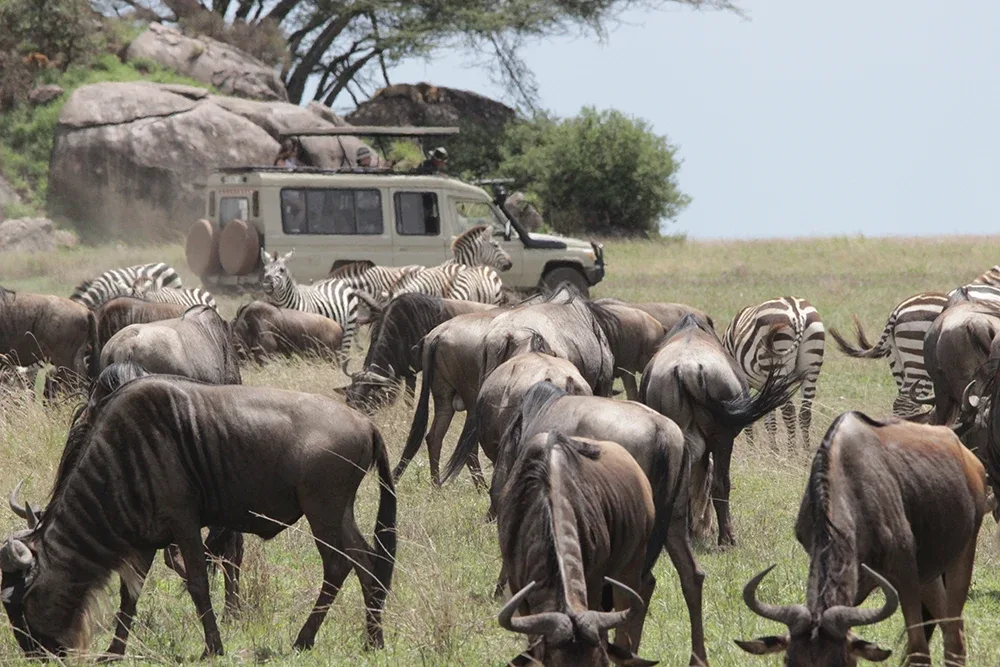
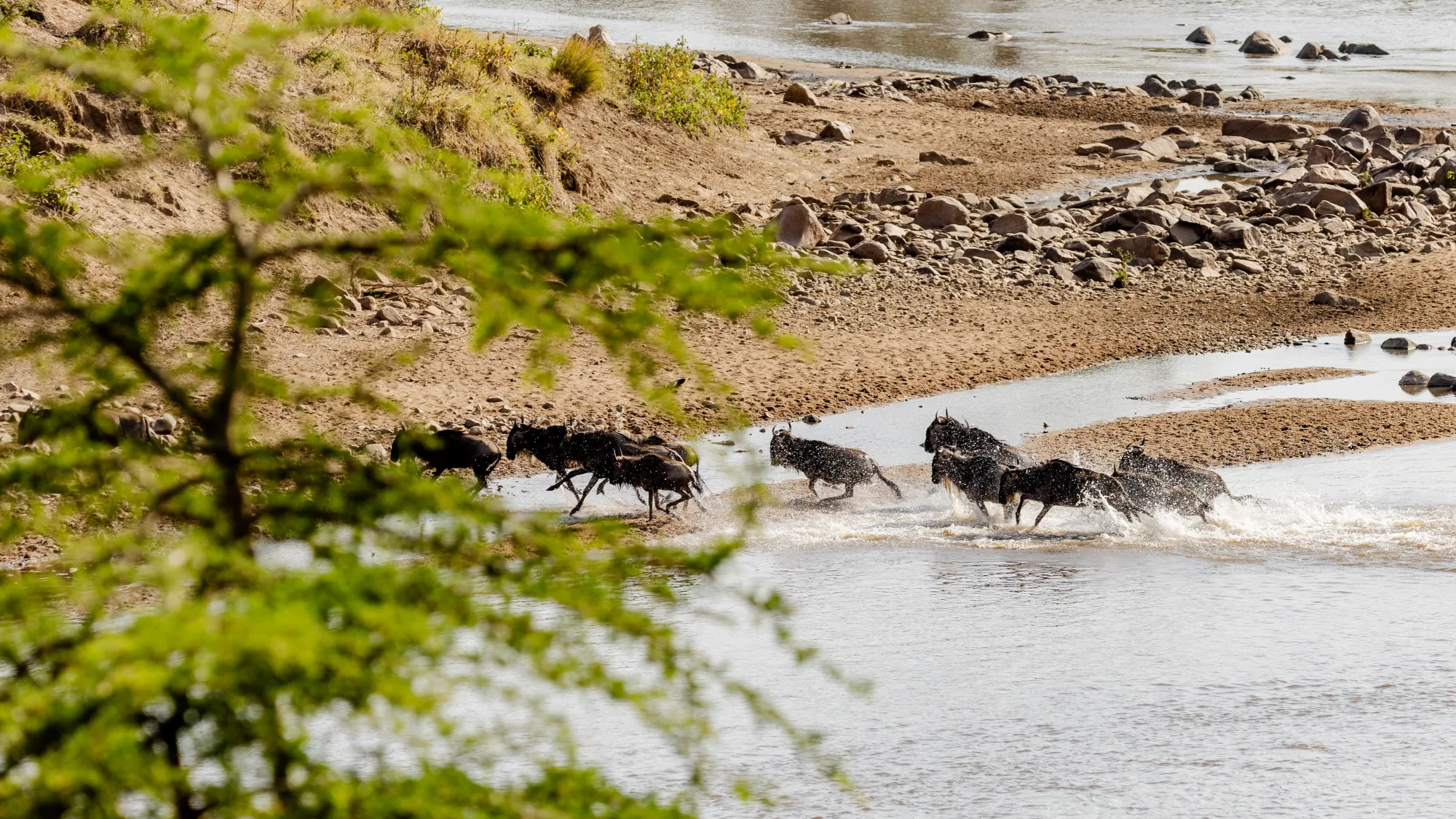
In Tanzania, the Serengeti National Park is the standout. The experience ranges from the open southern plains during calving season, where predators and prey sit in close quarters, to the northern reaches near the Mara River, where the Great Migration crosses between July and October. Tarangire National Park holds some of the densest elephant populations on the continent, while the Ngorongoro Crater, a self-contained ecosystem inside a collapsed volcanic caldera, offers drives on the crater floor where you can spot lions, black rhino, hippos, and large wildebeest herds in a single morning. Each park demands different knowledge, different routes, and different timing, and our guides bring that to every Great Migration itinerary we build.
Across the border in Kenya, our game drives extend into the Masai Mara and its own chapter of the Great Migration. During migration season the drama is constant: wildebeest making their crossings, and year-round, big cats everywhere you look. The web of private reserves around the main park gives you more options for exclusive drives away from the crowds at the famous crossing points. Our reach extends further still, including Kruger National Park in South Africa, where game drives cover vast, varied bush territory.
The Guide: The Difference Between a Drive and a Discovery
No vehicle or location makes up for a weak guide. That's where we put our real investment, and it's where we get our best feedback. Our guides aren't drivers with some wildlife knowledge bolted on. They're trained naturalists, trackers, cultural interpreters, and storytellers who turn a drive into an actual discovery.
Where a less experienced driver stops at the obvious sighting and moves on, a Gosheni guide reads the bush: a subtle shift in a zebra's behavior, the direction a flock of vultures is flying, fresh leopard tracks in soft sand. Those are the details that lead to the moments guests remember. Guides like Juma, known for tracking animals and reading their behavior, Gabriel, who stays current on wildlife research, and Zadock, with us since the early days and an encyclopedic knowledge of Tanzanian nature and history, are the reason guests come back and name them personally in reviews.
Safety is part of the guide's job too. Every guide is trained in first aid and emergency response, and gives a pre-departure briefing before each game drive covering vehicle behavior, wildlife etiquette, and what to do in an unexpected encounter. It isn't a formality. It's what lets you relax and stay in the moment, trusting the person behind the wheel.
Guides also adapt on the fly. For a photographer, that means positioning the vehicle for the best light and waiting for the shot. For a family with young kids, it means adjusting the pace, the commentary, and the stops to keep everyone engaged. Mention over breakfast that you want to see wild dogs or a cheetah hunt, and your guide will use their knowledge of the park to go looking, rather than sticking to the most-traveled roads.
Conservation in Action: Protecting Wildlife and Wilderness
A game drive isn't only an outing, it connects to something larger. Conservation sits at the center of safari tourism, since the funds it generates are what protect the wildlife and landscapes visitors come to see. Every game drive, whether in Kruger, the Masai Mara National Reserve, or the reserves of East Africa, plays a part in that.
Revenue from safari tourism funds anti-poaching patrols and habitat restoration in national parks and private reserves alike. In Kruger and the Mara, that funding supports teams protecting elephants, zebras, wild dogs, and other species from poaching and habitat loss. Visitors who book a game drive are, in a direct way, helping pay for that work.
Conservation is also about people and partnerships, not just funding. Many operators work with local communities and conservation organizations on strategies that protect both wildlife and people: preserving migratory routes for elephants and zebras, reducing human-wildlife conflict, and supporting education programs. Community engagement is often the difference between a wildlife area that thrives and one under real threat.
A good guide is also an ambassador for these places. As you move through the bush, your guide will explain the conservation status of the animals you see, the challenges facing Africa's parks, and the role visitors play in keeping these ecosystems healthy.
Choosing a responsible operator helps keep Africa's parks and reserves as sanctuaries for wildlife. Every game drive is a chance to see the wild up close, and a small part of the effort to protect it for the long term.
The Full Experience: From Camp to Sundowner
A good safari experience is never just the drive. The lodges, the food, and the daily rhythm of the trip all shape how it feels. We choose lodges and camps near the parks for how close they put you to the wildlife and how well they round out the trip, since accommodation is as much a part of the experience as the drive itself. Whether you're in a tented camp on the edge of the Serengeti, falling asleep to hippos, or on the rim of the Ngorongoro Crater with sunrise over the caldera, the choices get the same care as the drive routes.
We were among the first Tanzanian operators to serve full hot lunches out in the bush rather than a sandwich box handed over on the way into the park. Our guides set up a real spread, soup, starters, mains, dessert, and drinks, under a canopy in a spot worth stopping for. Between the morning and afternoon drives, that break turns a quick rest into something worth remembering. It's a small thing, but it reflects how we approach the rest of the trip.
As the sun drops at the end of an afternoon drive and the sky turns orange and crimson, with lions silhouetted against the light, it's one of the better moments a safari offers. Our guides know where the best sunset spots are in each park and plan the drive to put you there as the light fades. You head back to camp with a full memory card and, usually, not much left to say.
Plan Your Game Drive With Us
The game drive is the center of an African safari, the reason people cross continents and rearrange their schedules for a week or two in the wild. Every part of a Gosheni trip is built around that: vehicles designed for the best view and ride, guides with years of experience across Tanzania, Kenya, and beyond, drive timing matched to the animals' own routines, and locations chosen to put you close to the wildlife and the moments worth photographing.
Our game drives aren't only about the adventure, they're also about doing it responsibly. We invest in conservation and in local communities, because keeping this landscape intact matters well beyond any single trip. Every drive our vehicles make is part of what keeps the lions, elephants, leopards, zebras, wild dogs, hippos, and everything else out there safe for the next visitor.
If you're ready to start planning a safari built around real game drives, reach out to our team and we'll help you work out the details.
Questions
Game Drives in Africa: Common Questions
It is a scheduled outing through a national park or reserve in an open-sided or pop-up-roof 4x4, with a guide who knows the terrain and the animals' habits. The guide drives slowly, stops for sightings, and explains what you are seeing.
Animals are most active when it is cool. Lions, leopards and hyenas hunt or move around at dawn and dusk and rest through the heat of the day, so guides schedule drives to match that rhythm rather than a tourist's clock.
A morning or afternoon game drive usually runs three to four hours, though it stretches longer if there is a good sighting worth sitting with. Some lodges also offer a full-day drive with a hot lunch out in the bush between the morning and afternoon stretches.
Yes, in certain reserves where local conservation rules allow it. Guides use spotlights to find nocturnal animals like leopards, civets and hyenas that are much harder to see during the day.
No, though they help. Gosheni vehicles carry wildlife reference books, local maps and power inverters so camera batteries can charge on the move, and guides are used to positioning the vehicle for photographers.
Curated Journeys
Safaris to Inspire This Journey
Handcrafted itineraries that bring this story to life.
Where You'll Stay